Showing posts with label Communication. Show all posts

2 November 2014

Could predictive text spell the death of poetry?

Predictive text and autocorrect have not just brought us innumerable laughs from fails like these, but they have made typing on mobile devices a lot easier. Just the other day, I had to rewrite a message after accidentally closing the application before pressing send. And, lo, I only had to bother with the first letter of each word and predictive text took care of the rest, sometimes even suggesting the next word before I had time to type anything! Wow - tech today is amazing, I thought.

But the magic in my mobile then made me wonder: if my communication device acts like a helpful butler for the brain, spoon-feeding my every next word, how will it affect my writing and my mind?

A lot has been said and written about the so-called the Filter Bubble. The term describes how Google, Bing, Baidu, etc personalise our search results through sophisticated algorithms that mine our previous online interactions in order to make the next one more relevant. Search engines thus act as the gatekeepers to what we see in the World Wide Web, directing us first and foremost toward content that they think we will like, rather than all the relevant results. Of course, from a User Experience perspective this makes complete sense and it is quite helpful, but the result is that our online experiences are becoming ever more atomised, and we are less likely to come across surprises or materials that could jolt our reflective equilibriums.

Likewise with our increasing use of social media. Facebook, Twitter and co. are great at reflecting back to us that which we already think. In these public spaces, where content is curated by our friends and those we "Like" or "Follow", we can comfortably bask in the pleasant glow of having our opinions validated because what we see and read is, after all, provided by those whose beliefs and views we have already  vetted as being in tune with our own. Moreover, consuming content (be it articles, videos, cats, what have you) via social media is becoming ever more pervasive. Not only is offline media in seemingly terminal decline, but the Homepage has been declared dead while pull- is fast being replaced by push media.


So a paradox and regrettable irony of our time is that, while we have never had as much information at our fingertips, search engines and social media are pushing us toward ever narrower silos of information – and we seem to love it.

This is far from news, but I hadn't previously given much thought to the possible repercussions that predictive text could have on the next generation in particular. As the use of mobile devices becomes ever more pervasive, children will no longer have to learn how to write by hand, nor will they even be required to know how to spell full words. Correct writing goes out the window if a computer does it for you – just like knowing how to use the gears in a car becomes redundant if you only learn to drive an automatic. 

Studies have already found that predictive text makes children more likely to make mistakes and act impulsively. Handwriting has also been shown to be more beneficial to learning than typing as it requires a greater degree of planning, anticipation and accuracy. Writing an essay is all too easy when you can cut, paste, copy, delete and start again. That is why those advocating holding school and university exams with computers rather than pens miss an important point: it is far more demanding having to write in one swoop a first and final draft, even if the resulting 'pen strain' makes the poor students' hands sore. (How weak have we become that there is such a concept as 'pen strain'...)


But, if its use becomes the norm, might predictive text also cause a narrowing of what is written, perhaps even confining what is thought in general? Assuming it is used and there is no conscious effort to avoid one's previous patterns of writing, predictive text can transform into a powerful valve, translating our thoughts into type, and the more often we use a certain phrase or word, the more likely it will be offered back to us and be used again. Therefore, the text we produce becomes shaped to a considerable degree by previous input – making our output ever more constricted by what we have written before. 
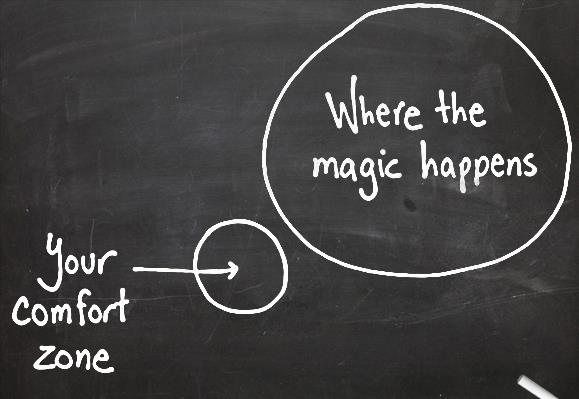

However, the road to excellence, innovation and genius was surely not paved by familiarity. How can literary art flourish if linguistic innovation, a surprising turn of phrase and a novel word become ever less likely? Can poetry survive and would Shakespeare have thrived in such an age where the effort involved in using words offered by our Brain Butler is so much less than coming up with something new?

The danger is that, as our horizons become smaller, so will our minds. As Henry Ford, the creator of the first mass produced automobiles, quipped, “If I had asked people what they wanted, they would have said faster horses.” Indeed, it is outside our comfort zones where the magic happens – and it seems to me that predictive text and social media might actually be building psychological barriers that could impede us from accessing our creative sweet spots.

To finish with some wise words from John Stuart Mill: 

"In this age, the mere example of non-conformity, the mere refusal to bend the knee to custom, is itself a service. Precisely because the tyranny of opinion is such as to make eccentricity a reproach, it is desirable, in order to break through that tyranny, that people should be eccentric. Eccentricity has always abounded when and where strength of character has abounded; and the amount of eccentricity in a society has generally been proportional to the amount of genius, mental vigor, and moral courage which it contained. That so few now dare to be eccentric, marks the chief danger of the time." 

These words are perhaps even more pertinent today than when they were written.

19 January 2014

From a county show ox to the possibility of direct democracy

In 1906, visitors to the West England Fat Stock and Poultry Exhibition were asked to estimate the weight of a live ox after it had been slaughtered and dressed. Upon analysing the results of this competition, the Victorian polymath Francis Galton noticed a curious thing: the average of everyone's guess wasn’t just closer to the correct answer than the winning guess; it was also more accurate than any of the expert judges.

Quoting this and subsequent scientifically more rigorous evidence, the program Ultimate Swarms (BBC 1) argued that animals which exhibit collective behaviour are at their strongest when there is no single leader. This is because individuals, however capable, are nonetheless fallible. A collective, on the other hand, is able to counteract and mitigate the consequences any singular errors.

Intelligence in numbers


This holds true, for example, when looking at the evasive actions of a shoal of tuna, twisting and turning in an effort to outmanoeuvre animals of prey. Even if a few unlucky fish end up as lunch, the aggregate of each individual action produces a highly responsive defensive unit – indeed, one that is far more formidable than if the shoal were directed by a single lead fish.

Honey bees also take advantage of this collective intelligence. For example, when the time comes, it is not the queen bee who decides the location of the colony’s next home. Instead, this decision – vital for the survival of the group – is a communal choice. Upon discovering a potential nesting site for the colony, the worker bee will report back to the beehive and promote their find with a "waggle dance". This form of communication imparts information to the rest of the hive about the location and features of the newly found property. The winning dance – the one that excites the colony the most – will determine the location of the collective’s next home. A kind of bugs life X-Factor indeed.


But back to the ox and the county show in Plymouth. After realising that the median of all the guesses came to within 0.8% of the correct weight, while the average came even closer and was also more accurate than the experts, Galton reasoned that, "according to the democratic principle of ‘one vote one value’, the middlemost estimate expresses the vox populi, every other estimate being condemned as too low or too high by a majority of the voters”. 

Now, if this vox populi identified by Galton arrives at better answers than our so-called experts, and studies in swarm intelligence point to group decision-making being favourable to actions directed by a single leader; then what does this say about our reliance on individuals to ultimately decide the direction of our communities?

Thankfully, we in the West at least are able to vote in our leaders, but human collectives tend to still be guided by a singular brain, whether it be a PM, President or dictator. Our current system for collaborative action endows our rulers with the authority to weigh and consider the available information in order to arrive at decisions that will then affect us all. However, it's still just one individual making the final call.

Online to the rescue
In the wired parts of our world, however, there rests a gadget in virtually every gentleman's pocket and each lady's handbag that could be utilised to capitalise on our collective intelligence. 

Moreover, the daily routines of most of us already include posting statuses, checking tweets, and dealing with all manner of online chatter.  It shouldn’t, therefore, be too burdensome for each of us to have a civic obligation that would regularly poke us into thinking about a subject to do with our communities, hence, our own lives. 

It could be as unobtrusive as receiving an email, text or Facebook notification requiring us to vote for a collective course of action by clicking on “like” or “dislike”. Such e-plebiscites could take the form of questions, such as "should speed bumps be installed on street Y?", or "should land X of this council be used to build a shopping centre, business centre or park?", or "should this council buy energy from wind farms or shale gas producers?"

The user interface could be a simple page showing the question, and a button or two with which to assert one's position. The resulting votes would then be calculated by a Google-type number-cruncher.

  Each adult could own a civic profile ("Civicbook"?) connected to their council, allowing them to only vote on matters directly relevant to their lives and to their communities (and perhaps a national equivalent for larger and broader questions).

Every adult member of the body politic would also retain the power to bring up issues for debate, as already happens with the online petitions in the UK that can trigger talks in Parliament. And every time a citizen were to create such an e-plebiscite, it would be permanently displayed on their profile  resulting over time in a history that would flag up any conflicts of interest, thus bringing transparency and long-term accountability to our political interactions.

Such a Civicbook should also allow everybody to browse questions posed by others and to pick causes to "like" or "dislike".  Collectively agreed-upon rules would then dictate the frequency of these e-plebiscites and the threshold for "likes" that would trigger a referendum. 

There should also be a statutory duty forcing people to take part regularly, at risk of losing some commensurate privilege, right or benefit; not necessarily compelling us to vote on every question, but at least on an agreed-upon number. 

The thing is, this is far from some idealised techno-fantasy – indeed, a form of direct democracy similar to this is already practiced in Switzerland. Elections and referenda, increasingly often electronic, on all types of issues take place four times a year in each Swiss canton (about equivalent to our councils). 

Swiss citizens are able to, for example, demand popular votes, amend the constitution and even veto laws and spending bills through these referenda. The relatively small size of the cantons (in effect, peer pressure) and, in some places, fines for not taking part in elections ensure that everybody has an incentive to fulfil their duty.  

Likewise, the citizens of Iceland were allowed to draft their new constitution via crowd-sourcing – as is now also being advocated for the UK in a new project at the LSE.  So the technology already exists – what is missing is the political will. Our leaders and decision makers need not worry about their livelihoods, however, as we'd still need experts to analyse, inform and galvanise the population on the relevant questions of tomorrow.

Even so, as Galton opined about the county show competition, “the average competitor was probably as well fitted for making a just estimate of the dressed weight of an ox, as an average voter is of judging the merits of most political issues on which he votes. 

How to define "Politics"

The question is, how prudent is it for us to outsource our stakes in society to career-politicians – with their party political responsibilities, ideological agendas, vested interests and core voters – when these days we could so easily each wield the power ourselves? 

Moreover, the zigzagging, even schizoid dynamic of oppositional politics – the governing party moulding the country according to their proclivities, the opposition trying to undermine them, only for the roles to be reversed after a Parliament or two; and repeat ad nauseam – seems far from an efficient or productive system for guiding our societies toward sustainable and long-term prosperity. 

If we each had the exact same amount of say, in no way mediated or determined by whichever party made it into government, it would seem to follow that there would be a lot less, if any, need for the kind of arrogant partisanship and ignorant tribalism that so often goes for "debate" amongst the political classes, the MSM and, in particular, online comments sections. Merriam Webster offers several definitions for Politics

Here are two:  “Activities that relate to influencing the actions and policies of a government”; and “Getting and keeping power in a government”. The former, in my mind at least, would better describe this type of direct, power-in-the-palm-of-your-hands politics. 
The latter, meanwhile, reflects rather aptly our current, depressing-for-most-but-lucrative-for-a-few party political system.


We are incredibly lucky and privileged to be alive at a time when the power to influence our societies could reside equally in each and every individual. Indeed, modern technological advances are bringing us the opportunity to consign to the dustbin of history  where it belongs with such other iniquitous systems as feudalism and imperium  our paternalistic form of representative democracy. 

These days, a large scale state run by an electronic form of direct democracy is a real and distinct possibility, one that even Plato might have approved of

A single official – democratically elected or otherwise – is always prone to such quintessentially human traits as vanity, greed or being fallible, as are we all. So, when it comes to questions that affect communities, societies and countries, wouldn't it be more prudent to trust the votes, so easily collectible these days, of everyone affected in order to arrive closer to the optimal solution? Swarm intelligence, Galton’s vox populi and Equity  one vote, one value  all seem to suggest it would.

1 May 2012

Burying talents in a muddy Finsbury Square


The camp

Occupy Finsbury Square, May Day 2012Last Friday, on my way to Moorgate after work, I decided to walk through the Occupy camp on Finsbury Square. I wanted to see how they were coping with the dreadful weather we've had this spring - and what I found was anything but a pleasant surprise.

The place was a mess. Some six months after being pitched, the tents looked battered. Everything seemed soggy. There were few signs of life and the din of the city was the only sound to be heard. I saw a mountain of rubbish in one corner of the square, rising from a pond made of its own garbage juice. The ground, previously healthy grass, had been reduced to liquid mud and brown puddles. At times I was unsure of what I was walking on (or worse, in).


There were a few slapdash attempts to create walkable paths. A piece of cardboard here, a plank of wood there, but these were so dispersed and slippery that even Crash Bandicoot would've found it difficult to skip through the camp unscathed. The Square, the mud, the atmosphere; it all made me think of a festival where the final act had long since finished, but the revellers still refuse to face reality, pack up, and go home.

When I finally made it through the sprawl of tents, I found the main information hub. Interestingly, compared to the fall out city that lurked behind it, this place was clean and orderly like town library. I found myself wondering: how could the people who set up this info hub, who obviously had some pride in appearances and organisational skills to boot; how could they put up with all this filth around them? How can they live with front and back yards that resemble pigsties? And why are there still, 6 months into this experiment, no concrete signs of progress or development on the site?

The inhabitants

And, then, it began to dawn on me. I had been thinking of writing a post about how governments like to live beyond their means. To a large extent, I realised, this movement and their actions reflect a very similar mindset of wanting the cake, but not being prepared to earn it. The ideological inhabitants of Finsbury Square argue for power and wealth to be distributed more evenly, but judging by the place they call home, they must either be unwilling or too lazy to work hard in order to increase their share.


Guardian photo gallery (from a sunnier day)
Polis, said Plato, is man writ large. Well, if so, this polity looked like the kind of ruffian you would find living in a cardboard box under a bridge in a run-down part of town.


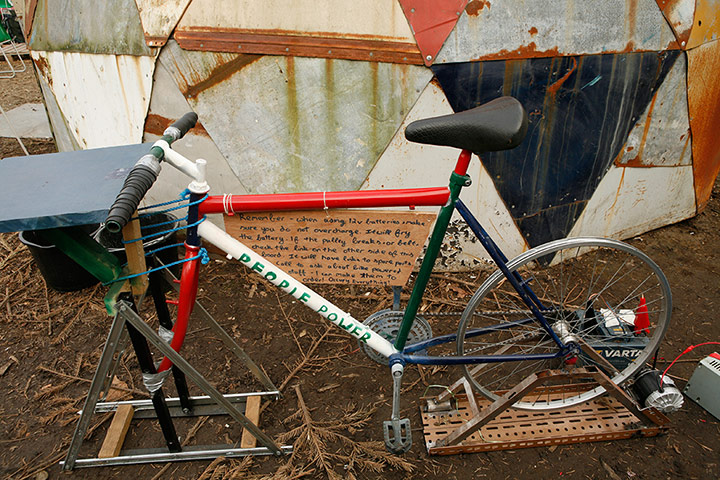
Granted, they had shown some initiative by turning a bicycle into a power generator. But in terms of creating a sustainable and long term power supply, it would probably turn out somewhat impractical - unless, that is, they fancy cities powered by people in hamster wheels? 

Still, hardly a blueprint for improving the structures of our society, this camp. If this Occupy group can't even manage an acre or so without turning it into the toilet from Trainspotting, then why should we listen to them harping on about how to structure society? Just imagine the state of our infrastructure, sewage, electricity, NHS, telecoms, etc., if these Occupiers were put in charge.

There's nothing wrong per se with turning on, tuning in and dropping out, provided one doesn't become a burden or a bother to others. However, not only does the ship of fools at Finsbury Square spoil public places and ask for handouts, they also have the cheek to belittle everyone else by declaring "Why get a job? I have an Occupation.

16th century ship of fools(Well, let's see. Jobs pay for 1) a roof, floor and four walls, 2) water for washing, 3) gas for heating, 4) electricity for entertaining and, most importantly, 5) food to sustain me. But you, on other the other hand, dear Occupier, choose to live in a tent surrounded by mud, refuse and discarded bits of dreadlocks.)

Similar wasters have of course always existed. However, from the Middle Ages up to the 17th centurybefore the French came up with asylumsrather than being allowed to plant themselves right bang in the centre of town, they were forced to wander the rivers and the wilderness

We need not be quite so strict these days, but - here's an idea - why don't these Occupiers petition the government and local businesses for a licence to use vacant properties? They could undertake a binding promise to leave the property in better shape than what they found it in. They could could do it up a bit, make it nicer. In short, they could add value.

The Guardian writes about a meeting that took place in the camp: 'In a bizarre act of protest, an older Occupier called Rob, shouting "fuck your process", left the meeting to fish a ukelele from a nearby tent, then sat strumming for the remainder of the meeting, to the annoyance of several around straining to hear.' This sentence, for me, reflects the camp and its relationship with London in microcosm.

The people being annoyed by the arrogant and selfish rogue playing the ukelele are us, the many, the real 99% who live or work around the Square. The bad apple, Rob, is analogous to the Occupy movement vis-à-vis London. He decided to unilaterally ruin it for everyone else, just like the Occupiers did with Finsbury Square. They have arbitrarily appropriated a public space and reduced it to their own private squalor in order to promote their singular political beliefs, whatever the cost to the larger community.

The malady

I"Protest and Communication", episode 6 of the sublime BBC series Civilization, Kenneth Clark looked at Drürer's famous work, "Melancholia I".

Albrecht Drürer, "Melancholia I"
He said of the engraving, created in 1514, that it was "one of the great prophetic documents of western man." It shows, Clark continued, "humanity at its most evolved. With wings to carry her upwards, she sits holding the compasses - symbols of measurement by which science will concur the world. Around her are all the elements of constructive action: a saw, a plane, pincers, and those two prime elements of solid geometry, the sphere and the dodecahedron. And yet all these aids to construction are abandoned, and she sits there brooding on the futility of human effort."


In the Late Middle Ages, according to Clark, melancolia had meant a simple combination of sloth, boredom and despondency. As radical as the "direct action" activists on Finsbury Square might fancy themselves, today's Occupy movement is actually captured perfectly by the engraving. They have in their lap the most powerful machine yet (the computer) and with it a key (the internet) to virtually every tool in history. But instead of utilizing these to make stuff with, or do things that could improve their communities, they sit down and bury their head on a table, their their talents wasting away in the muddy ground beneath their tents.


Occupy Finsbury Square, May Day 2012
Despondency in Finsbury Square
That is no route to progress. It is the opposite, in fact. Where the civilized man develops himself and improves upon his surroundings with a view to making them permanent, the savage merely looks around haphazardly to satiate himself now. The Occupiers have grown up cushioned by the welfare state and the Western life of luxury. As a result, they have little sense of direction, and even less of a work-ethic - instead, they prefer to act on the basis of an incredible sense of entitlement. It is because of these reasons that the movement, while admirable in intent, will ultimately fail.

The alternative

I have no doubt that there are many people living in the camp who have honourable ideas and who really want to make the world a better place. Indeed, I agree with many of the Occupiers' gripes. However, the path to wilderness is filled with good intentions, while the road to progress is paved with hard work. Plumbing, hygiene, waste management, taking care of one's property, construction, gardening, education, health care... that's the stuff that really matters. And as is evidenced by the unholy state of their camp, the Occupiers unfortunately prefer to spend their time and energy on more glamorous and intellectually stimulating pursuits, like discussing the international legal dimensions of eradicating ecocide.

Instead of transforming public spaces into a health hazard, these people should use their time constructively and find something that they can make into an occupation, something with which they can add value. These would be revolutionaries could have put up tents, and then occupied themselves in a productive way by figuring out how to improve and help the area, its people and its environs.  If they had done this, they would have gained more friends, and they might have made a real difference for the better.

The last time I walked through Finsbury Square was on my way to a concert by Terje IsungsetIf these Occupiers find it difficult to figure out what it is that they can give to humanity, they would do well to to ask him for some advice. Mr Isungset has made himself famous by playing music with instruments he crafted from birch, ice and stones, to name but a few novel materials. Now that's more like it - and Terje's incredible initiative contrasts glaringly with the the self-righteousness and laziness that are on display at Finsbury Square.

It is May Day after all, the day of the workers, so, guys, you really should get to work. And, please, leave our public parks just that: public.


29 April 2012

Higher states of consciousness


A red rectangle with a BBC logo has appeared in the forest, and one furry fellow is investigating it with gusto. At the risk of anthropomorphising, the bear must be wondering where this curious object came from and what it is. The chances of the bears having seen before anything quite like this object are slim to none, which quite likely has something to do with how in thrall he/she is with the colourful curiosity.

We featherless bipedals do the same, and perhaps did even more in the past. The myriad of explanations, thoughts and ideas to have unfolded as a result of our investigations into the things we come across are, to a great extent, what make us human. And there's a good chance, or at least it would be a plausible explanation, that our propensity to be inquisitive was spurred by a novel event or thing that in some way stopped us in our tracks.

Like what happened to our hominid predecessors in 2001: A Space Odyssey.


Whatever the shape of our metaphorical monolith, when we found it, we began to not just seek answers, but consciously create them as well. The Dawn of Man came the day we began to share the fruits of this labour. We had made the step from a private language to a public one, and we have been adding layer upon layer of complexity to our languages ever since. The work and thought of our forefathers can be seen, touched and heard today in our society, science, construction and culture; and it is incumbent upon us to continue the efforts.


Pardon the flight of fantasy, but instead of a higher state of consciousness using some unsuspecting bears to collect cutsey-points from an audience, what if our monolith had been something just as inconsequential, like a piece of scrap (or crap for that matter) from a passing space ship. A disused refrigerator, or a broken radioator, or whatever is probably being used out the somewhere in the vast expanse of space.


What if our most treasured, sacred and unifying concepts and beliefs were set in motion by the interstellar equivalent of a rusty hub cap? More to the point, would that make them any less important?

25 February 2012

Community ties

Wealth comes in many forms. Watching the people in this video ("The Cause of Labour is the Hope of the World", from the film The Miners' Hymns), it is difficult to escape the conclusion that, over the last few decades, spiritual wealth seems to have declined in almost direct proportion to the increase of material well-being.  A good example of this, I think, has been the proliferation of technological gadgetry, and the effect this has had on our communities.


Prior to the arrival of television, the little leisure time that townsfolk had was more than often spent together, at home, in pubs, on the streets, in parks, and so on. This social life - not to be confused with today's life as mediated by Social Media - along with community events like those of the miners had the effect of cementing the structures of society by binding people together through face-to-face interaction, which often resulted in relationships, a sense of interdependence and friendships.


TV, however, brought the whole planet and everybody else straight into our living rooms, thus bypassing the need to go out in order to meet people and hear the news, and instead allowing people to connect with the outside world from the comfort of their own sofa. In this way, the social unit became ever smaller, and by the 80's community experiences were being reduced from grand gatherings and street parties to family dinners or water cooler discussions about last night's soap opera.


At least scheduled programming and the need to prepare food kept people in the same psychological time zones, but even these unifying structures have begun to crumble over the last decade. Laptops, smart phones and on-demand entertainment in the palm of your hand, along with ready meals and fast food, are now doing to the family unit - the most basic building block of society - what TV did to the street community. Eating together, playing  together or even just huddling in front of the television in common anticipation of the latest episode of The Simpsons are fast becoming increasingly rare. Instead, today's individuals come, eat, play and go as and when suits their own timetables.


While technological innovations are surely not the only culprit, our social spheres have indeed become increasingly solitary over the last 50 or so years - and this has naturally lead to the fragmentation of society. Just compare and contrast our early 21st century town-life to the the people in this video. Dressed in their Sunday best, they look strong and cohesive; full of vigour, a sense of community and self-respect - not to be confused with its bastardised cousin: street "respec". Their purpose and drive are palpable, while the pride they take in their work is evident, and they also exhibit an awareness of something greater than themselves. 


These are all important components of being civilized - and they are all in danger of being lost amidst the blooming buzzing confusion of today's increasingly atomized world. So, if anyone knows of similar displays happening these days, do let me know - because it's moving stuff, people at their best. Enjoy (The video needs sound; hat tip, Eamonn).


12 January 2011

Choral Fantasies

Probably the most excited I've ever been without my beautiful wife was singing Beethoven's Choral Fantasy with the UCL Chorus and Symphony Orchestra at St Pancras Church in London. I was therefore intrigued to read about a new study into the way choral music affects us. 


Professor David Howard from York University has been trying to find a scientific explanation for how choral singers achieve that special "sparkle" or "shine" which, according to Edmund Aldhouse, assistant director of music at Ripon Cathedral, distinguishes the best singers from the talented ones.

Professor Howard's hypothesis was that "if we can hear a difference, we should be able to see something that will show us what the acoustic attribute is that means the brain hears it that way." The research was carried out in an anechoic chamber, enabling Howard's team to record only the purest tones without interference from ambient or reflected sound. It revealed that, when the best choral singers flexed their larynxess to achieve that sparkle, certain frequencies of their voices peaked repeatedly, while the other, less talented singers were unable to produce the same effect.


"In our experiments", he explains, "it looks as if that particular 'ring' is happening above the normal speech area, in the region of around 8,000hz." The effect is "something that makes you sit up, it's something that communicates with the soul." According to the BBC, a similar resonance has been found in older opera singers as well, albeit at a lower frequency.


Interesting stuff, I thought, and it made me wonder: why should a frequency above the range of speech make us sit up and take note? What evolutionary purpose could it serve; or did it reflect something else in us, something more ethereal? Beauty, the saying goes, is in the eye of the beholder - but could this ring Howard speaks of and the effect it has on us be an objective, quantifiable example of aural beauty?


History is of course peppered with explanations as to what makes something beautiful and what separates art from the mundane. Seldom, however, have they been put forward by scientists - for aesthetics tends to be the domain of philosophers, poets and artists alone.


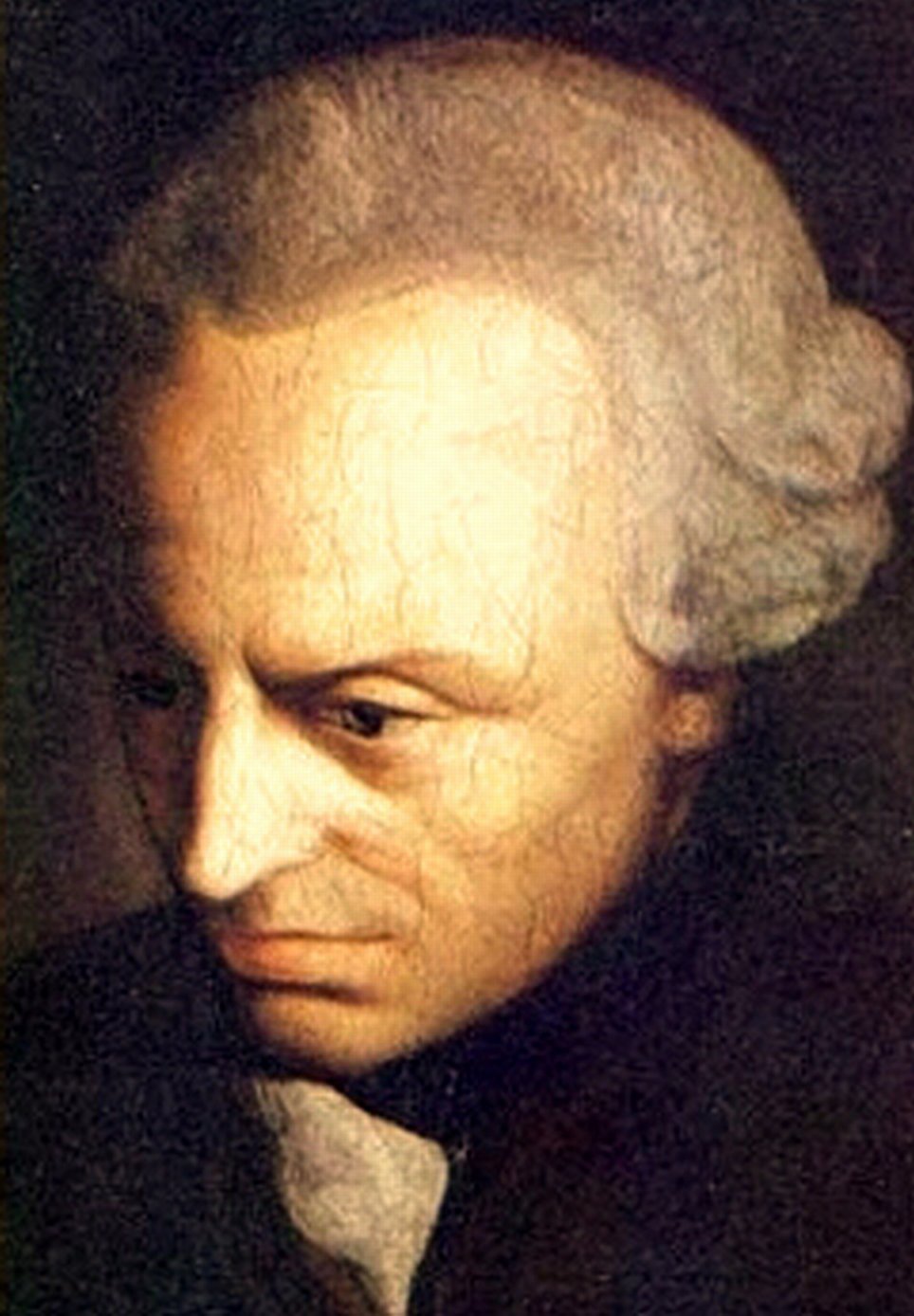
Immannuel Kant, for example, thought that beauty is something exhibited by things with distinct and tangible forms that please our senses: things such as flowers or a sculptures.


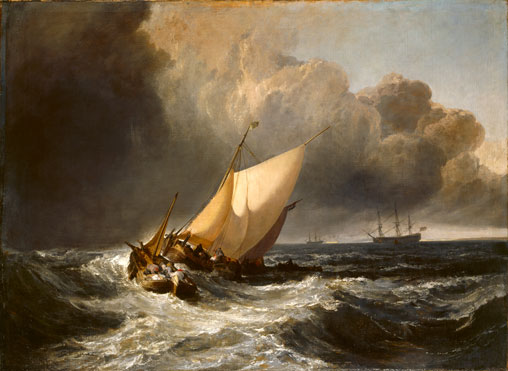
Choral singing, however, would belong to a different category alltogether, namely that of the Sublime, which is what this big brain from Koningsberg called those larger than life experiences that are so wondrous that they inspire awe and are simply beyond our grasp. A good example of attempts to capture this kind of fleeting profundity would be the famous works of J.M. Turner.


I would agree with Kant on this one, and even though many people today see little virtue in classical music, dare I say, they are just plain wrong: there is no aural equivalent to the visceral power of a full choir backed up by a symphony orchestra, no matter how much bass one might peddle.


J.M. Turner - Dutch Boats in a Gale (1801)


But I digress. We've all no doubt had a sensory experience which overpowered us in such a way that we find it difficult to convey with words. As Kant put it succinctly, the Sublime is something that we "cannot get our heads around." Likewise, the voice that Edmund Aldhouse seeks also defies explanation:  it's "just something you know, maybe not something you can define" - which, incidentally, is more than reminiscent of St Augustine's explanation for time.


G.W.F. Hegel, on the other hand, came to the opinion that beauty in art is an expression of our human ideal. Although a work of art expresses the individual who created it, along with the culture that brought him or her up, what makes it art per se as opposed to any other thing is that which makes it timeless; that which relates it to the progress of humanity. 

In this way, Hegel thought that through sculpture, music and painting we are able to transcend our temporal and geographical circumstances and get a glimpse of our Spirit, which was his term for the evolution of human consciousness.


Could, then, the peculiar resonance discovered by Professor Howard be a scientific explanation for what messieurs Kant and Hegel tried to pin down with their respective ideas of the Sublime and the Ideal?


It would, of course, be fascinating to see follow up studies in later centuries so that we could find out whether or not the frequencies change with time, but, leaving that aside, what reason could there be for such a musical threshold that separates mere melody from something more meaningful? Professor Howard is able to provide no real explanation for this, nor can he tell us what his discovery is: "It's way beyond words, it's way beyond the music, it's something about the content going straight from the brain of a singer to the brain of a listener."


Perhaps a poet could help were the scientist fails. In Bards of Passion and of Mirth, John Keats describes the song of a nightingale as "divine melodius truth" - in other words, truth untainted by the blunt instrument of language. Words can easily mislead, while Keats was of the view that melody provides "philosophic numbers smooth" because it does away with words and works therefore at a more immediate level.


Could it be, then, that melody and song are useful in ways we no longer appreciate? Perhaps we are simply too enamoured by our linguistic prowess to recognize the true value of other, more subtle ways of communicating.


It would seem so - at least if the next example is anything to go by. When flying in formation, the FA 18 Hornets of the Blue Angels are often separated by less than a metre. As they perform their death defying manoeuvres - led by the team leader rather than being fully choreographed in advance - at speeds of 500 knots and counting, the team can only be successful if they know what the lead pilot is thinking, when he's thinking it. There is simply not enought time for the team leader to use words for each bit of information, so his team mates need some other connection into his mind in order to act as an undivided, single unit. And melody provides them just that.


The lead pilot communicates with his colleagues by singing out his commands: a low drawn out voice denotes delicate changes to their movement, while a high pitched voice instructs the others of tighter twists and turns. Admittedly, this is just a system they've devised rather than some Vulcan mind meld, but the song of sorts does add a non-linguistic dimension to the team's communication. 

Anecdotally at least, this goes to show that instructions laced with melody are superior to words alone. In this particular case, the result is a supersonic harmony without which the jet-powered ballerinas would crash into each other before you could say oops.


In a similar vein to Keats, Paul Johnson opined that song is the high road into the mind of a bird - but the Blue Angels would suggest that this can also apply to us featherless bipedals. Indeed, whatever the reason, a melody sung well can often connect us intimately with its singer, without need for intermediary tools such as words, facial expressions or gestures.


This is because language uses concepts, ideas and relationships to signify and depart meaning, and we have to learn and know its rules, and then collate the whole lot into a message. Singing, on the other hand, is more immediate in how melody can bypass the alphabetical middleman and access our feelings more directly - which is what makes music a truly universal language. 

The listener might be wholly ignorant of the rules within music; they can have the musical skills of a cricket, and be as theory-wise as a bat, but they can still hear it, understand it and be affected by it in a most profound and meaningful way. While still the single most useful skill when it comes to survival, language is unable to replicate this feat because it demands too much inside knowledge.


Leonardo wrote that, "in art we are said grandsons unto God." Perhaps he was pointing to the same thing as Hegel, that in art we partake in our shared Spirit. And maybe it could explain what Professor Howard's special resonance is: a key that connects us to each other, and to all humans, from the first to the last.


Whatever the reason behind our fascination with music, one thing is certain, singing, listening and dancing, they make us feel good. I would argue that music doesn't just unlock the dopamines in our brain like chocolate does; that there is a deeper thing going on, of which dopamines are the effect rather than the cause.


Just look at people in a club or at a concert, individuals enjoying life inside the same musical bubble; or how, in action, a symphony orchestra becomes so much more than the sum of its parts; or how an angel choir can order the hairs on our neck to stand up and listen; or how we can understand the singer without having a clue as to what they're saying. On top of all this, music is also able to unify individuals and cultures in ways like no single language can, of which the Eurovision spectacle of 2010 is only one cheesy yet profound example.


In any case, maybe someone like Simon Cowell will one day pind down the je ne sais quoi that gives music its magic, but, until then, I'm content enjoying its fruits. Actually, now that I think of it, I should've just played you That Same Song by The Beach Boys:


This post is dedicated to Paul Johnson - thank you for And Another Thing.