Showing posts with label Politics. Show all posts

12 October 2014

What Chuka could learn from Malala

Congratulations to Malala Yousafzai on winning the Nobel Peace Prize jointly with Kailash Satya, who has also worked for the advancement of children's rights. Thoroughly deserved, and arguably a year late. She is a true inspiration and her ideas and how she expresses them  not to mention her courage  are so far beyond her 17 young years.

I got a chance to see her acceptance speech at the airport on Friday. The main thrust of her humble but powerful message was encapsulated by the simple idea that "we have to ensure every child gets quality education." Spot on.

It made me think of a piece I read the same day about a speech to mark Black History Week given in Brixton by Chuka Umunna. The Labour MP for Streatham highlighted the fact that, while 25% of Premier League football players are black, only 2% of club managers are, and there is not a single black director.

Quite a disparity, that's for sure  and Mr Umunna used it to argue for the introduction to British football of a "Rooney Rule", as in the NFL where clubs recruiting for managerial positions must interview a certain amount of candidates from minorities.

Such a rule might be a good step, or, perhaps, a necessary evil for Britain, seeing as society here is so stratified, with a structurally iniquitous system where children are educated in qualitatively different tiers: a golden ticket for the rich kids in private schools and a wooden spoon for everyone else.

But what if, instead, private education were abolished and each child were awarded the same quality education, as Malala so rightly advocates, then surely there would be less need for positive discrimination.

People would have received, for all intents and purposes, the same investment from the state or society or taxpayers  however you want to call it  with which each could then do as they wished. One's prospects for success would be more dependent on their own work, talent and determination than it would on family wealth. 

Parents should of course be allowed to nurture their children's talents with extracurricular activities and such, but they should be prevented from buying a better education, and giving their children a leg up, at the expense of the children of those less well off.

State education for every child provides a superb tool for decreasing inequality by sidestepping the role that family wealth can play in determining one's opportunities, and thereby increasing equality of opportunity. Furthermore, as Finland has shown, it does not need to be achieved by sacrificing quality.

Even though his intentions are probably good, instead of addressing the cause, Mr Umunna is simply replicating the problem. Positive discrimination is still discrimination  it is merely reverse racism. It gives individuals an advantage solely on the basis of their skin colour, ethnicity, sex or another trait beyond their direct control. Whereas Malala, at such a young age, already understands that the role quality education can and should play in our society. An equal education for every child  because Rights do not come in gradients. 

Giving each generation the same state investment, an equal start in life, would in time make a Rooney Rule and positive discrimination redundant.  I would hope that he and our other politicians focused on unleashing ability, effort and meritocracy by abolishing privilege, rather than substitute one form of discrimination with another. 

Ps. I am writing this on my mobile from about 11,500 metres somewhere above northern Europe while going home after an eventful weekend trip to Finland. Feels good to post from the sky!

8 October 2014

Immanuel Kant on late Kryptonite society, ants and private education

In the film Man of Steel, Superman gets a crash course on the history of Krypton from a computerised projection of his late father, Jor-El. Our hero learns that, before the planet went kaput, Krypton's social system was based on individuals being artificially bred in a “Genesis Chamber”. Superman’s father went on to explain that each Kryptonite child was thus “designed to fill a predetermined role in our society. As a worker, a warrior, a leader, and so on."

This brought to mind life in an ant colony, the quintessential example of diversification of labour based on birth rather than choice. A worker ant can never learn to become a soldier or vice versa, just like soldiers can never become a queen. Likewise, individuals on Krypton had to accept that their life choices were decided before they were born. As in an ant colony, a life on Superman’s home planet was not a chance to see, learn, experience, choose and do, rather, it was a role to fulfil, irrespective of personal preference.


A Kryptonite Genesis Chamber
Superman's parents, however, refused to accept this state of affairs. His father, Jor-El, and mother, Lara, believed that something precious had been lost through the adoption of population controls and the Genesis Chamber, namely, the "elements of choice, of chance… of a child dreaming of becoming something other than what society intended for them… of a child aspiring to something greater." By objecting to predetermination, in other words, Superman's biological parents were proponents of equality of opportunity.

This dichotomy of social predetermination on the one side, as exemplified by late Kryptonite society, and individual freedom on the other, as typified by the views of Superman’s parents, made me think of Immanuel Kant’s modestly titled work "Idea for a Universal History from a Cosmopolitan Perspective". 

Species specific skills


In this short but profound essay, the big brain from Königsberg argues that each type of plant and animal has a species specific skill or skillset that provides it a purpose and guides its actions. Kant thought that this biological USP is evident in the way every individual within one species behaves in the same way. So the goal of a tree, for example, is to reach toward the sun. For gazelles it is to stay alive by outrunning predators. For monarch butterflies it is to migrate, while sharks use their sense of smell to hunt and their and sharp teeth to eat, and so on. Animals just do what comes naturally to them – or, in modern parlance, animals do what gives them an evolutionary advantage. 

We human beings, however, are born into this world with few such inbuilt skills. We are weak and we break easily. We have no armour, no sharp teeth, no claws to keep us safe from predators or to help us hunt for food. We lack fancy skills like echolocation or magnetic field positioning to guide us around our surroundings. However, Kant was of the view that Nature, in her infinite wisdom, had decreed that we human beings must learn to create all of these things for ourselves – and for that she gave us a unique faculty among Earth’s life forms: Reason.

Diversification and progress through Reason


As a species, our innate advantage is learning through reasoning. Individuals within other species instinctively exploit their heritable traits – claws, speed, camouflage, and so on – to stay alive and multiply, whereas human beings alone, Kant thought, develop a huge variety of different skills and purposes for our lives. One man becomes a Formula One driver, while another a carpenter, another a plumber, another a lawyer  the possibilities are limited only by our population.

Moreover, Kant argues that Reason "does not work instinctively, but requires trial, practice, and instruction in order gradually to progress from one level of insight to another. Therefore a single man would have to live excessively long in order to learn to make full use of all his natural capacities." It is thus only through generations that humanity’s abilities fully develop, and only when the last human being has passed away will Nature have witnessed all of our capacities unfold.

In this Kantian view, whether to find one’s purpose in music, dentistry, car engines, computers, teaching, painting, nursing, or so on… that is the question for human beings. And this responsibility each of us must carry alone. To paraphrase Jean-Paul Sartre, humans are thrown into the world and we are therefore condemned to be free and responsible for everything we do.

So, in societal terms, Kant's vision for humanity is diametrically opposed to late Kryptonite society. The former is founded on freedom and responsibility, while the latter, like an ant colony, is based on predetermined roles that dictate each individual's choices and chances. 

Where, then, on such a spectrum of individual choice on one side and a rigid cast system on the other would our Western society fit in? Or, rather, on which side of the spectrum do we want our societies to be based upon?

Private schools prevent equality of opportunity

Although there is a growing and worrying trend in the West for designer babies, thankfully at least our species hasn't started using Genetic Chambers yet. But I would like to focus on a more immediate social phenomenon, namely, decreased social mobility resulting from a lack of equality of opportunity – because the more structural it becomes the more we move toward segregated societies like those of ants and… well, Kryptonites. 

The institution of private fee-paying schools in the UK and the US provides a good example of a structure that actively stratifies society by undermining, or perhaps even preventing equality of opportunity. It does so by segregating individuals into certain groups that, to a high degree, determine their outcomes. For group A – whose parents can cough up the fees – private education broadens the horizons and improves the prospects of their offspring. For group B – whose parents are unable to afford such fees – the quality of education that they can access is markedly lower, as a result of which the child’s opportunities are far narrower. 

Although the predetermination that results from your parent’s income bracket is obviously not as stark or rigid as that in an ant colony, the fact that there are two tiers of education that depend on your family’s wealth rather than your ability places our society at least a few steps in the direction of a predetermined cast system. And as much as those working in private schools might disagree, one type of education for the rich and another for the poor and middle classes reinforces a state of affairs where a portion of the population is fast tracked toward success, while the other sections are forced to work far, far harder for a chance to achieve the same levels of success. 

Indeed, a recent study found that, in the UK, just 7% of members of the public attended a private school. Nonetheless, alumni from private education counted for 71% of senior judges, 62% of senior officers in the armed forces, 55% of permanent secretaries in Whitehall, 53% of senior diplomats, 50% of members of the House of Lords, 44% of people on the Sunday Times Rich List, 43% of newspaper columnists, 36% of cabinet ministers, 33% of MPs, 26% of BBC executives and 22% of shadow cabinet ministers. 

I find it difficult to believe that these people are somehow innately smarter or more capable than their state school peers – and it is surely more reasonable to think that it was their superior education that made them better qualified for such high powered positions.

Of course, there is no such thing as a perfect competition, where everybody could set off into their lives from the exact same starting point, except perhaps in economics or in the minds of Utopian idealists. Some families have accumulated more wealth due to their own initiative and hard work, through competing and winning. There is nothing wrong with that nor is there anything unjust about inequality that is the result of merit.

Competition brings out the best in us

In Kant's view it is actually Nature's way and a positive thing to work hard toward having a better lot than the Joneses because such competition is the engine that propels humanity's drive toward progress. Without competition, he argues, “all the excellent natural capacities of humanity would forever sleep, undeveloped.” It is this natural inclination toward competition that compels us to strive for a higher vantage point, even when we are standing on the shoulders of giants. 

That said, unfettered competition can over time cause inequalities that were initially based on merit to turn into structural fault lines that begin to predetermine societal position, wealth and/or opportunity. In the words of the economist du jour, Thomas Piketty, when "the rate of return on capital exceeds the rate of growth of output and income, as it did in the nineteenth century and seems quite likely to do again in the twenty-first, capitalism automatically generates arbitrary and unsustainable inequalities that radically undermine the meritocratic values on which democratic societies are based.

Indeed, it is easy to see how an Establishment can arise only to then pull up the ladder from underneath them. Those at the top will strive to stay there. As Kant puts it, man being a reasonable being “wishes to have a law which limits the freedom of all, [but] his selfish animal impulses tempt him, where possible, to exempt himself from them."

Ants must accept that their biology causes distinct casts within a colony, but, for human beings, the only thing required for the abolition of socially unjust structures is willpower; and the only thing preventing it is vested interests. One can argue that a status quo with two-tiered education is just the way it is, that the rich will never give up their private education, their golden ticket to an (economically) easier life. But we should not bow down and accept the status quo. History has seen far greater shifts toward justice and equality than it would be to ensure every child gets the same level of education, an equal start in life. (And you only need to look as far as Finland to see that this can be achieved without compromising the standard of education.)

Moving in the right direction


William Wilberforce,
proponent of equality
An example would be the abolition of slavery. It must have been unthinkable to the majority of early 19th century Britain that slavery, an institution so fundamental to their economy, could be prohibited. And it must have taken an awful lot of energy and perseverance for William Wilberforce and the Clapham Sect's revolutionary idea of ending slavery to gain traction and then become a reality, first in the British Empire and gradually thereafter around the world.

But their work paid off and society became a fairer place. Their campaigning caused humanity to take a giant leap toward  individual freedom and the more equitable end of the spectrum between predetermination and choice. Granted, we may still be landing from this jump today because the echoes of institutional racism can still hinder equality of opportunity when it comes to minorities, but at least we are moving in the right direction.


Jor-El, defender of equality of opportunity
Just as Superman's parents had the right idea and as William Wilberforce and Rosa Parks and countless others who championed the rights of the oppressed, we should not just accept the world as it is. We should never forget that all social structures, whether patriarchy or feudalism or slavery or capitalism or  private education are, after all, arbitrary and result from historical choices and flukes, rather than from some in-built human necessity to organise ourselves in a certain way. 


Equality of opportunity, the least worst system

Although Kant was the first to admit that "from such crooked wood as man is made of, nothing perfectly straight can be built", we should nonetheless strive toward improving our social systems and the structures that underpin them.

We have an opportunity today to continue the work of past champions of individual rights by abolishing private education and instead awarding each child the same, high standard of education. In so doing, we would be giving every human being an equal chance to find and unlock their full potential. On this, I think Superman’s parents would agree with the big brain from Königsberg.

Previous shifts in social structures toward a more just system – universal suffrage, banning slavery, state education, public health care, to name but a few glorious examples – give hope that, finally, “after many reformative revolutions, a universal cosmopolitan condition, which Nature has as her ultimate purpose [for humankind], will come into being as the womb wherein all the original capacities of the human race can develop.

13 September 2014

On Boris and Party Politics

So, Boris Johnson has been selected as the Conservative candidate for Uxbridge and South Ruislip. Parachuted into Parliament would be a fitting description as the Tories have won the last thirteen Parliamentary elections in Uxbridge. And now with Boris – arguably the nation's favourite politician – on the ticket, the Tories' winning run in this North West London constituency will almost certainly continue.

Boris' volte face

I used to be a big fan of the bumbling but equally charismatic Bojo. His seemingly unrehearsed soundbites and unguarded soliloquies are usually entertaining, often even rapturously funny. Boris seemed to stand in stark contrast to the Play Doh politicians dominating politics these days, those forked tongue politicos like Cameron and Blair, whose actions and policies are based on political expediency, rather than what's best for their electorates. Their kind are perhaps best described by Groucho Marx's famous quip that "those are my principles, and if you don't like them... well, I have others."

Alas, during the London Mayoral election, Boris promised, solemnly vowed and committed to not stand for Parliament should he be elected. Each statement, as of yesterday's news, he has now broken. This puts him firmly in the same group of charlatans as Cast Iron Dave or "When-it-Becomes-Serious-You-Have-to-Lie, Junker." Boris broke his explicit promises for personal, political gain. As a result, for the remainder of his term Londoners will be getting a part-time Mayor – which we did not vote for – while, if his candidacy succeeds, Uxbridgers will get a part-time MP (that, of course, would at this point be their own fault). The only ones to really benefit from his duplicity are Bojo himself and the Tories, who gain the gold dust that is brand Boris for their general election campaign.

But what I really wanted to write about here is not two-faced-Boris. Instead, I wanted to focus on our party political system of governance. My questions are: what makes Boris a suitable candidate for Uxbridge and South Ruislip in particular? Wouldn't he be better experienced to represent his home borough of Islington or even Oxford, where he spent his student days? Other than Heathrow, which is located in the Uxbridge constituency and of which he no doubt knows plenty (wanting to close it down in favour of his vision for an estuary airport, Boris Island), how invested is he in Uxbridge and South Ruislip? Moreover, what knowledge or experience does he have of life there, of the particular issues and challenges faced by its inhabitants, that make him the prime candidate to represent them at Parliament?

The incumbent MP, Sir John Randall, was born in Uxbridge, which surely classifies him as being au fait with the ins and outs of this corner of Greater London. Also, one of the candidates shortlisted by the Conservatives to replace Randall was Simon Dudley. Mr Dudley, currently councillor for Maindenhead-Riverside, actually lived in Hillingdon, Uxbridge, for 18 years. One would think this time and experience would be a considerable advantage on the CV when applying to represent the area? Or how about another shortlisted candidate, the current Deputy Leader of the London Borough of Hillingdon council – yes, that Hillingdon, the one in Uxbridge – David Simmonds? Surely both of these gents had more knowledge of the constituency, along with a real personal connection and even investment in the area, than the candidate elect Boris? Had they not more merit to represent this particular seat?

Party Before People politics

But herein lies the crux of the matter, merit wasn't the decider in Uxbridge and South Ruislip, contacts were. The two better qualified candidates wouldn't have served the interests of the Party as well as the blonde bigwig that is Boris. After all, the point in Party Politics is not what is best for the electorate – who our representatives purport to serve—but what is best for the Party. The Party is where our MPs (independents excepted) allegiances truly lie. It is the Party who they really serve. Party political power, and retaining it—that is what defines the UK's current version of democracy.

Boris himself extols the Athenian virtues of meritocracy, quoting, for example, Pericles on the ideals of Athenian democracy: "preferment for office is determined on merit, not by rank but by personal worth." But could Bojo honestly argue that, as a part-timer with virtually no previous connection to the place, he is better qualified to serve the interests of Uxbridge than a full-time councillor with years of expertise gained from working for its people, for their interests? Or is he better qualified than a councillor who has 18 years of living experience in the constituency in question? I would be interested in hearing his answer.


Indeed, what has happened in this case is power being handed to an outsider at the expense of those more deserving. It is but a slightly democratised version of the kind of feudalism created by the Norman king William the Conqueror (1028-1087). In order to consolidate his grip on the newly conquered lands, he too parachuted to the castles and important posts of 11th century England his personal friends and loyal vassals who would bid his will come what may.

Of course, a big difference to Norman England is that Boris still needs a majority vote before becoming a Member of Parliament, but we live far from a democracy based on merit where every one has an equal opportunity to stand for election and lead their community. Our Party Before People system is more akin to the People's Republic of China or Iran, where the Communist Party or Guardian Council respectively chooses the candidates that can be voted for. Thus, a chosen few effectively weighs the outcome of the election so that only preselected candidates have any realistic hope of winning.

Of course, in England anyone can put themselves forward as an independent candidate, but the political machinery of the main parties and the block voting power they will hold in Parliament make it all-but impossible for independents to be chosen for Government or really affect the country's political agenda. So, in reality, being parachuted into a safe seat, as has happened to Boris, isn't that different from a feudal monarch filling seats with his trusted minions.

Government is no place for musical chairs 

Another, slightly tangential, example of our Party Before People system of democracy is that calculated and cynical act of political expediency over long term electoral benefit which we call the reshuffle. The reshuffle this past summer, for instance. saw the replacement of several Cabinet Ministers with newcomers. Perhaps the most high profile position that was shuffled about was that of the Education Secretary.

Now, leaving aside Michael Gove's policies, my question is, who benefits most from this reshuffling? Is it the UK education system, which gets a new boss in the form of junior Treasury minister, Nicky Morgan, with no professional experience of the education sector and only a year to learn the ropes before then being replaced with another newbie? Or the Conservative party, which can make political capital by getting rid of the more experienced minister, but one that had made powerful political enemies, and potentially get more women votes in the process? While politically expedient, reshuffles just cause brain drain, disruption and a need to retrain. It is difficult to see any advantage here for the electorate.

It would surely be more beneficial in the long term if each party had to outline in their manifesto, in advance of a general election, those ministers who would hold each Cabinet post for the duration of the Parliament (provided there was no gross misconduct or such, of course). But that would take away from the Party an important tool, ever so useful for calibrating their machine toward electoral success, regardless of the effects on the public interest and the work they are supposed to be doing.

Other ways

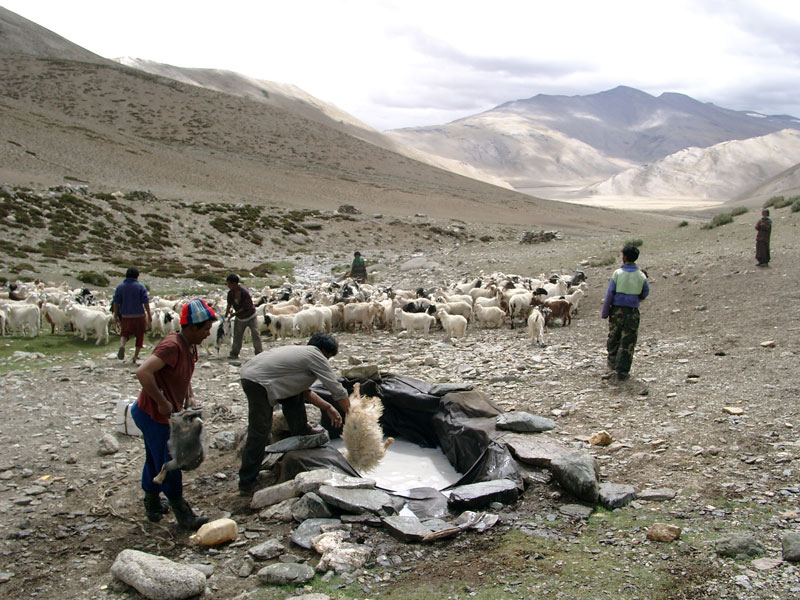
Another quote from Pericles via Boris: "We rightly dwell today on the imperfections of Athenian democracy; and yet no modern democracy is perfect." Indeed. Would that we could govern our communities like, for example, the nomads in Ladakh, high up in the Himalayas. Here the villagers elect a leader for one year and one term at a time. The elected leader then does their best to guide the community's choices and work before relinquishing the job—often quite happily, as it happens—to the next leader. In the film Stone Pastures, we see this form of democracy in action and the responsibility and pressure it puts on the bearer. In Ladakh at least each and everyone has a chance to lead the community and there is no Party dictating who is eligible to run or who people can vote for.

Or, another example Boris would certainly be aware of, the Ancient Athenian political system. Even with such unjustness as only allowing men of property to vote and stand for public positions, it did have at least one distinct advantage to the "democracy" that we experience: there were no political parties.

For those allowed to take part in political decision making, the citizens, it was one-man-one-vote. There was no preselection, no pre-agreed block voting. Athenian democracy also had a secret weapon against corruption, the Kleroterion. This lottery machine was used to form juries and select citizens to state offices. It made block voting virtually impossible by randomizing the group who would be allowed to take part in any particular vote. Our system, on the other hand, with its institution of party "Whips", whose job it is to ensure that party members vote according to official party policy, actively promotes Party Before People politics.

That great sage of the Athenian age, Plato (427-347), correctly identified that true democracy was more suitable for relatively small city states because the sheer logistics of decision making required to govern a large population would necessitate professional politicians. The expertise of "Politics" would become more important than governing or knowledge of the area or the electorate or the portfolio... This is because politicking is more useful for securing an election and therefore one's job.

Enter our form of representative democracy, as in Uxbridge, where the pro-politician gets the leg up from the Party machine ahead of candidates with proven local expertise.

Shifting power from the Party to the People

Now, warts and all, our system in the UK is still a good way on the road to a meritocratic and equitable political system, but here are a few thoughts on how to reduce the incentives of Party Politics in favour of accountability and long term benefits for the electorate:
  1. Political Parties should not be allowed to appoint candidates. Instead each candidate must garner a certain percentage of "thumbs up" from the electorate they hope to represent (today's technology would make such crowd-sourced mandates easily achievable—eg see here).
  2. Each candidate should have a demonstrable connection with the constituency they are hoping to represent, through birth or throughliving there or working there.
  3. Each party should be required to assign Cabinet posts before general elections.
  4. To receive a Cabinet portfolio, ministers should have demonstrable experience of the department or industry in question.
  5. Reshuffles should not be allowed, unless some crisis (war, death, proven corruption or misconduct, or such) necessitated it.
Just a few ideas that could make political parties more accountable, increase the amount of professionalism (real world, not politico) in government and incentivise longer term thinking, rather than focusing on how to get voted back in.

The current political system is calibrated in favour of political parties rather than the demos, which should be addressed immediately. Our semi-feudalist democracy serves political parties and vested interests first, and only second the electorate. We should aim for true democracy that would serve the interests of everyone, and give each and every one of us the possibility to lead our communities. Candidacy to lead a community should not be based on contacts, it should be based on merit.

***

UPDATE: Guido Fawkes brings us this similar story of Labour parachuting their chums into Parliament, ahead of local candidates.

19 January 2014

From a county show ox to the possibility of direct democracy

In 1906, visitors to the West England Fat Stock and Poultry Exhibition were asked to estimate the weight of a live ox after it had been slaughtered and dressed. Upon analysing the results of this competition, the Victorian polymath Francis Galton noticed a curious thing: the average of everyone's guess wasn’t just closer to the correct answer than the winning guess; it was also more accurate than any of the expert judges.

Quoting this and subsequent scientifically more rigorous evidence, the program Ultimate Swarms (BBC 1) argued that animals which exhibit collective behaviour are at their strongest when there is no single leader. This is because individuals, however capable, are nonetheless fallible. A collective, on the other hand, is able to counteract and mitigate the consequences any singular errors.

Intelligence in numbers


This holds true, for example, when looking at the evasive actions of a shoal of tuna, twisting and turning in an effort to outmanoeuvre animals of prey. Even if a few unlucky fish end up as lunch, the aggregate of each individual action produces a highly responsive defensive unit – indeed, one that is far more formidable than if the shoal were directed by a single lead fish.

Honey bees also take advantage of this collective intelligence. For example, when the time comes, it is not the queen bee who decides the location of the colony’s next home. Instead, this decision – vital for the survival of the group – is a communal choice. Upon discovering a potential nesting site for the colony, the worker bee will report back to the beehive and promote their find with a "waggle dance". This form of communication imparts information to the rest of the hive about the location and features of the newly found property. The winning dance – the one that excites the colony the most – will determine the location of the collective’s next home. A kind of bugs life X-Factor indeed.


But back to the ox and the county show in Plymouth. After realising that the median of all the guesses came to within 0.8% of the correct weight, while the average came even closer and was also more accurate than the experts, Galton reasoned that, "according to the democratic principle of ‘one vote one value’, the middlemost estimate expresses the vox populi, every other estimate being condemned as too low or too high by a majority of the voters”. 

Now, if this vox populi identified by Galton arrives at better answers than our so-called experts, and studies in swarm intelligence point to group decision-making being favourable to actions directed by a single leader; then what does this say about our reliance on individuals to ultimately decide the direction of our communities?

Thankfully, we in the West at least are able to vote in our leaders, but human collectives tend to still be guided by a singular brain, whether it be a PM, President or dictator. Our current system for collaborative action endows our rulers with the authority to weigh and consider the available information in order to arrive at decisions that will then affect us all. However, it's still just one individual making the final call.

Online to the rescue
In the wired parts of our world, however, there rests a gadget in virtually every gentleman's pocket and each lady's handbag that could be utilised to capitalise on our collective intelligence. 

Moreover, the daily routines of most of us already include posting statuses, checking tweets, and dealing with all manner of online chatter.  It shouldn’t, therefore, be too burdensome for each of us to have a civic obligation that would regularly poke us into thinking about a subject to do with our communities, hence, our own lives. 

It could be as unobtrusive as receiving an email, text or Facebook notification requiring us to vote for a collective course of action by clicking on “like” or “dislike”. Such e-plebiscites could take the form of questions, such as "should speed bumps be installed on street Y?", or "should land X of this council be used to build a shopping centre, business centre or park?", or "should this council buy energy from wind farms or shale gas producers?"

The user interface could be a simple page showing the question, and a button or two with which to assert one's position. The resulting votes would then be calculated by a Google-type number-cruncher.

  Each adult could own a civic profile ("Civicbook"?) connected to their council, allowing them to only vote on matters directly relevant to their lives and to their communities (and perhaps a national equivalent for larger and broader questions).

Every adult member of the body politic would also retain the power to bring up issues for debate, as already happens with the online petitions in the UK that can trigger talks in Parliament. And every time a citizen were to create such an e-plebiscite, it would be permanently displayed on their profile  resulting over time in a history that would flag up any conflicts of interest, thus bringing transparency and long-term accountability to our political interactions.

Such a Civicbook should also allow everybody to browse questions posed by others and to pick causes to "like" or "dislike".  Collectively agreed-upon rules would then dictate the frequency of these e-plebiscites and the threshold for "likes" that would trigger a referendum. 

There should also be a statutory duty forcing people to take part regularly, at risk of losing some commensurate privilege, right or benefit; not necessarily compelling us to vote on every question, but at least on an agreed-upon number. 

The thing is, this is far from some idealised techno-fantasy – indeed, a form of direct democracy similar to this is already practiced in Switzerland. Elections and referenda, increasingly often electronic, on all types of issues take place four times a year in each Swiss canton (about equivalent to our councils). 

Swiss citizens are able to, for example, demand popular votes, amend the constitution and even veto laws and spending bills through these referenda. The relatively small size of the cantons (in effect, peer pressure) and, in some places, fines for not taking part in elections ensure that everybody has an incentive to fulfil their duty.  

Likewise, the citizens of Iceland were allowed to draft their new constitution via crowd-sourcing – as is now also being advocated for the UK in a new project at the LSE.  So the technology already exists – what is missing is the political will. Our leaders and decision makers need not worry about their livelihoods, however, as we'd still need experts to analyse, inform and galvanise the population on the relevant questions of tomorrow.

Even so, as Galton opined about the county show competition, “the average competitor was probably as well fitted for making a just estimate of the dressed weight of an ox, as an average voter is of judging the merits of most political issues on which he votes. 

How to define "Politics"

The question is, how prudent is it for us to outsource our stakes in society to career-politicians – with their party political responsibilities, ideological agendas, vested interests and core voters – when these days we could so easily each wield the power ourselves? 

Moreover, the zigzagging, even schizoid dynamic of oppositional politics – the governing party moulding the country according to their proclivities, the opposition trying to undermine them, only for the roles to be reversed after a Parliament or two; and repeat ad nauseam – seems far from an efficient or productive system for guiding our societies toward sustainable and long-term prosperity. 

If we each had the exact same amount of say, in no way mediated or determined by whichever party made it into government, it would seem to follow that there would be a lot less, if any, need for the kind of arrogant partisanship and ignorant tribalism that so often goes for "debate" amongst the political classes, the MSM and, in particular, online comments sections. Merriam Webster offers several definitions for Politics

Here are two:  “Activities that relate to influencing the actions and policies of a government”; and “Getting and keeping power in a government”. The former, in my mind at least, would better describe this type of direct, power-in-the-palm-of-your-hands politics. 
The latter, meanwhile, reflects rather aptly our current, depressing-for-most-but-lucrative-for-a-few party political system.


We are incredibly lucky and privileged to be alive at a time when the power to influence our societies could reside equally in each and every individual. Indeed, modern technological advances are bringing us the opportunity to consign to the dustbin of history  where it belongs with such other iniquitous systems as feudalism and imperium  our paternalistic form of representative democracy. 

These days, a large scale state run by an electronic form of direct democracy is a real and distinct possibility, one that even Plato might have approved of

A single official – democratically elected or otherwise – is always prone to such quintessentially human traits as vanity, greed or being fallible, as are we all. So, when it comes to questions that affect communities, societies and countries, wouldn't it be more prudent to trust the votes, so easily collectible these days, of everyone affected in order to arrive closer to the optimal solution? Swarm intelligence, Galton’s vox populi and Equity  one vote, one value  all seem to suggest it would.

14 October 2012

The EU wins the Nobel what prize?

On Friday, the Norwegian Nobel Committee awarded their highly coveted Nobel Peace Prize to the European Union. According to the Committee, the "union and its forerunners have for over six decades contributed to the advancement of peace and reconciliation, democracy and human rights in Europe."

Well, yes, the EU has done a lot of good. The free movement of people, for instance, has given Europeans the possibility of voting with their feet. Despite what the Daily Mail would have us believe, this right to move will force governments to raise their game. And red tape emanating from Brussels risks stifling growth, but the common market gives European businesses the opportunity to branch out into new markets – a nice by-product of which is enhanced consumer choice.

But the Noble Peace Prize? Seriously? Have the Nobel Committee been living on the bottom of a fjord for the last five years?

Referring to the close ties that exist today between France and Germany, those all too often warring neighbours, the Committee reasoned that "through well aimed efforts and building up mutual confidence, historical enemies can become close partners". That is all well and good, but the EU's current policies seem designed to foster distrust and drive regions apart.

Rather than strengthening national ties, as the Nobel committee would have it, the EU's answer to the sovereign debt crisis has resulted in a gradual but sustained erosion of trust between North and South, ditto rich and poor.


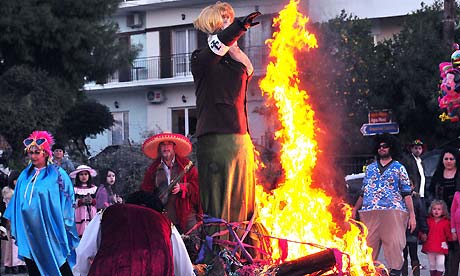
De facto EU policies such as favoring of austerity over haircuts for investors, and pushing elected leaders into early retirement, have led to a steep and unfortunate rise in support for nationalist and extremist parties and attacks on foreigners. Crude, prejudicial caricatures of national stereotypes have made a return to many a broadsheet. We have even become accustomed to seeing flags and effigies of our leaders being burned on European streets. 

The foremost reason behind this rise in distrust and animosities is the fiscal imbalance caused by the EMU. It has plunged some of the Eurozone countries, Greece and Spain in particular, into unemployment, civil unrest and violence, while enabling the so-called core countries (Germany, France, the Netherlands, Finland) to live in relative luxury. Their citizens, on the other hand, are becoming disaffected by a growing perception that their taxes are paying for the economic mismanagement of their Southern neighbours. 

The result of this terminal tango has been poverty, distress and paranoia in the South; wealth, resentment and xenophobia in the North. Devising and enforcing such a divisive economic system, that by its very nature creates winners and losers and then sets out to reinforce the disparities, doesn't, to me at least, sound like Nobel Peace Prize territory.

We could also point out to the Committee that less than 20 years ago, on European soil, this harbinger of peace failed to both prevent and bring to an end the vicious and bloody wars in the Balkans. While Brussels was busy setting up the EMU, Europeans were witness to humanitarian atrocities (cf Sarajevo) and very real attempts at genocide (cf Srebrenica). It was left to the US and NATO to bring to an end this tragic chapter in European bloodletting.


But, putting aside all of the above, the prize still doesn't make sense. If the Panel wanted to award a human endeavour that produces stability and fosters peace, the rightful winner would have been liberal democracy. The panel have confused cause with result. There is not a single case of a liberal democracy fighting a war against another liberal democracy: the EU did not create the 60 years of stability on our continent, it was born of that peace. 

Even with such noble roots, these days, the EU disregards cooked books when it served its purpose (cf Greek entry), turns a blind eye to huge overspending by member states (cf rules on deficits), interferes in the democratic process of sovereign nations, refuses to disclose its own accounts for public scrutiny, and brakes its own rules without batting an eyelid (cf bailing out countries).

It has, of course, been a difficult few years, but it is exactly at such times – when the going gets tough – that an institution's true nature will show. On the same day as the Prize was awarded, a more deserving recipient of the Peace Prizethe Dalai Lama, tweeted that:

"Peace isn't the mere absence of violence; real peace must come from inner peace. And inner piece comes from taking other's interests into account".

In this respect, the EU has failed miserably.

An example of a more worthy winner would have been Malala Yousafzai, the 14 year old girl in Afghanistan who is fighting for her life after being shot in the head on her way to school by the Taliban. Her crime, according to the sick and twisted perpetrators, was to promote equality between the sexes. Already at such a young age, she has paid an incredible price for promoting peace and equality, and for having  the courage to stand by her convictions.


The only rational explanation that I can think of, for awarding the Peace Prize to the EU and not Malala, for example, would be that the oil rich and impeccably mannered Norwegians wanted to help their financially embattled neighbour with a donation of €750,000. The prize, in any case, will no doubt be swallowed up swiftly by the beaurocrats, MEPs and special advisors in Brussels. The inhabitants of the European Union, meanwhile, suffering from an economic catastrophe created by their leaders but facilitated by the EU, will more than likely become increasingly marginalised and disenfranchised.

The Nobel Committee has, it must be said, previous form in picking unlikely winners. It was a surprise to most when Obama received the Peace Prize for little more than a a handful of speeches – after which, we should remind ourselves, he increased drone strikes, drew up an official 'kill list', and ordered extrajudicial assassinations on foreign lands. This peace maker even basked in the publicity. Go figure. But at least the hypocricy wasn't quite as rank as Gaddaffi's Libya chairing the Human Rights Commission

Perhaps Mao had a point, that political power rests in the barrel of a gun. I'd hope not, but one thing is depressingly clear: when it comes to the decision making organs of our global institutions, the Nobel Committee included, politicking, backhanders and favoritism tend to trump facts, justice and historical accuracy.

The EU winning the Nobel Peace Price? Please. Alfred must be turning in his grave.