Part 1
Setting the tone
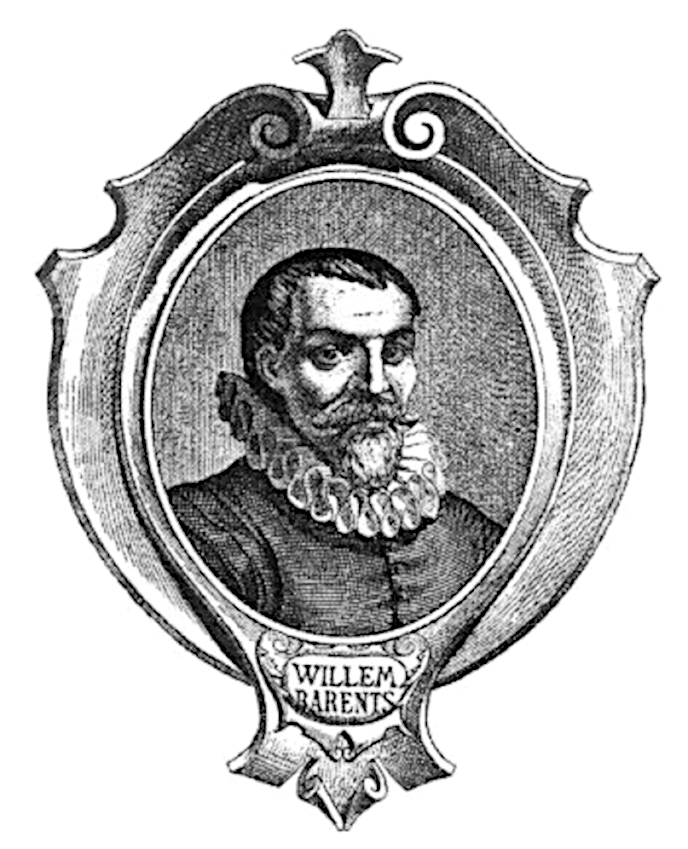 |
| Willem Barentsz |
Instead of finding the Northeast Passage, however, Barentsz's vessel was surrounded and then captured by the arctic ice. The 16 crewmen were forced to overwinter in this far-away land of extreme cold and dark.
 |
| Barentsz's ship stuck in the polar ice |
Such was the winter freeze at the 78th parallel that, when huddling up to the fire place, the crew's socks would catch fire before they managed to warm up their feet. It must have been a blow to morale when, early on, their beer froze, bursting the casks. Still (or perhaps because of this blessing in disguise), Barentsz and his men managed to survive in the frozen northern wasteland.
The following summer, on 13 June, the ice finally eased its vice-like grip and Barentsz's men, riddled with scurvy, set course for home.
Unfortunately for Willem, the damage had been done, and he died just seven days into the journey home.
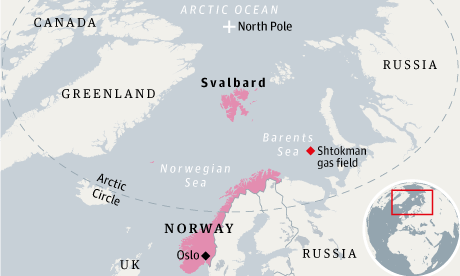
This story of discovery and daring ending in hardship and tragedy would be repeated time and again on the Svalbard archipelago in the far north, just 1300 kilometres from the North Pole.

First impressions
On the descent to Svalbard's capital Longyearbyen, the first and only things one can see are mountains, sea and ice. From above, the mountain range looks nothing out of the ordinary, but having landed at Longyearbyen airport, the first things that struck me was how arid this place is. Not a tree or bush in sight, just lifeless, slate-coloured peaks rising up some 500-800 metres from the green glacial waters of Isfojrden.The palette of the landscape could be described as what's left after all the colours we might associate with life – the greens of trees, yellows of flowers, reds and blues of berries – have been removed. The word moonscape comes to mind, and this impression is accentuated by the town itself.
The buildings fit neatly into two categories: warehouses and bunkers. The beachfront and port have the former, the town the latter.
Everything is built to be robust and functional. Although the houses display the familiar bright Norwegian colours, they are much smaller, stockier and lacking the elegant touches of large balconies and outside decorative features one sees on the mainland. In Svalbard, form follows the primary function: to survive against the unforgiving elements.
Unfortunately, though, even these houses aren't impervious to the extreme environment. On 14 December 2015, for example, an avalanche destroyed 10 homes in the town after four metres of snow fell during the worst storm in 30 years.
Our guide, Mårten, told us of the night and how the town rallied to help. Some 100 people tried to dig out the snow as fast as humanly possible in 5-minute shifts, with dozens more waiting to step in the moment anyone's strength started to flag.
Many were saved thanks to their neighbours' hard work, but a 40-year old man lost his life as it had taken some 36 hours for the rescue workers to dig him out, and five children and four adults were injured, three of them seriously.
The houses were destroyed beyond repair, so they were removed. Today, 10 months later, the footprint of tragedy has been turned into a place of joy, a childrens' playground.
 |
| The empty plots left by the destroyed houses are visible on the bottom left |
In addition to the main grocery store, there are sports equipment stores (all of which have large selections of guns on display), a few gift shops, a childrens' school and hospital.
In contrast to the typical Nordic main street, Longyearbyen has a much more no-time-for-nonsense feel to it. It is clearly a frontier town. Snow bikes, bits of machinery, tractors, metal forms of all kinds lay strewn across the town.

A quote from Peter Adams at the Svalbard Museum in the University Centre put it well, "the streets of Longyearbyen have no names, they have numbers - grown men do not build houses in streets that are named Blueberry Road or Teddy Bear Yard".
From light to dark
The season of the midnight sun ends tonight and the days will start getting shorter after four months of uninterrupted sunlight. Within two months, the polar night will have taken hold and the sun not rise at all between October 28th and February 14th.The constant pitch-black darkness during winter plays havoc on the inhabitants. In addition to vitamin D deficiency, the dark season causes Polar T3 syndrome. Its symptoms include forgetfulness, cognitive impairment and mood disturbances.
Mårten told us of how, last winter, he went to the shop to buy eggs and milk, but on returning home he must have put his clothes back on and gone to the shop again to buy eggs and milk, ending up with two sets of both, but with no recollection of the first trip.
Although the temperatures are relatively mild considering its latitude, rarely going under -30ºC thanks to the Gulf Stream, the constant night slows down everything and everyone. (Finnish and Swedish Lapland, by comparison, some 800km south of Svalbard, often experience deep freezes of -50ºC and below.) People walk slower, work slower, do less – like the bodily functions in hibernating animals, life remains on hold.

A timeless landscape
The name Svalbard comes from 12th century Norse accounts of "Svalbarð", or cold shores. It's disputed whether the reference was to Svalbard or Greenland, but either way the archipelago is far older than ancient.This barren and northernmost collection of islands we see today between 74 and 81 north latitude and 10 to 35 east longitude began its journey toward the north pole some 400 million years ago, from somewhere south of the Equator.
Since then, the islands have travelled through tropical climates; they've been sun-scorched deserts; submerged under water... you name it, Svalbard's done it, making it a honey hole for geologists.

Distinct layers of sediment and rock are clearly visible in most places, and the darker mountains surrounding Longyearbyen make for a menacing backdrop.

Four types of trees are found on these isles, but you wouldn't know it. The tiny leaves of the Polar Willow just about manage to provide patches of rusty patina to the otherwise monochrome mountains.
The bits of green grass dotted around the hills are evidence of nesting birds above, fertilising the soil just enough to introduce a bit of colour to the landscape.
Waking up on the second morning, the overnight snow has dusted the mountains with a white icing, evenly across every peak, almost as if by design.
 |
| The futuristic University Centre mimics the surrounding mountains |
The king of the north
Perhaps the most famous inhabitant of these islands (and the waters between) is the polar bear. It's often said there are more polar bears in Svalbard than there are people; in 2012, some 3000 bears to 2642 people. Inquisitive by nature, polar bears perceive pretty much everything as potential food. Their tracks have been spotted everywhere around the archipelago, from the villages to the highest peaks at some 1700 metres. For this reason, when venturing outside Longyearbyen's perimeter, rifles and the ability to use them are a must.
The rules are clear though: should humans and bears ever interact in a way that results in harm to either, the bear is always considered the victim. To kill one even in self-defence results in a legal and bureaucratic process almost on par with a murder investigation.
There have been many cases of people being attacked, maimed or killed only for them (or their families) to receive a fine afterwards because they failed to follow the protocol of, first, trying to avoid the bear, second, attempting to scare it away, and only then engaging it with a rifle if in immediate mortal danger.
But people are coming into contact with with these beautiful yet deadly creatures increasingly regularly as a result of the retreating polar ice caps.
Year-on-year there is less ice from which to hunt seals, so the bears are forced to move about more to find alternative sources of food.
 With the exception of the arctic fox and reindeer, the land animals are dependent on the sea. The polar bear, ringed seal, walrus and the majority of the birds spend their lives either hunting in the sea or eating and resting above the sea ice or within its vicinity.
 So closely connected is Svalbard's life with the sea, that evolution has even kitted the fulmar with the ability to drink sea water, using a unique salt-filtering cavity in its beak.
In stark contrast to the seemingly dead landscape, the ecosystem in the sea is thriving, even after centuries of whaling and fishing by an adventurous and hardy bunch of often foolhardy of people.
Part 2
Extracting abundant resources
Beginning with Barentsz's ill-fated expedition, Svalbard's economy has seen three distinct phases. First, whaling, then trapping, followed by mining. Each stage seems to have followed the same cycle of abundant resources leading to optimistic efforts to extract them, only to end in destitution or tragedy, or both.Whaling
After Barentsz's discovery of Svalbard, the abundance of whales in and around the archipelago sparked a wave of Europeans hunting in the arctic. In the 16th and 17th century, whale blubber was melted down to be used as lamp oil, soap, lubrication, and such. The pickings were so easy that, according to another guide called Kristen, a whaler was quoted as saying: "you could walk from one side of the fjord to the other on the backs of whales".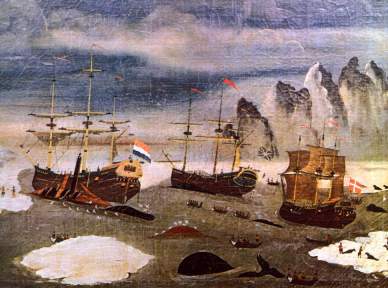
Initially, only the Basque whalers had the expertise to hunt, catch and process the powerful leviathans, but over time their northern European colleagues learnt the tricks of the trade.
Upon finding its prey, the whaling boat would sneak up behind its catch and harpoon it, which would usually prompt the enormous beast to dive into the depths of the icy cold water. If the harpoon string tightened too much or their boat wasn't facing the same direction as the prey, the boat would capsize, leading to an almost certain death. (Indeed, this happened so frequently that the whalers would bring their own funeral equipment on their northern expeditions.) Once the whale had been tired out, it was beached intentionally and the blubber would be diced into manageable chunks and melted down for transport.
Skirmishes between whaling ships from England, Denmark-Norway, the Netherlands and France became more regular with each country attempting to lay claim to parts of the sea and land.
The English were the first to assert sovereignty over the Spitsbergen Archipelago, as it was known until the 1920's. The Dutch and French, meanwhile, argued the mare liberum principle, which gave everyone equal right of access to its resources, and Svalbard remained terra nullius, a land without sovereignty, until the 18th century.
After two centuries of intensive whaling, the stocks had been depleted to such an extent that the risky voyages and losses of ships and crewmen no longer made the business profitable, so the whalers left for other pastures.
Trapping
As the whaling towns were left to decay slowly in the arctic desert, Russian hunters and trappers known as Pomors arrived in the early 18th century, having heard of the land animals roaming the archipelago. Risking the dangerous journey so far north, they hunted and trapped polar bears, foxes, seals, walruses and birds. Hunters from other countries soon got in on the action, yet again sparking disputes about ownership of lands.During the summer, the trappers had 24 hours of daylight and relatively mild weather, but the risk of getting stuck in the ice and having to overwinter were ever present.
 |
| A. E. Nordenskiöld |
The Swedish House tragedy
The renowned Swedish-Finnish polar explorer Adolf Erik Nordenskiöld wanted to spend a winter in Svalbard and set about building a house that would be the most luxurious Svalbard had ever seen. Trappers had been living in lodges built from Siberian timber because it was the only suitable wood available and easily found as driftwood on the coastlines of the archipelago. Their cabins were small and cramped, with a single room that included bunks, a table and fireplace for warmth, and a small antechamber to insulate the room from the biting cold outside.
 |
| A traditional trappers cabin |
 |
| Nordenskiöld's Swedish House in Spitsbergen |
A small party was dispatched to find his camp, believed to lie some 70km away, and they managed to locate the famed polar explorer. On hearing about their plight, Nordenskiöld gave the trappers some rations and materials for the winter. His camp couldn't accommodate all of the stranded Norwegians, but Nordenskiöld told them about his newly built house, which could easily provide the group with shelter and enough food for a winter.
Returning to their stricken vessel, the trappers debated the best course of action: either wait and spend winter on their ship, hoping that the ice would at some point give way, or attempt the risky voyage across the ice and sea to the safety of Nordenskiöld's house.
Seventeen of the younger men in the group decided that the long march to a proper house was less risky than staying in the vessel that didn't have enough rations and could be crushed by the tightening grip of the ice. So they left the their crewmates on the ship and dragged a few life boats over the ice for hundreds of kilometers before reaching open water. The journey was over 350 kilometres and, at this point in October, a few of the men had to constantly scrape and smash the ice forming on the boat, as they would sink if the ice was allowed to build up. Nevertheless, the men made it to safety and, relieved beyond measure, set up home in the comfort of Nordenskiöld's luxurious house.
The groups colleagues at the ship were also in luck. The ice had unexpectedly shifted, allowing them to escape its grip and sail home to Tromsø. The authorities were immediately notified about the stranded 17 crewmen, and a rescue party was sent for them as soon as spring arrived.
When the captain of the rescue party arrived at Nordenskiöld's house, the first things he noticed were two fresh graves. Worse was to follow. Upon entering the house, he found the other 15 men dead in their bunks, on chairs, lying on the floor.
There were no signs of violence – so the question became, what could have killed 17 young and able seamen in a seemingly peaceful way? The captain's men searched the house for clues and found in the journals of the deceased references to bleeding gums, aching joints and overwhelming fatigue.
Of course, scurvy, that well-known foe of seafarers, became the prime suspect, but the men's friends and relatives in Tromsø didn't buy this explanation. These men had been brought up in and around nature and the sea and were well aware of how to avoid scurvy by eating berries and drinking the blood of prey, for example. Moreover, Nordenskiöld's rations included food designed to keep scurvy at bay.
The mystery remained until 2008, when Dr Ulf Aasebø and historian Kjell Kjærwas were allowed to dig up some of the graves and found that it was lead poison which killed the men.
Back in those days, the ration tins and cans had all been sealed using lead. Nordenskiöld had used the same types of rations and suffered no ill-effects, but his team heated up the food correctly in separate containers. The young men in the Swedish House, however, boiled the food within the tins they found, thereby releasing the poison into their foods. The more sick they became, the more they tried to eat to regain their strength, hastening their dark and lonely deaths in Spitsbergen.
Mining
Around the time of the Swedish House tragedy, the first mining ventures began popping up in Svalbard. Due to its unique geology, all types of resources were found there, and many a prospector arrived in search of his fortune. |
| John Monroe Longyear |
His venture proved successful and is today continued by the Store Norske Spitsbergen Kulkompani, one of only two companies to succeed in not going under in this arctic wasteland. Other prospectors tried to do the same but failed.
For example, the British entrepreneur Ernest Mansfield had invested his fortune and his investors' money in a marble mine in Blomstrandhalvøya. The necessary infrastructure, housing and machinery were all built from scratch, but when the extraction finally began, the marble fell apart during the voyage to Britain, dashing any hopes of a profit or even breaking even. The reason the marble seemed so fine in the arctic was the permafrost keeping its structure together – it was, alas, treasure only for as long as it stayed in Svalbard.
The ghost town of Pyramiden
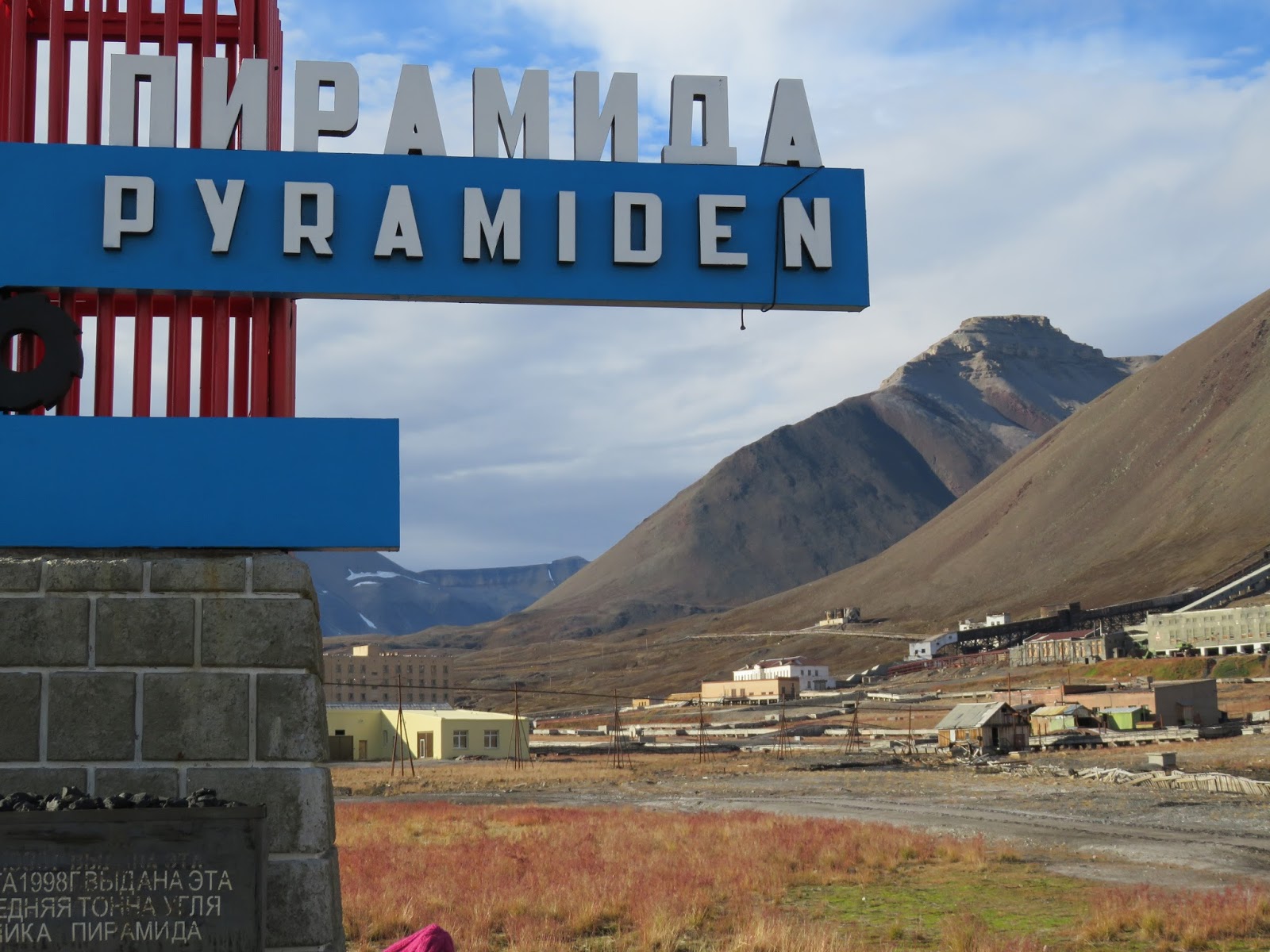 The Russian mining town of Pyramiden is perhaps Svalbard's most famous example of economic, geological and geographic realities killing off the dreams of mining executives. The state-owned company Arktikugol began work here in 1946 and the town became to the Russian mining community what Silicon Valley is to techies in the US.
Its population expanded rapidly to over 1,000, and at one point Arktikugol received some 10,000 applications for every 100 that were successful. Not only were Pyramiden miners the best of the Soviet best, the same high standards were required of anyone and everyone who worked there.
Soon enough, the town grew to contain a school, a hospital kitted out for complex surgery, a cultural house for events, ice hockey rinks for the winter and football pitches for the summer, and the inhabitants had access to all manner of vehicles for exploring their arctic surroundings. According to the town's photographer, Alexandr Ivanovic Naumkin, living there was the happiest time of his life and the town had "everything a young man needed".
 |
| The Cultural Palace and Lenin overlooking the main street |
 |
| Pyramiden main street |
After the fall of the Soviet Union, the subsidies that had kept the mine operational dried up, forcing its closure and, ultimately, the evacuation of the whole town in 1998. Naumkin commented about when he left the town with the last of the evacuees, "we all knew something beautiful had come to an end".
Today, Pyramiden is a tourist destination complete with a hotel and eight staff, including our guide Sacha, countless fulmar and seagulls that have taken over the buildings and a lone polar bear which roams the town.


As mentioned above, just two mining companies have ever been successful in Svalbard, the Norske Spitsbergen Kulkompani and Arktikugol. And they only managed to survive as a result of being heavily subsidised by their respective states.
Legislation for preserving the cultural and natural heritage of Svalbard prevents anything pre-1946 from being removed or cleaned up and, as a result, deserted mines and towns like Pyramiden remain dotted around the landscape, slowly falling apart in the unforgiving but also preserving arctic climate.
Some companies prefer to mothball their operations indefinitely because, in Svalbard, that which is left unattended for twenty years is up for grabs for anyone. Having invested so heavily, a few miners still hope that one day their operations might be resumed.
The rusty remains, like the ones we saw in Pyramiden, provide eerie reminders of human hope and endeavour giving way to economic realities and failure. Time, the great leveller, is ever-present in Svalbard.
 |
| The decaying remains of the Soviet mining settlement of Grumant, abandoned in 1965 |
Part 3
A unique form of sovereignty
Ever since whalers and trappers began using the resources of the archipelago, questions arose about sovereignty, legitimacy and, most of all, property. Norway, Denmark, Russia, Britain, the Netherlands, Spain and the USA were the foremost countries involved in the rush for Svalbard, and all tried at some point to claim the land.In 1871, Nordenskiöld began work to establish a local administration for the Spitsbergen Archipelago, as it was known then. The mining companies required enforceable property rights and formalised procedures for resolving conflicts between companies and also between each company's management and workers. The Norwegian government took the lead on the issue, and negotiations for an official framework began in earnest in 1907. This resulted in the Svalbard Treaty, which was negotiated during the Paris Peace Conference.
Due to geographical proximity and having been the most active in the region, Norway and Russia held the most persuasive claims to the area, even though other countries maintained that their operations in the archipelago belonged to them by virtue of terra nullius.
Luckily for Norway, though, Russia had been excluded from the negotiations in Paris, which were held between representatives of the Allied Powers (Great Britain, France, Italy and the USA). The 'Big Four', as they were sometimes called, preferred giving control of the archipelago to the neutral and, in their view, harmless Norway rather than to Russia, which had been a great power and was in the throes of a revolution that would lead to the formation of the Soviet Union.
However, the agreement also specified that Norway only would only control the administration of the archipelago, its natural resources and conflict resolution. The treaty forbids any country, Norway included, from pursuing warlike activities in the archipelago.
When it comes to economic activities, the treaty stipulated that Norway is not allowed to discriminate between countries. Uniquely, therefore, Svalbard is an entirely visa-free destination. It is open for business, studies and leisure for each and every citizen and company of the world, regardless of their nationality.
Norway's gift
After so many architectural and economic ruins in Svalbard, the Global Seed Vault (GSV) provides a more optimistic project, one which will hopefully last longer than the purely-for-profit operations dotting the lands like scars.
Opened in 2008, the high-tech vault provides free storage for duplicates of agricultural seeds from any of the other 1700 seed banks in the world. There are currently some 860,000 samples housed in the GSV, which was built into a mountainside some 130 metres above Longyearbyen airport to protect it from sea-level rises. The vaults are kept at a cool constant of -18ºC, and the surrounding permafrost acts as a natural fridge and back-up freezer should the seed bank ever lose power.

The project, often referred to as the Doomsday Vault, aims to preserve biodiversity in case of any accident, war, mismanagement or natural disaster that might destroy samples in a local seed bank.
The Russian Nikolai Vavilov founded the first seed bank in Leningrad in the 1930's and referred to it as a tool box. We cannot foresee which tools we might need in the future, the thinking goes, and it's therefore important to preserve as many as we can. For example, seeds that are today considered sub-standard might turn out to be priceless later due to immunity to future illnesses or providing a higher yield in a different climate than the one we have today.
The people working at Vavilov's seed bank valued his botanic tool box so highly that, during the horrors of the Siege of Leningrad, they refused to eat or use any of the 250,000 seeds they looked after even though by the end of the siege nine of the scientists had died of starvation.
Protecting biodiversity from globalisation
Biodiversity has suffered greatly over the last century as a result of large-scale farming and globalisation. Countless varieties of agricultural plants have been lost as small-scale farmers have been put out of business or been forced to adopt the prevailing higher-yield varieties in order to compete with industrialised farming.Moreover, many of the standardised seeds we farm today have been patented by big companies, as a result of which the practices of sharing and saving seeds, both of which helped maintain and produce distinct plant varieties, is now mainly a thing of the past.
In the USA, for example, some 7000 varieties of apple were farmed at the beginning of the 20th century. Today, only 1000 of those remain – the others we have lost forever. Overall, some 75% of the agricultural crops we farmed 100 years ago have disappeared.
 The GSV doesn't accept any flower or other types of seeds, but to deposit duplicates of agricultural seeds, banks are simply required to use the standardised documentation and pay for the transportation to the vault. The depositor can then withdraw their seeds at any point.
Although developing countries were at first suspicious of the project, virtually every country has now deposited seeds here. (Apparently the US ambassador was none-too-impressed on a recent visit, finding US boxes held together with duct tape sitting beside the neat and ever-so tidy North Korean boxes.)
This grand project is entirely managed by Norway as its gift to the international community.
Going home
After our few days in this northernmost outpost, I leave with mixed feelings. On the one hand, as a tourist destination, Svalbard would be difficult to beat in terms of extreme wilderness, majestic animals and otherworldly landscapes. |
| Like hiking on another planet |
Perhaps my perception of Svalbard has been coloured by having previously read fictional accounts like Dark Matter and having watched shows like Fortitude, both of which focus on the dark side of life in the extreme arctic. But the feeling has certainly been entrenched by the tragic stories the locals seemed to revel in telling.
In any case, the days here were long and filled with once-in-a-lifetime experiences, like seeing polar bears and blue whales in the wild, hiking in the most alien of landscapes and spending time among the ghosts of Pyramiden. Still, I am still relieved to leave, to escape the clutches of a land that became the final resting place of so many other travellers.
A quote I saw at the Svalbard Museum seems to best describe my feelings about what I've seen: "This place is abandoned by God and ought to have been abandoned a long time ago by mankind as well". A harsh truth perhaps, but one that makes me admire the friendly, hardy and entrepreneurial people here even more.
All that said, I am looking forward to seeing flowers and trees again.