Showing posts with label Technology. Show all posts

2 November 2014

Could predictive text spell the death of poetry?

Predictive text and autocorrect have not just brought us innumerable laughs from fails like these, but they have made typing on mobile devices a lot easier. Just the other day, I had to rewrite a message after accidentally closing the application before pressing send. And, lo, I only had to bother with the first letter of each word and predictive text took care of the rest, sometimes even suggesting the next word before I had time to type anything! Wow - tech today is amazing, I thought.

But the magic in my mobile then made me wonder: if my communication device acts like a helpful butler for the brain, spoon-feeding my every next word, how will it affect my writing and my mind?

A lot has been said and written about the so-called the Filter Bubble. The term describes how Google, Bing, Baidu, etc personalise our search results through sophisticated algorithms that mine our previous online interactions in order to make the next one more relevant. Search engines thus act as the gatekeepers to what we see in the World Wide Web, directing us first and foremost toward content that they think we will like, rather than all the relevant results. Of course, from a User Experience perspective this makes complete sense and it is quite helpful, but the result is that our online experiences are becoming ever more atomised, and we are less likely to come across surprises or materials that could jolt our reflective equilibriums.

Likewise with our increasing use of social media. Facebook, Twitter and co. are great at reflecting back to us that which we already think. In these public spaces, where content is curated by our friends and those we "Like" or "Follow", we can comfortably bask in the pleasant glow of having our opinions validated because what we see and read is, after all, provided by those whose beliefs and views we have already  vetted as being in tune with our own. Moreover, consuming content (be it articles, videos, cats, what have you) via social media is becoming ever more pervasive. Not only is offline media in seemingly terminal decline, but the Homepage has been declared dead while pull- is fast being replaced by push media.


So a paradox and regrettable irony of our time is that, while we have never had as much information at our fingertips, search engines and social media are pushing us toward ever narrower silos of information – and we seem to love it.

This is far from news, but I hadn't previously given much thought to the possible repercussions that predictive text could have on the next generation in particular. As the use of mobile devices becomes ever more pervasive, children will no longer have to learn how to write by hand, nor will they even be required to know how to spell full words. Correct writing goes out the window if a computer does it for you – just like knowing how to use the gears in a car becomes redundant if you only learn to drive an automatic. 

Studies have already found that predictive text makes children more likely to make mistakes and act impulsively. Handwriting has also been shown to be more beneficial to learning than typing as it requires a greater degree of planning, anticipation and accuracy. Writing an essay is all too easy when you can cut, paste, copy, delete and start again. That is why those advocating holding school and university exams with computers rather than pens miss an important point: it is far more demanding having to write in one swoop a first and final draft, even if the resulting 'pen strain' makes the poor students' hands sore. (How weak have we become that there is such a concept as 'pen strain'...)


But, if its use becomes the norm, might predictive text also cause a narrowing of what is written, perhaps even confining what is thought in general? Assuming it is used and there is no conscious effort to avoid one's previous patterns of writing, predictive text can transform into a powerful valve, translating our thoughts into type, and the more often we use a certain phrase or word, the more likely it will be offered back to us and be used again. Therefore, the text we produce becomes shaped to a considerable degree by previous input – making our output ever more constricted by what we have written before. 


However, the road to excellence, innovation and genius was surely not paved by familiarity. How can literary art flourish if linguistic innovation, a surprising turn of phrase and a novel word become ever less likely? Can poetry survive and would Shakespeare have thrived in such an age where the effort involved in using words offered by our Brain Butler is so much less than coming up with something new?

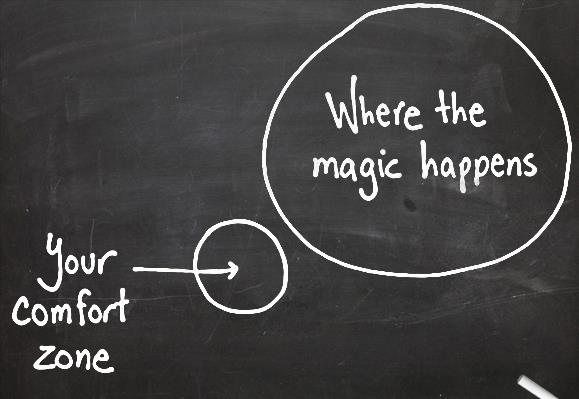
The danger is that, as our horizons become smaller, so will our minds. As Henry Ford, the creator of the first mass produced automobiles, quipped, “If I had asked people what they wanted, they would have said faster horses.” Indeed, it is outside our comfort zones where the magic happens – and it seems to me that predictive text and social media might actually be building psychological barriers that could impede us from accessing our creative sweet spots.

To finish with some wise words from John Stuart Mill: 

"In this age, the mere example of non-conformity, the mere refusal to bend the knee to custom, is itself a service. Precisely because the tyranny of opinion is such as to make eccentricity a reproach, it is desirable, in order to break through that tyranny, that people should be eccentric. Eccentricity has always abounded when and where strength of character has abounded; and the amount of eccentricity in a society has generally been proportional to the amount of genius, mental vigor, and moral courage which it contained. That so few now dare to be eccentric, marks the chief danger of the time." 

These words are perhaps even more pertinent today than when they were written.

19 January 2014

From a county show ox to the possibility of direct democracy

In 1906, visitors to the West England Fat Stock and Poultry Exhibition were asked to estimate the weight of a live ox after it had been slaughtered and dressed. Upon analysing the results of this competition, the Victorian polymath Francis Galton noticed a curious thing: the average of everyone's guess wasn’t just closer to the correct answer than the winning guess; it was also more accurate than any of the expert judges.

Quoting this and subsequent scientifically more rigorous evidence, the program Ultimate Swarms (BBC 1) argued that animals which exhibit collective behaviour are at their strongest when there is no single leader. This is because individuals, however capable, are nonetheless fallible. A collective, on the other hand, is able to counteract and mitigate the consequences any singular errors.

Intelligence in numbers


This holds true, for example, when looking at the evasive actions of a shoal of tuna, twisting and turning in an effort to outmanoeuvre animals of prey. Even if a few unlucky fish end up as lunch, the aggregate of each individual action produces a highly responsive defensive unit – indeed, one that is far more formidable than if the shoal were directed by a single lead fish.

Honey bees also take advantage of this collective intelligence. For example, when the time comes, it is not the queen bee who decides the location of the colony’s next home. Instead, this decision – vital for the survival of the group – is a communal choice. Upon discovering a potential nesting site for the colony, the worker bee will report back to the beehive and promote their find with a "waggle dance". This form of communication imparts information to the rest of the hive about the location and features of the newly found property. The winning dance – the one that excites the colony the most – will determine the location of the collective’s next home. A kind of bugs life X-Factor indeed.


But back to the ox and the county show in Plymouth. After realising that the median of all the guesses came to within 0.8% of the correct weight, while the average came even closer and was also more accurate than the experts, Galton reasoned that, "according to the democratic principle of ‘one vote one value’, the middlemost estimate expresses the vox populi, every other estimate being condemned as too low or too high by a majority of the voters”. 

Now, if this vox populi identified by Galton arrives at better answers than our so-called experts, and studies in swarm intelligence point to group decision-making being favourable to actions directed by a single leader; then what does this say about our reliance on individuals to ultimately decide the direction of our communities?

Thankfully, we in the West at least are able to vote in our leaders, but human collectives tend to still be guided by a singular brain, whether it be a PM, President or dictator. Our current system for collaborative action endows our rulers with the authority to weigh and consider the available information in order to arrive at decisions that will then affect us all. However, it's still just one individual making the final call.

Online to the rescue
In the wired parts of our world, however, there rests a gadget in virtually every gentleman's pocket and each lady's handbag that could be utilised to capitalise on our collective intelligence. 

Moreover, the daily routines of most of us already include posting statuses, checking tweets, and dealing with all manner of online chatter.  It shouldn’t, therefore, be too burdensome for each of us to have a civic obligation that would regularly poke us into thinking about a subject to do with our communities, hence, our own lives. 

It could be as unobtrusive as receiving an email, text or Facebook notification requiring us to vote for a collective course of action by clicking on “like” or “dislike”. Such e-plebiscites could take the form of questions, such as "should speed bumps be installed on street Y?", or "should land X of this council be used to build a shopping centre, business centre or park?", or "should this council buy energy from wind farms or shale gas producers?"

The user interface could be a simple page showing the question, and a button or two with which to assert one's position. The resulting votes would then be calculated by a Google-type number-cruncher.

  Each adult could own a civic profile ("Civicbook"?) connected to their council, allowing them to only vote on matters directly relevant to their lives and to their communities (and perhaps a national equivalent for larger and broader questions).

Every adult member of the body politic would also retain the power to bring up issues for debate, as already happens with the online petitions in the UK that can trigger talks in Parliament. And every time a citizen were to create such an e-plebiscite, it would be permanently displayed on their profile  resulting over time in a history that would flag up any conflicts of interest, thus bringing transparency and long-term accountability to our political interactions.

Such a Civicbook should also allow everybody to browse questions posed by others and to pick causes to "like" or "dislike".  Collectively agreed-upon rules would then dictate the frequency of these e-plebiscites and the threshold for "likes" that would trigger a referendum. 

There should also be a statutory duty forcing people to take part regularly, at risk of losing some commensurate privilege, right or benefit; not necessarily compelling us to vote on every question, but at least on an agreed-upon number. 

The thing is, this is far from some idealised techno-fantasy – indeed, a form of direct democracy similar to this is already practiced in Switzerland. Elections and referenda, increasingly often electronic, on all types of issues take place four times a year in each Swiss canton (about equivalent to our councils). 

Swiss citizens are able to, for example, demand popular votes, amend the constitution and even veto laws and spending bills through these referenda. The relatively small size of the cantons (in effect, peer pressure) and, in some places, fines for not taking part in elections ensure that everybody has an incentive to fulfil their duty.  

Likewise, the citizens of Iceland were allowed to draft their new constitution via crowd-sourcing – as is now also being advocated for the UK in a new project at the LSE.  So the technology already exists – what is missing is the political will. Our leaders and decision makers need not worry about their livelihoods, however, as we'd still need experts to analyse, inform and galvanise the population on the relevant questions of tomorrow.

Even so, as Galton opined about the county show competition, “the average competitor was probably as well fitted for making a just estimate of the dressed weight of an ox, as an average voter is of judging the merits of most political issues on which he votes. 

How to define "Politics"

The question is, how prudent is it for us to outsource our stakes in society to career-politicians – with their party political responsibilities, ideological agendas, vested interests and core voters – when these days we could so easily each wield the power ourselves? 

Moreover, the zigzagging, even schizoid dynamic of oppositional politics – the governing party moulding the country according to their proclivities, the opposition trying to undermine them, only for the roles to be reversed after a Parliament or two; and repeat ad nauseam – seems far from an efficient or productive system for guiding our societies toward sustainable and long-term prosperity. 

If we each had the exact same amount of say, in no way mediated or determined by whichever party made it into government, it would seem to follow that there would be a lot less, if any, need for the kind of arrogant partisanship and ignorant tribalism that so often goes for "debate" amongst the political classes, the MSM and, in particular, online comments sections. Merriam Webster offers several definitions for Politics

Here are two:  “Activities that relate to influencing the actions and policies of a government”; and “Getting and keeping power in a government”. The former, in my mind at least, would better describe this type of direct, power-in-the-palm-of-your-hands politics. 
The latter, meanwhile, reflects rather aptly our current, depressing-for-most-but-lucrative-for-a-few party political system.


We are incredibly lucky and privileged to be alive at a time when the power to influence our societies could reside equally in each and every individual. Indeed, modern technological advances are bringing us the opportunity to consign to the dustbin of history  where it belongs with such other iniquitous systems as feudalism and imperium  our paternalistic form of representative democracy. 

These days, a large scale state run by an electronic form of direct democracy is a real and distinct possibility, one that even Plato might have approved of

A single official – democratically elected or otherwise – is always prone to such quintessentially human traits as vanity, greed or being fallible, as are we all. So, when it comes to questions that affect communities, societies and countries, wouldn't it be more prudent to trust the votes, so easily collectible these days, of everyone affected in order to arrive closer to the optimal solution? Swarm intelligence, Galton’s vox populi and Equity  one vote, one value  all seem to suggest it would.

17 June 2012

Rill Rill Atlantis

The last flight of space shuttle Atlantis. Edited by yours truly from the Discovery Science documentary, "The Last Shuttle". Music, "Rill Rill", by Sleigh Bells. (Better in Full Screen.)


25 February 2012

Community ties

Wealth comes in many forms. Watching the people in this video ("The Cause of Labour is the Hope of the World", from the film The Miners' Hymns), it is difficult to escape the conclusion that, over the last few decades, spiritual wealth seems to have declined in almost direct proportion to the increase of material well-being.  A good example of this, I think, has been the proliferation of technological gadgetry, and the effect this has had on our communities.


Prior to the arrival of television, the little leisure time that townsfolk had was more than often spent together, at home, in pubs, on the streets, in parks, and so on. This social life - not to be confused with today's life as mediated by Social Media - along with community events like those of the miners had the effect of cementing the structures of society by binding people together through face-to-face interaction, which often resulted in relationships, a sense of interdependence and friendships.


TV, however, brought the whole planet and everybody else straight into our living rooms, thus bypassing the need to go out in order to meet people and hear the news, and instead allowing people to connect with the outside world from the comfort of their own sofa. In this way, the social unit became ever smaller, and by the 80's community experiences were being reduced from grand gatherings and street parties to family dinners or water cooler discussions about last night's soap opera.


At least scheduled programming and the need to prepare food kept people in the same psychological time zones, but even these unifying structures have begun to crumble over the last decade. Laptops, smart phones and on-demand entertainment in the palm of your hand, along with ready meals and fast food, are now doing to the family unit - the most basic building block of society - what TV did to the street community. Eating together, playing  together or even just huddling in front of the television in common anticipation of the latest episode of The Simpsons are fast becoming increasingly rare. Instead, today's individuals come, eat, play and go as and when suits their own timetables.


While technological innovations are surely not the only culprit, our social spheres have indeed become increasingly solitary over the last 50 or so years - and this has naturally lead to the fragmentation of society. Just compare and contrast our early 21st century town-life to the the people in this video. Dressed in their Sunday best, they look strong and cohesive; full of vigour, a sense of community and self-respect - not to be confused with its bastardised cousin: street "respec". Their purpose and drive are palpable, while the pride they take in their work is evident, and they also exhibit an awareness of something greater than themselves. 


These are all important components of being civilized - and they are all in danger of being lost amidst the blooming buzzing confusion of today's increasingly atomized world. So, if anyone knows of similar displays happening these days, do let me know - because it's moving stuff, people at their best. Enjoy (The video needs sound; hat tip, Eamonn).


25 December 2010

Buon Natale da Milano

A very 21st century take on the Nativity... Enjoy and a merry Christmas to one and all!


Thanks to Granito973

17 December 2010

Flashes of inspiration

Evening Standard, 16 September: "They won't care because of the 'come and go' nature of participants [sic] - catching one person doesn't mean much. I'd say it adds nothing but fuel to the fire - if 'anynymous' had one goal, it would be that a group of strangers with the same ideals cannot be stopped by halting the actions of one person." These are the words of Yuki, a very 21st century revolutionary.

What would his predecessors - the motley crew of freedom fighters, terrorists and other fanatics of centuries past - have done for such a capability? The success of these heroes to some, villains to others, was always dependent upon the force of their leader's character. Victory would be the result of his (Boudica and Joan of Arc would be rare examples of her) ability to instil enough fervour in others so as to create a loyal following with which to mould the world toward their goal. Whatever their cause cรฉlรจbre, the tools employed were word, paper and fist - which makes for a lot of blood, sweat and tears.

These days, however, the World Wide Web allows activists, hactivists and slactivists, along with other more dangerous unmentionables, to take root at any time, in any location, as long as they have broadband. Demagogues never had it so good. Even nature requires her seeds to travel by water, ground or air, but we have overcome such spatial constraints when disseminating ideas around the world. So, a nifty mechanism, being connected.

Could someone please make an animation of the Earth from above with small flashes indicating whenever someone, somewhere gets hitched to a cause and takes it upon themselves to lash out against the world that they cannot tolerate. It would probably be quite a pretty sight, flashy too, and scary, to boot. I suppose a nicer version could be made with flowers indicating each time someone, somewhere donates to charity or gets involved in a good cause.

The internet has, alas, the potential to unleash a perfect storm - so let's make sure the good flowers outnumber the flashes, shall we, however Manichean that may sound. On second thought, that sounds more like hippy-talk. Ah well, so be it, I still stand by the point.

12 December 2010

Wikilogue

The first time I came across WikiLeaks, I thought what a great idea. It's online nature gave it a level of impunity from state actors and it was therefore a formidable tool for making governments more accountable to their citizens. It promised to empower whistleblowers around the world, to be a thorn in the side of elected politicians and dictators alike, should they think of dusting over any shady dealings. So, commendable stuff, surely.

Since releasing WikiLeaks some four years ago, the founder, Julian Assange's work has been at considerable cost to himself. He has received death threats and his freedom of movement is severely curtailed - as tends to happen when one is wanted by several governments.

I'd still be applauding him if all these sacrifices were due to a simple, altruistic compulsion to promote freedom of information. On this occasion, however, by publishing documents that identify facilities around the world which the US State Department perceives as vital to American security, Mr Assange has taken an unwise and unhelpful step, from exposing injustices already committed to placing people in clear and present danger.

The earlier sections of these Embassy Cables were more interesting than revealing. There was little of real consequence, for example, from learning what American diplomats really thought of our European leaders. Nor was it stop-the-press news that the US Secretary of State, Hillary Clinton, was of the view that Saudi Arabia helped raise funds for Sunni terrorists.

The Cables contained another 250,000 or so letters and snippets like these, but the majority of the information in them did little more than provide a glimpse into the views and mindsets of the American foreign policy machine. 


That said, the straight forward language deployed by the US officials did probably ruffle a few feathers around the world and complicate some international relationships - which is another factor Assange doesn't seem to have troubled his mind with. Indeed, as a result of putting this information in the public domain, diplomats and officials will doubtless be less candid in their future correspondence - something that is surely not conducive to good public policy or amicable international relationships.

In any case, publishing detailed information on hundreds of military and civilian buildings, Assange inadvertedly began aiding and abetting those out to harm the United Sates and every other country identified in the documents. He has placed everyone who works at these facilities in direct danger, and indirectly endangered all of us those who rely upon the facilities and the services they provide - that's you, me, us.

Sir Malcolm Rifkind said that this leak bordered on criminal, and it certainly did fulfil the criteria of recklessness in English law at least. Publishing this material did and does entail a foreseeable risk that some nutjob or disgruntled visa applicant decides to find the nearest place whence to vent their anger at the US - or against another community or government. If advising terrorists on the best targets around the world is not recklessness, then please enlighten me as to what is.

This week Mr Assange wrote that, "WikiLeaks has a four-year publishing history. During that time, we have changed whole governments, but not a single person, as far as anyone is aware, has been harmed." But WikiLeaks in no way vets the people accessing the sensitive information it provides - so for who's benefit are these documents supposed to be for? And what part are they to play in what Assange is out to accomplish? Does he really consider it useful, for example, that everybody is allowed unfettered access to detailed information on the gas pipelines that are most important for European security?

Judging by how his wikirays seem to be projected solely on the US, he has a beef with America, quite likely with its foreign policy and global dominance in particular. He's probably out to create a more just and equitable world order as well. This would be fair enough and good on you, of course, but I find it difficult to believe that he would be so stupid or naive as to not realise that the only people likely to benefit from this information are those out to harm others. How will Assange explain his role, should an intentional tragedy occur in one of these places.

This disregard for the safety of others reveals how he's actually less a champion of freedom of information, the common good, and more a person on an anti-US quest. In this instance at least, the collateral damage that may ensue is of no consequence for him, as long as the main target suffers.

Even his colleagues seem to think so: In the NYT article "WikiLeaks Founder on the run, Trailed by Notoriety", they are said  to be "abandoning him for what they see as erratic and imperious behaviour, and a nearly delusional grandeur unmatched by an awareness that the digital secrets he reveals can have a price in flesh and blood." According to his colleagues, it was also his decision alone "to release the Afghanistan documents without removing the names of Afghan intelligence sources for Nato troops."

His actions are thus guided by a most shallow form of utilitarianism where the end always justifies the means. By putting the health, safety and security of others at risk solely to further his agenda, he puts no premium on the intrinsic value of others, and sees us only in terms of our utility toward fulfilling his plan. He doesn't even allow for any discussion or debate on the wisdom of his actions, he just does it, whatever the consequences.

These particular leaks are no longer about freedom of information: they are about one person putting others in danger so as to further his singular world view. He is, in short, an idealogues - and they tend to be dangrerous.


UPDATE: Some former employees of WikiLeaks have just released a new website, OpenLeaks. Although not fully operational yet, according to the creators, the main impetus for creating the new site was to have a democratic and accountable organisation for helping whistleblowers, rather than that lead by Assange, who they accuse of behaving like "some kind of emperor or slave trader."

6 December 2010

Data vs Words

Bowman inside H.A.L., 2001 A Space Oddyssey
My wife just showed me a text message that I had sent to her last summer. In it, I noted (on good authority - I'll provide the source later) that some number crunchers (or word munchers?) have calculated that we humans created more data in 2009 than we have in all of our previous 5000 years combined. That's a lot of words, numbers and the stuff that holds them together.

Brings to mind 2001: A Space Oddessey, by Arthur C. Clarke. In the prologue, he tells us of the civilization that created the Monoliths, and how they began to externalize their consciousnesses with the aid of technological devices - robot parts for the body and hard drives for the mind, if you will. Could the internet be the beginning of some similar kind of process for us?

A lot has also been said recently of the effects that information technology will have on our memory, thought processes and such, but if the above fact is correct, then either we created an awful lot of rubbish in 2009 or the human race has been mighty lazy for the last five millennia. I would tend toward the former - God only knows the depths of the murkier side of the internet. Anyway, just a thought...

PS. the Big Day was an absolute success: everything went brilliantly, the wife was stunning and Yours Truly is now a very happily married man!

28 November 2010

Everybody looks good on Facebook

I went to see The Social Network yesterday and, by Jove, it’s a superb film. It would’ve been easy for David Fincher, the director, to make a blockbuster about Facebook by just focusing on pokes, Farmville, mafia knights, or whatever useless game you can play there; or, equally, he could’ve made a romcom starring, say, Jennifer Aniston and Luke Wilson about how this particular “.com” can start and end relationships – a 21st century update of You've Got Mail, if you will. The sheer number of Facebook users alone would’ve guaranteed huge takings at the box office.

But for anyone who hasn’t seen it, you will only get about 2 minutes of Facebook in this movie – the other 118 minutes are a cinematic tour de force about genius and the price of friendship. The creator of Facebook, Mark Zuckerberg, doesn’t come off well in the movie, although, even he, the central antihero of the story, can’t compete in assholedom with how Sean Parker, creator of Napster, is portrayed in this film. By the way, what does it say about us – or possibly just me –that a charismatic jerk tends to be perceived as being much worse than a geeky one?

So, a great film – go see it if you haven’t already – but I digress. I was actually going to write about why this tool, so ubiquitous today (at least in the West), caught the attention of millions with such lightning speed. In seven years it has grown from a college prank (FB’s predecessor, facemash.com) to a must have social tool boasting over 500 million users, and counting.  As the movie notes, “Facebook me” has begun to supplant the usual “call me” when eliciting contact from others, at least among younger generations.

To give some idea of the sheer scale of how Facebook impacts our world today, in the movie, the creator of Napster brags with some reason about how he changed the music industry forever. True enough, downloading and sharing of copyrighted material P2P is bringing a swift end to the days of a £15 CD bought from HMV, and Parker was indeed the first to popularize downloading music – most often for free. To say that he totally transformed more than an industry, however, would be an exaggeration because people still listen to music like they did before, even if the format has changed. Likewise, the business model used by record companies has simply evolved from a big investment to get the whole album, to buying just the interesting bits with small instalments. Plus รงa change.

Facebook on the other hand... We are faced every now and then with new technologies that transform the how and why we do what we do: papyrus scrolls to pigeons to morse code to mobile phones, for example.* But this virtual world we are now moving into, spearheaded by Facebook, might actually change the very nature of how we human beings are.

Before I go any further, however, for the record, I don’t have anything against Facebook. I use it and I like it and I will continue using it because it’s great. And fun. And useful. It's simply great. It helps me to keep in touch with my friends, and with people from my home towns and beyond. It also entertains me in many ways and I like seeing what my classmates from primary school are up to even if I haven’t seen them in for years. In short, for me, it acts like a delightful glue connecting and unifying my past selves with whoever and wherever I currently am.


Now back to the matter at hand. Perhaps it’s just a logical extension of the internet applied to our every day affairs, but, as the movie hints on several occasions, Facebook is actually far more than the medium it works on. This is because of how it transposes so much of what we want and crave (popularity, friends, coolness, wit, sex, intelligence, looks, etc.) into a virtual world where we can have it all, and it does this to a far greater effect than television, another sign of our times.


The way people spend time on the website – unique visits to Facebook have a longer duration than any other website – refining their profiles, looking at and uploading pictures, corresponding with friends or playing games; adding likes and dislikes, filling out surveys... You know the drill. This myriad of simulacra provided by Facebook and its affiliates has created a new world unto itself. And day by day we move more and more of our lives into the realm of this virtual world. Facebook has achieved this by creating a space for us where we can be that what our egos want us to be, and nothing less, if I may put it in such a Freudian way.


Mark Zuckerberg, creator of Facebook

In this light, its popularity is unsurprising – for what could be more appealing to a modern individual than a virtual world where people will only see and learn of you that which you want them to? It’s kind of like the 80s fashion of wearing and advertising your musical allegiances with band pins. Facebook, however, takes this psychology a quantum leap further by enabling people to clothe their virtual self in the finest of garments their imaginations can come up with. We can add bios, photos, interests, books we’ve read, status updates about our latest thoughts, links to songs and articles we like – basically we are allowed to design and change our whole (virtual) self at the touch of a button or two, and, most importantly, everybody else will be informed about it instantaneously.

Rousseau would have been horrified. Our Facebook self could be construed as an extreme example of his major gripe with society, that of veiling ones’ self with garments (read false advertising) in order to look and feel superior to others. Indeed, Facebook must be New York Fashion Week to his idealized state of nature where "there is a removal of all cultural clothes", which he thought are like "garlands on our shackles" because of how they constrain, distort and ultimately disfigure our interactions.

In today’s Sunday Times, Caitlin Moran quotes a recent article, according to which up to 40% of the information we give online is fabricated. She thinks this isn’t too bad – after all, we also do a lot of this in real life, only offering to others the information about ourselves that we want them to have, and, hey, sometimes adding an embellishments or two. Or three. I think she misses the point, though: the thing that makes the Facebook fib so much more powerful, alluring and addictive is that it doesn’t happen in real time. When social networking, you and I can create a fantasy “Me” at our leisure, from our home, or from wherever we are, day or night, and all the while we are safe in the knowledge that “I am in control of this conversation”. This 21st century form of interaction is devoid of interlocution, and therefore you drive the narrative at your will.

That’s why Zuckerberg’s idea has such power. It feeds off and into our vanity, fantasies and egotistical yearning to be heard, to be seen, to be respected, be loved; and it does so by giving us total control over our social output. For at the end of the day, this is Facebook: a place with no bad hair days where we can take all the time we want to come up with that killer line without ever risking an embarrassing silence or an unintended faux pas.

Contrast that to real, everyday life as it has been through millennia, where things go wrong, where we often take our foot from our mouth only to put the other one in, and where we usually end up being far less impressive to others than we would like. A social existence where we must interact in real time and think on our feet, even if we might end up chewing on them, that is the real world.

It does kind of scare me, the thought of how big an influence this mode of interaction may ultimately have on how individuals see themselves and behave with each other, and by extension how society works. This is because Facebook, as a technology, panders to one of our lowest common denominators, vanity – just like Big Brother encourages people to judge and look down on others. That’s why I fear for the next generations, who grow up without ever knowing that there was a time without the distinction of “Friend” and “Facebook Friend” – and Jove help us if people begin to conflate the two. Even if this is overly dramatic, Facebook could be to society what the splitting of the atom was to science: an amazing tool and achievement, a game changer, but one that could also make things alot worse.

Maybe that’s just the conservative old-fart me talking – after all, who’s to say the FB Way isn’t as good as how our fathers and forefathers lived? Well, if Facebook isn’t just a fad – and I don’t think it will be because it’s simply too good a tool even if it’s name may change or some FB 2.0  might arrive – I would say it has the capacity to influence the deepest foundations of culture and society, namely who and what we see ourselves as. It could influence our interactions more than perhaps any other invention since... well, I’ll actually have to think about that and come back to you later because rarely does the way we humans conceptualize ourselves change to the extent of bifurcating ourselves into two worlds – the real and the face. Would that Rousseau were here to comment, he would probably do a better job!

In any case, the movie is great – do check it out – and I’ll try to think of other paradigm shifts, as Kuhn would say, that could rival this one, brought about by an obnoxious genius called Zuckerberg.


* Did you hear this story in South Africa, where a company with two offices got so annoyed by how slow their broadband was that they filled a USB stick with data, which they attached a homing pigeon. They then began uploading an identical amount of data to their other office via their broadband connection simultaneously as they set the pigeon off to do its thing. Believe it or not, the pigeon won and reached their sister office first. Nature 1, Internet 0.