Showing posts with label Travel. Show all posts

30 September 2016

Notes from an unforgiving land


Part 1

Setting the tone
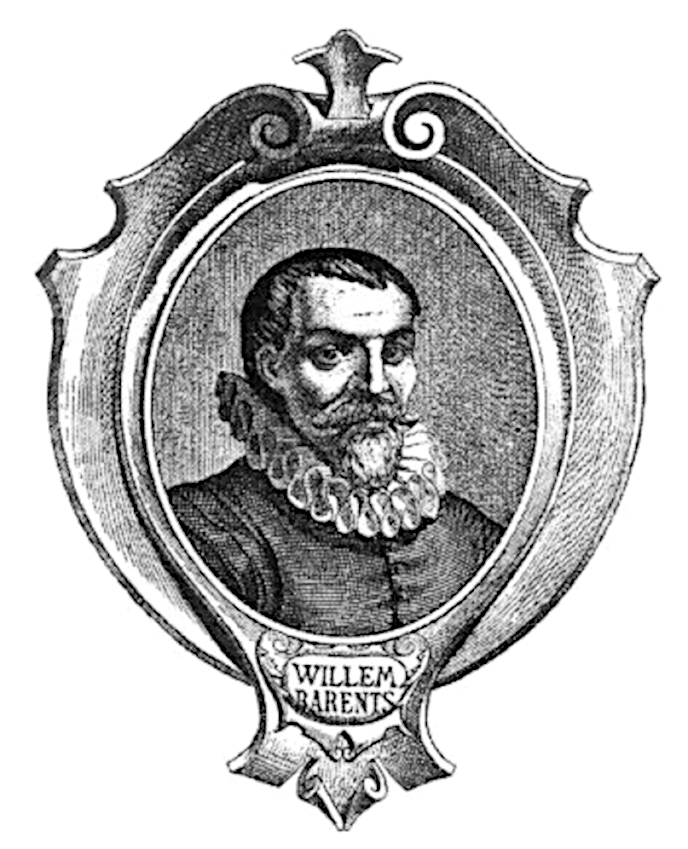
Willem Barentsz
In 1596, the Dutch explorer Willem Barentsz sailed from Amsterdam in search of a northern trade route between Europe and the Orient. On 17 June, far in the arctic above Europe, Barentsz's expedition discovered new land, which he named Spitzbergen after the pointed mountains on its northwest coast.

Instead of finding the Northeast Passage, however, Barentsz's vessel was surrounded and then captured by the arctic ice. The 16 crewmen were forced to overwinter in this far-away land of extreme cold and dark.

Barentsz's ship stuck in the polar ice
Barentsz and his crew began to ration their supplies and proved successful at hunting. The marooned sailors repurposed lumber from their ship to build a cabin and fashioned much-needed extra clothes from the merchant fabrics that had been destined for the eastern markets.

Such was the winter freeze at the 78th parallel that, when huddling up to the fire place, the crew's socks would catch fire before they managed to warm up their feet. It must have been a blow to morale when, early on, their beer froze, bursting the casks. Still (or perhaps because of this blessing in disguise), Barentsz and his men managed to survive in the frozen northern wasteland.

The following summer, on 13 June, the ice finally eased its vice-like grip and Barentsz's men, riddled with scurvy, set course for home.

Unfortunately for Willem, the damage had been done, and he died just seven days into the journey home.

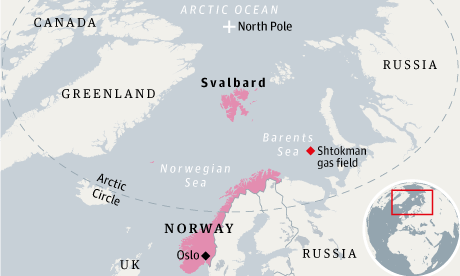
This story of discovery and daring ending in hardship and tragedy would be repeated time and again on the Svalbard archipelago in the far north, just 1300 kilometres from the North Pole.


First impressions

On the descent to Svalbard's capital Longyearbyen, the first and only things one can see are mountains, sea and ice. From above, the mountain range looks nothing out of the ordinary, but having landed at Longyearbyen airport, the first things that struck me was how arid this place is. Not a tree or bush in sight, just lifeless, slate-coloured peaks rising up some 500-800 metres from the green glacial waters of Isfojrden.

The palette of the landscape could be described as what's left after all the colours we might associate with life – the greens of trees, yellows of flowers, reds and blues of berries – have been removed. The word moonscape comes to mind, and this impression is accentuated by the town itself.

The buildings fit neatly into two categories: warehouses and bunkers. The beachfront and port have the former, the town the latter. 

Everything is built to be robust and functional. Although the houses display the familiar bright Norwegian colours, they are much smaller, stockier and lacking the elegant touches of large balconies and outside decorative features one sees on the mainland. In Svalbard, form follows the primary function: to survive against the unforgiving elements.

Unfortunately, though, even these houses aren't impervious to the extreme environment. On 14 December 2015, for example, an avalanche destroyed 10 homes in the town after four metres of snow fell during the worst storm in 30 years. 

Our guide, Mårten, told us of the night and how the town rallied to help. Some 100 people tried to dig out the snow as fast as humanly possible in 5-minute shifts, with dozens more waiting to step in the moment anyone's strength started to flag. 

Many were saved thanks to their neighbours' hard work, but a 40-year old man lost his life as it had taken some 36 hours for the rescue workers to dig him out, and five children and four adults were injured, three of them seriously.  

The houses were destroyed beyond repair, so they were removed. Today, 10 months later, the footprint of tragedy has been turned into a place of joy, a childrens' playground.

The empty plots left by the destroyed houses are visible on the bottom left 
Longyearbyen's pedestrianised main street has a few cafes and restaurants, many of which could well be found in larger cities on the mainland. The hipster cafe influence has reached the 78th parallel, but it has become enmeshed with the sensibilities of miners, meaning even more repurposed wood and metal. 

In addition to the main grocery store, there are sports equipment stores (all of which have large selections of guns on display), a few gift shops, a childrens' school and hospital.

In  contrast to the typical Nordic main street, Longyearbyen has a much more no-time-for-nonsense feel to it. It is clearly a frontier town. Snow bikes, bits of machinery, tractors, metal forms of all kinds lay strewn across the town.


A quote from Peter Adams at the Svalbard Museum in the University Centre put it well, "the streets of Longyearbyen have no names, they have numbers - grown men do not build houses in streets that are named Blueberry Road or Teddy Bear Yard".


From light to dark

The season of the midnight sun ends tonight and the days will start getting shorter after four months of uninterrupted sunlight. Within two months, the polar night will have taken hold and the sun not rise at all between October 28th and February 14th.

The constant pitch-black darkness during winter plays havoc on the inhabitants. In addition to vitamin D deficiency, the dark season causes Polar T3 syndrome. Its symptoms include forgetfulness, cognitive impairment and mood disturbances.

Mårten told us of how, last winter, he went to the shop to buy eggs and milk, but on returning home he must have put his clothes back on and gone to the shop again to buy eggs and milk, ending up with two sets of both, but with no recollection of the first trip.

Although the temperatures are relatively mild considering its latitude, rarely going under -30ºC thanks to the Gulf Stream, the constant night slows down everything and everyone. (Finnish and Swedish Lapland, by comparison, some 800km south of Svalbard, often experience deep freezes of -50ºC and below.) People walk slower, work slower, do less – like the bodily functions in hibernating animals, life remains on hold.


A timeless landscape

The name Svalbard comes from 12th century Norse accounts of "Svalbarð", or cold shores. It's disputed whether the reference was to Svalbard or Greenland, but either way the archipelago is far older than ancient.

This barren and northernmost collection of islands we see today between 74 and 81 north latitude and 10 to 35 east longitude began its journey toward the north pole some 400 million years ago, from somewhere south of  the Equator. 

Since then, the islands have travelled through tropical climates; they've been sun-scorched deserts; submerged under water... you name it, Svalbard's done it, making it a honey hole for geologists.


Distinct layers of sediment and rock are clearly visible in most places, and the darker mountains surrounding Longyearbyen make for a menacing backdrop.


Four types of trees are found on these isles, but you wouldn't know it. The tiny leaves of the Polar Willow just about manage to provide patches of rusty patina to the otherwise monochrome mountains. 

The bits of green grass dotted around the hills are evidence of nesting birds above, fertilising the soil just enough to introduce a bit of colour to the landscape.

Waking up on the second morning, the overnight snow has dusted the mountains with a white icing, evenly across every peak, almost as if by design.

The futuristic University Centre mimics the surrounding mountains
Even though the land is desolate, inhospitable and unwelcoming, the seas are bursting with life. Various sea currents meet around the polar region, giving rise to a smorgasbord of plankton, krill and other small sea life, which in turn feed enormous amounts of fish and the very largest of animals, whales.


The king of the north

Perhaps the most famous inhabitant of these islands (and the waters between) is the polar bear. It's often said there are more polar bears in Svalbard than there are people; in 2012, some 3000 bears to 2642 people.

Inquisitive by nature, polar bears perceive pretty much everything as potential food. Their tracks have been spotted everywhere around the archipelago, from the villages to the highest peaks at some 1700 metres. For this reason, when venturing outside Longyearbyen's perimeter, rifles and the ability to use them are a must.

The rules are clear though: should humans and bears ever interact in a way that results in harm to either, the bear is always considered the victim. To kill one even in self-defence results in a legal and bureaucratic process almost on par with a murder investigation.

There have been many cases of people being attacked, maimed or killed only for them (or their families) to receive a fine afterwards because they failed to follow the protocol of, first, trying to avoid the bear, second, attempting to scare it away, and only then engaging it with a rifle if in immediate mortal danger. 

But people are coming into contact with with these beautiful yet deadly creatures increasingly regularly as a result of the retreating polar ice caps. 

Year-on-year there is less ice from which to hunt seals, so the bears are forced to move about more to find alternative sources of food.

With the exception of the arctic fox and reindeer, the land animals are dependent on the sea. The polar bear, ringed seal, walrus and the majority of the birds spend their lives either hunting in the sea or eating and resting above the sea ice or within its vicinity. 

So closely connected is Svalbard's life with the sea, that evolution has even kitted the fulmar with the ability to drink sea water, using a unique salt-filtering cavity in its beak.

In stark contrast to the seemingly dead landscape, the ecosystem in the sea is thriving, even after centuries of whaling and fishing by an adventurous and hardy bunch of often foolhardy of people.


Part 2

Extracting abundant resources

Beginning with Barentsz's ill-fated expedition, Svalbard's economy has seen three distinct phases. First, whaling, then trapping, followed by mining. Each stage seems to have followed the same cycle of abundant resources leading to optimistic efforts to extract them, only to end in destitution or tragedy, or both.


Whaling

After Barentsz's discovery of Svalbard, the abundance of whales in and around the archipelago sparked a wave of Europeans hunting in the arctic. In the 16th and 17th century, whale blubber was melted down to be used as lamp oil, soap, lubrication, and such. The pickings were so easy that, according to another guide called Kristen, a whaler was quoted as saying: "you could walk from one side of the fjord to the other on the backs of whales".
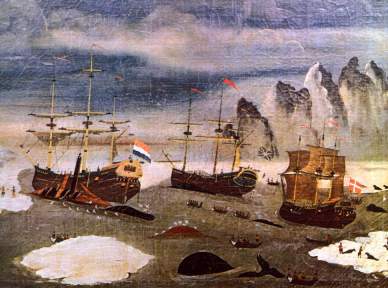

Initially, only the Basque whalers had the expertise to hunt, catch and process the powerful leviathans, but over time their northern European colleagues learnt the tricks of the trade. 

Upon finding its prey, the whaling boat would sneak up behind its catch and harpoon it, which would usually prompt the enormous beast to dive into the depths of the icy cold water. If the harpoon string tightened too much or their boat wasn't facing the same direction as the prey, the boat would capsize, leading to an almost certain death. (Indeed, this happened so frequently that the whalers would bring their own funeral equipment on their northern expeditions.) Once the whale had been tired out, it was beached intentionally and the blubber would be diced into manageable chunks and melted down for transport.


The whalers would move their camps to follow their prey, but gradually small permanent bases, consisting of a few huts and boiling ovens, began to form around the archipelago. 

Skirmishes between whaling ships from England, Denmark-Norway, the Netherlands and France became more regular with each country attempting to lay claim to parts of the sea and land.

The English were the first to assert sovereignty over the Spitsbergen Archipelago, as it was known until the 1920's. The Dutch and French, meanwhile, argued the mare liberum principle, which gave everyone equal right of access to its resources, and Svalbard remained terra nullius, a land without sovereignty, until the 18th century.

After two centuries of intensive whaling, the stocks had been depleted to such an extent that the risky voyages and losses of ships and crewmen no longer made the business profitable, so the whalers left for other pastures.


Trapping

As the whaling towns were left to decay slowly in the arctic desert, Russian hunters and trappers known as Pomors arrived in the early 18th century, having heard of the land animals roaming the archipelago. Risking the dangerous journey so far north, they hunted and trapped polar bears, foxes, seals, walruses and birds. Hunters from other countries soon got in on the action, yet again sparking disputes about ownership of lands.

During the summer, the trappers had 24 hours of daylight and relatively mild weather, but the risk of getting stuck in the ice and having to overwinter were ever present.
A. E. Nordenskiöld


The Swedish House tragedy

The renowned Swedish-Finnish polar explorer Adolf Erik Nordenskiöld wanted to spend a winter in Svalbard and set about building a house that would be the most luxurious Svalbard had ever seen. Trappers had been living in lodges built from Siberian timber because it was the only suitable wood available and easily found as driftwood on the coastlines of the archipelago. Their cabins were small and cramped, with a single room that included bunks, a table and fireplace for warmth, and a small antechamber to insulate the room from the biting cold outside.

A traditional trappers cabin
This wasn't quite good enough for Nordenskiöld, though. He first built a two-storey house in Gothenburg from the best timbers and materials, adding thickly insulated walls and devising a central heating system consisting of a large fireplace and chimney routed through each room in the house in order to heat them separately. The house was then flat-packed IKEA-style and shipped to Spitsbergen, the largest island in Svalbard, along with enough rations and materials for several winters.

Nordenskiöld's Swedish House in Spitsbergen
Meanwhile, in September 1872, a Norwegian trapping expedition had got into trouble in North West Spitsbergen. Having outstayed their welcome, the sea ice took hold of their ship. In terms of getting help this late in the season, they were as good as being stranded on the moon. Thankfully, though, some of the group had heard about Nordenskiöld and his attempt to reach the North Pole before they had left Tromsø.

A small party was dispatched to find his camp, believed to lie some 70km away, and they managed to locate the famed polar explorer. On hearing about their plight, Nordenskiöld gave the trappers some rations and materials for the winter. His camp couldn't accommodate all of the stranded Norwegians, but Nordenskiöld told them about his newly built house, which could easily provide the group with shelter and enough food for a winter. 

Returning to their stricken vessel, the trappers debated the best course of action: either wait and spend winter on their ship, hoping that the ice would at some point give way, or attempt the risky voyage across the ice and sea to the safety of Nordenskiöld's house.

Seventeen of the younger men in the group decided that the long march to a proper house was less risky than staying in the vessel that didn't have enough rations and could be crushed by the tightening grip of the ice. So they left the their crewmates on the ship and dragged a few life boats over the ice for hundreds of kilometers before reaching open water. The journey was over 350 kilometres and, at this point in October, a few of the men had to constantly scrape and smash the ice forming on the boat, as they would sink if the ice was allowed to build up. Nevertheless, the men made it to safety and, relieved beyond measure, set up home in the comfort of Nordenskiöld's luxurious house.

The groups colleagues at the ship were also in luck. The ice had unexpectedly shifted, allowing them to escape its grip and sail home to Tromsø. The authorities were immediately notified about the stranded 17 crewmen, and a rescue party was sent for them as soon as spring arrived. 

When the captain of the rescue party arrived at Nordenskiöld's house, the first things he noticed were two fresh graves. Worse was to follow. Upon entering the house, he found the other 15 men dead in their bunks, on chairs, lying on the floor.

There were no signs of violence – so the question became, what could have killed 17 young and able seamen in a seemingly peaceful way? The captain's men searched the house for clues and found in the journals of the deceased references to bleeding gums, aching joints and overwhelming fatigue.

Of course, scurvy, that well-known foe of seafarers, became the prime suspect, but the men's friends and relatives in Tromsø didn't buy this explanation. These men had been brought up in and around nature and the sea and were well aware of how to avoid scurvy by eating berries and drinking the blood of prey, for example. Moreover, Nordenskiöld's rations included food designed to keep scurvy at bay.

The mystery remained until 2008, when Dr Ulf Aasebø and historian Kjell Kjærwas were allowed to dig up some of the graves and found that it was lead poison which killed the men. 

Back in those days, the ration tins and cans had all been sealed using lead. Nordenskiöld had used the same types of rations and suffered no ill-effects, but his team heated up the food correctly in separate containers. The young men in the Swedish House, however, boiled the food within the tins they found, thereby releasing the poison into their foods. The more sick they became, the more they tried to eat to regain their strength, hastening their dark and lonely deaths in Spitsbergen.


Mining

Around the time of the Swedish House tragedy, the first mining ventures began popping up in Svalbard. Due to its unique geology, all types of resources were found there, and many a prospector arrived in search of his fortune.

John Monroe Longyear
The American John Munro Longyear arrived on Spitsbergen as a tourist and straight away thought that there were fortunes to be made here. In 1906, he founded the Arctic Coal Company and Longyer City, known today as Svalbard's capital, Longyearbyen. 

His venture proved successful and is today continued by the Store Norske Spitsbergen Kulkompani, one of only two companies to succeed in not going under in this arctic wasteland. Other prospectors tried to do the same but failed.

For example, the British entrepreneur Ernest Mansfield had invested his fortune and his investors' money in a marble mine in Blomstrandhalvøya. The necessary infrastructure, housing and machinery were all built from scratch, but when the extraction finally began, the marble fell apart during the voyage to Britain, dashing any hopes of a profit or even breaking even. The reason the marble seemed so fine in the arctic was the permafrost keeping its structure together – it was, alas, treasure only for as long as it stayed in Svalbard.


The ghost town of Pyramiden
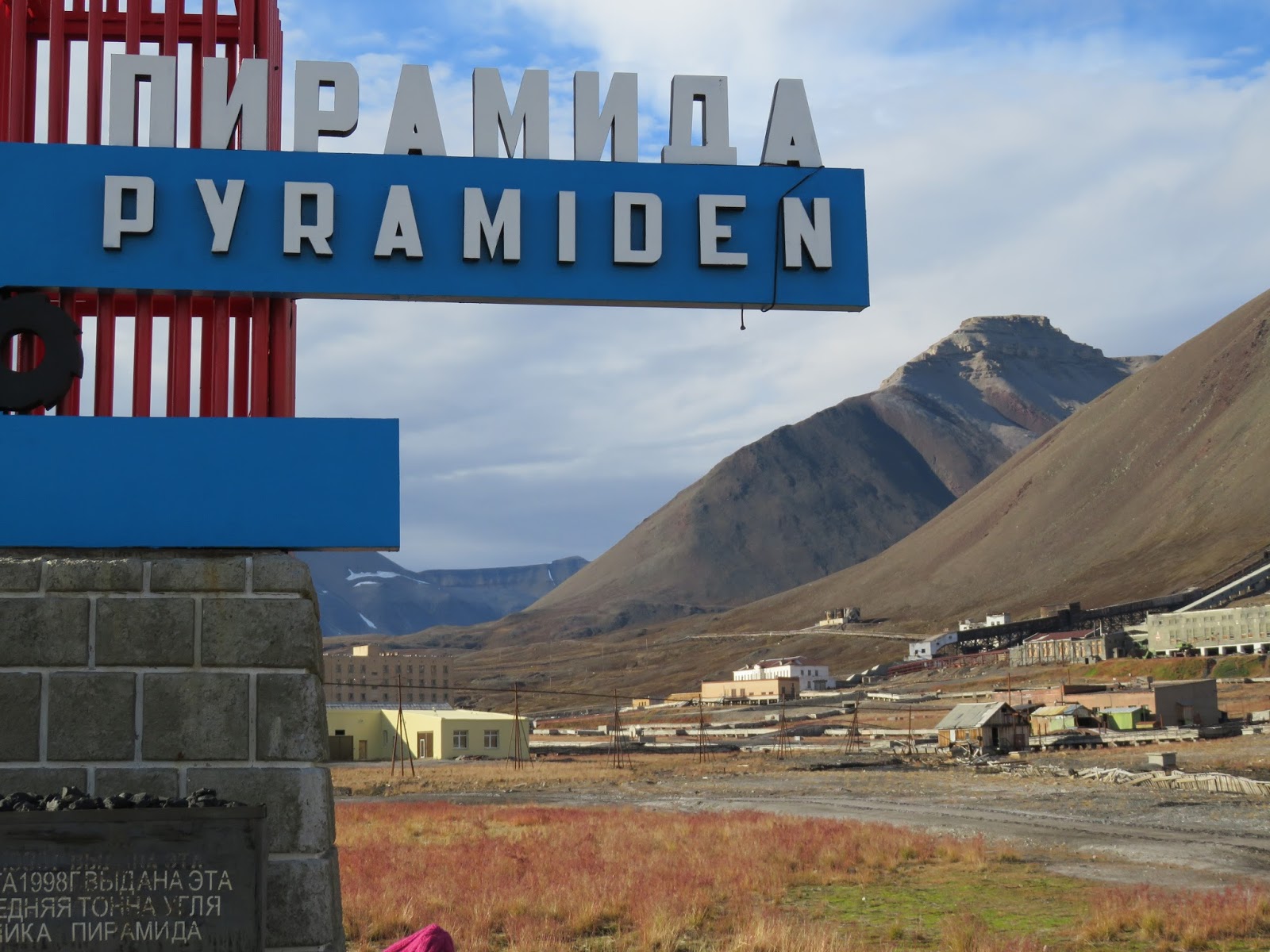
The Russian mining town of Pyramiden is perhaps Svalbard's most famous example of economic, geological and geographic realities killing off the dreams of mining executives. The state-owned company Arktikugol began work here in 1946 and the town became to the Russian mining community what Silicon Valley is to techies in the US.

Its population expanded rapidly to over 1,000, and at one point Arktikugol received some 10,000 applications for every 100 that were successful. Not only were Pyramiden miners the best of the Soviet best, the same high standards were required of anyone and everyone who worked there.

Soon enough, the town grew to contain a school, a hospital kitted out for complex surgery, a cultural house for events, ice hockey rinks for the winter and football pitches for the summer, and the inhabitants had access to all manner of vehicles for exploring their arctic surroundings. According to the town's photographer, Alexandr Ivanovic Naumkin, living there was the happiest time of his life and the town had "everything a young man needed".

The Cultural Palace and Lenin overlooking the main street
Contrary to the majority of coal mines that are dug deep underground, most mines in Svalbard are cut into mountains, with funiculars transporting the workers up, and carts and conveyor belts bringing the coal down. Even with innovations enabling the miners to extract the coal which is of excellent quality, the quantities available in Svalbard were tiny compared to most profit-making mines in the world. In addition, the coal lay in such narrow horizontal strips that the workers were forced to either lie on their backs while drilling above their faces, or lie on their stomachs and drill forward. A strenuous job if there ever was one.

Pyramiden main street

After the fall of the Soviet Union, the subsidies that had kept the mine operational dried up, forcing its closure and, ultimately, the evacuation of the whole town in 1998. Naumkin commented about when he left the town with the last of the evacuees, "we all knew something beautiful had come to an end".

Today, Pyramiden is a tourist destination complete with a hotel and eight staff, including our guide Sacha, countless fulmar and seagulls that have taken over the buildings and a lone polar bear which roams the town.


As mentioned above, just two mining companies have ever been successful in Svalbard, the Norske Spitsbergen Kulkompani and Arktikugol. And they only managed to survive as a result of being heavily subsidised by their respective states.

Legislation for preserving the cultural and natural heritage of Svalbard prevents anything pre-1946 from being removed or cleaned up and, as a result, deserted mines and towns like Pyramiden remain dotted around the landscape, slowly falling apart in the unforgiving but also preserving arctic climate.

Some companies prefer to mothball their operations indefinitely because, in Svalbard, that which is left unattended for twenty years is up for grabs for anyone. Having invested so heavily, a few miners still hope that one day their operations might be resumed.

The rusty remains, like the ones we saw in Pyramiden, provide eerie reminders of human hope and endeavour giving way to economic realities and failure.  Time, the great leveller, is ever-present in Svalbard.

The decaying remains of the Soviet mining settlement of Grumant, abandoned in 1965


Part 3

A unique form of sovereignty

Ever since whalers and trappers began using the resources of the archipelago, questions arose about sovereignty, legitimacy and, most of all, property. Norway, Denmark, Russia, Britain, the Netherlands, Spain and the USA were the foremost countries involved in the rush for Svalbard, and all tried at some point to claim the land.

In 1871, Nordenskiöld began work to establish a local administration for the Spitsbergen Archipelago, as it was known then. The mining companies required enforceable property rights and formalised procedures for resolving conflicts between companies and also between each company's management and workers. The Norwegian government took the lead on the issue, and negotiations for an official framework began in earnest in 1907. This resulted in the Svalbard Treaty, which was negotiated during the Paris Peace Conference.

Due to geographical proximity and having been the most active in the region, Norway and Russia held the most persuasive claims to the area, even though other countries maintained that their operations in the archipelago belonged to them by virtue of terra nullius

Luckily for Norway, though, Russia had been excluded from the negotiations in Paris, which were held between representatives of the Allied Powers (Great Britain, France, Italy and the USA). The 'Big Four', as they were sometimes called, preferred giving control of the archipelago to the neutral and, in their view, harmless Norway rather than to Russia, which had been a great power and was in the throes of a revolution that would lead to the formation of the Soviet Union.

However, the agreement also specified that Norway only would only control the administration of the archipelago, its natural resources and conflict resolution. The treaty forbids any country, Norway included, from pursuing warlike activities in the archipelago. 

When it comes to economic activities, the treaty stipulated that Norway is not allowed to discriminate between countries. Uniquely, therefore, Svalbard is an entirely visa-free destination. It is open for business, studies and leisure for each and every citizen and company of the world, regardless of their nationality.


Norway's gift

After so many architectural and economic ruins in Svalbard, the Global Seed Vault (GSV) provides a more optimistic project, one which will hopefully last longer than the purely-for-profit operations dotting the lands like scars.


Opened in 2008, the high-tech vault provides free storage for duplicates of agricultural seeds from any of the other 1700 seed banks in the world. There are currently some 860,000 samples housed in the GSV, which was built into a mountainside some 130 metres above Longyearbyen airport to protect it from sea-level rises. The vaults are kept at a cool constant of  -18ºC, and the surrounding permafrost acts as a natural fridge and back-up freezer should the seed bank ever lose power.


The project, often referred to as the Doomsday Vault, aims to preserve biodiversity in case of any accident, war, mismanagement or natural disaster that might destroy samples in a local seed bank. 

The Russian Nikolai Vavilov founded the first seed bank in Leningrad in the 1930's and referred to it as a tool box. We cannot foresee which tools we might need in the future, the thinking goes, and it's therefore important to preserve as many as we can. For example, seeds that are today considered sub-standard might turn out to be priceless later due to immunity to future illnesses or providing a higher yield in a different climate than the one we have today.

The people working at Vavilov's seed bank valued his botanic tool box so highly that, during the horrors of the Siege of Leningrad, they refused to eat or use any of the 250,000 seeds they looked after even though by the end of the siege nine of the scientists had died of starvation.


Protecting biodiversity from globalisation

Biodiversity has suffered greatly over the last century as a result of large-scale farming and globalisation. Countless varieties of agricultural plants have been lost as small-scale farmers have been put out of business or been forced to adopt the prevailing higher-yield varieties in order to compete with industrialised farming. 

Moreover, many of the standardised seeds we farm today have been patented by big companies, as a result of which the practices of sharing and saving seeds, both of which helped maintain and produce distinct plant varieties, is now mainly a thing of the past.

In the USA, for example, some 7000 varieties of apple were farmed at the beginning of the 20th century. Today, only 1000 of those remain – the others we have lost forever. Overall, some 75% of the agricultural crops we farmed 100 years ago have disappeared.

The GSV doesn't accept any flower or other types of seeds, but to deposit duplicates of agricultural seeds, banks are simply required to use the standardised documentation and pay for the transportation to the vault. The depositor can then withdraw their seeds at any point.

Although developing countries were at first suspicious of the project, virtually every country has now deposited seeds here. (Apparently the US ambassador was none-too-impressed on a recent visit, finding US boxes held together with duct tape sitting beside the neat and ever-so tidy North Korean boxes.)

This grand project is entirely managed by Norway as its gift to the international community.


Going home

After our few days in this northernmost outpost, I leave with mixed  feelings. On the one hand, as a tourist destination, Svalbard would be difficult to beat in terms of extreme wilderness, majestic animals and otherworldly landscapes.

Like hiking on another planet
But there seems to be an almost menacing nature to this archipelago. The lifeless, ageless, ruthless landscape acts, in my mind at least, like a constant reminder of our mortality and the futility of battling against time. It's almost like the land was constantly whispering "you are but a mere blip in time in comparison to me; I was here long before you, and will continue to be here long after all of you have gone".


Perhaps my perception of Svalbard has been coloured by having previously read fictional accounts like Dark Matter and having watched shows like Fortitude, both of which focus on the dark side of life in the extreme arctic. But the feeling has certainly been entrenched by the tragic stories the locals seemed to revel in telling.

In any case, the days here were long and filled with once-in-a-lifetime experiences, like seeing polar bears and blue whales in the wild, hiking in the most alien of landscapes and spending time among the ghosts of Pyramiden. Still, I am still relieved to leave, to escape the clutches of a land that became the final resting place of so many other travellers. 

A quote I saw at the Svalbard Museum seems to best describe my feelings about what I've seen: "This place is abandoned by God and ought to have been abandoned a long time ago by mankind as well". A harsh truth perhaps, but one that makes me admire the friendly, hardy and entrepreneurial people here even more.

All that said, I am looking forward to seeing flowers and trees again.


13 September 2012

Ode alla Toscana

Buongiorno, bella Toscana. Colazione e poi andiamo in spiaggia. Dopo si ritorna a casa per mangiare cibo molto buono con un poco di vino locale. Dopo, sonnellino e poi andiamo ancora in spiaggia. Di sera, andiamo in una bella e vecchia città nelle montagne per mangiare troppa pasta, cinghiale e vino buonissimi. E poi, buona notte. Ripetere domani... La dolce vita, mi piace.

Prossima fermata, Sardegna, ma è difficile lasciare la Toscana.


2 October 2011

Honeymoon Travelogue: Paradise in 200 words

Part 2 - the Maldives


Picture yourself on a sea plane, flying over azure waters, paradise islands and atolls that glisten in the sun like jadeite jewels. After landing comfortably on the Indian Ocean, a Dhoni - the traditional Maldivian transport - brings you to your destination, Reethi Beach.


Exploring this eden done barefooted, the canopy above serving as a natural parasol while a postcard perfect beach awaits you in every direction.


Reethi's three restaurants and six bars offer an impressive range of cuisines and a cornucopia of cocktails (the Maldivian Ice Tea is a must.) There is also a spa for pampering and a fully equipped fitness centre should you feel the need to work off any guilt.


The Water Villas are simple yet luxurious with a bathroom fit for Marie Antoinette, and a private terrace from where you can admire the tropical fish swimming below.


With one of the best house reefs in the Maldives, you can also snorkel amongst turtles, stingrays, clown fish and virtually the whole cast from Finding Nemo.


Enjoying a candlelit dinner on the beach as the setting sun paints the sky every hue of red is, like the island itself, simply unforgettable.


(Thank you, Reethi Beach. This post was originally written for a travel writing competition. See here for Part 1.)

27 February 2011

Honeymoon Travelogue: From Serendipity to Paradise

Part 1 - Sri Lanka


The 11-hour flight with Sri Lankan Airlines from Heathrow to Colombo was anything but smooth - the usual stress of long haul compounded by broken meal trays, malfunctioning TV's and staff who were rude to say the least - but it was wonderful to finally be on our honeymoon. After having marvelled at the duty free shops in Bandaranaike Airport, which sold household appliances like washing machines and refrigerator alongside the more usual booze, perfumes and sweets, we were met by a very rainy Land of Serendipity and our cheerful guide Lal.  And so we were off. 


Every travel agent we'd spoken with before booking the honeymoon had assured us that February in Sri Lanka would be glorious sunshine all day long. This year was different, however, for it was the year of La Niña with a vengeance (as I've noted here before).


We knew about the recent floods in Sri Lanka, and when we checked the five day weather forecast the night before leaving, the whole island was covered by what looked like a washing machine stuck on the soak cycle - so we were prepared. 


For all its efforts, however, the weather never managed to dampen our spirits as we were too busy enjoying ourselves.


So, in this post, dear reader, I'll try to share with you some of the things we did, saw, heard and learnt on what was to be the best holiday I or my amazing wife have ever had.


Kandy and the sacred sacred tooth


The first stop for our motley crew - driver, Tom, his assistant, Jerry (I kid you not), the aforementioned Lal, and six English couples a good bit older than us - was the city of Kandy, the cultural capital of this Jewel of the Indian Ocean. It's the second city of Sri Lanka, situated in the centre of the country, and we would begin our tour with a visit to the Temple of the Tooth.


Temple of the Tooth
The temple is a place of pilgrimage for Buddhists from Sri Lanka and abroad. It was built in the 17th century to house what's believed to be the left upper canine tooth of Siddharta Gautama, the Lord Buddha himself. Most of what one sees today, however, has been added on since, and the moat is pretty much the only remaining original structure. 


According to legend, the tooth was taken from the Buddha as he lay on his funeral pyre and then smuggled into Sri Lanka by Princess Hemamali who hid it in her hair. (Even Lady Gaga would have difficulty topping this particular fashion accessory!) The relic became the foremost symbol by which Sri Lanka's kings asserted their legitimacy and this temple is one of many that have been built to house it.


We didn't actually get to see the tooth itself - a privilege reserved for high llamas and other dignitaries - but the two-storey shrine which holds the relic is impressive. The structure is resplendent with gems and huge elephant tusks, and intricate paintings depicting the life of the Buddha. 


Sri Lankas buddhists believe that they are required to make the pilgrimage to the temple at least once over their lifetime. And we saw a constant flow of people going to worship before the shrine, most having brought beautiful flowers with them to leave as offerings. This, they believe, improves their karma.


The bustling streets of the Kandy's city centre were filled with tuk-tuks and other traffic - and judging by how they, we and even the lorries were constantly overtaking each other, drivers here  fancied themselves as rally aces. Each small shop on the street seemed to sell everything from fruit and veg to high end electronics, and there were reams of confetti hanging across streets and around houses - something you see everywhere in Sri Lanka - with blue denoting affiliation with the ruling political party (UPFA) while green belongs to the opposition party (NDF).


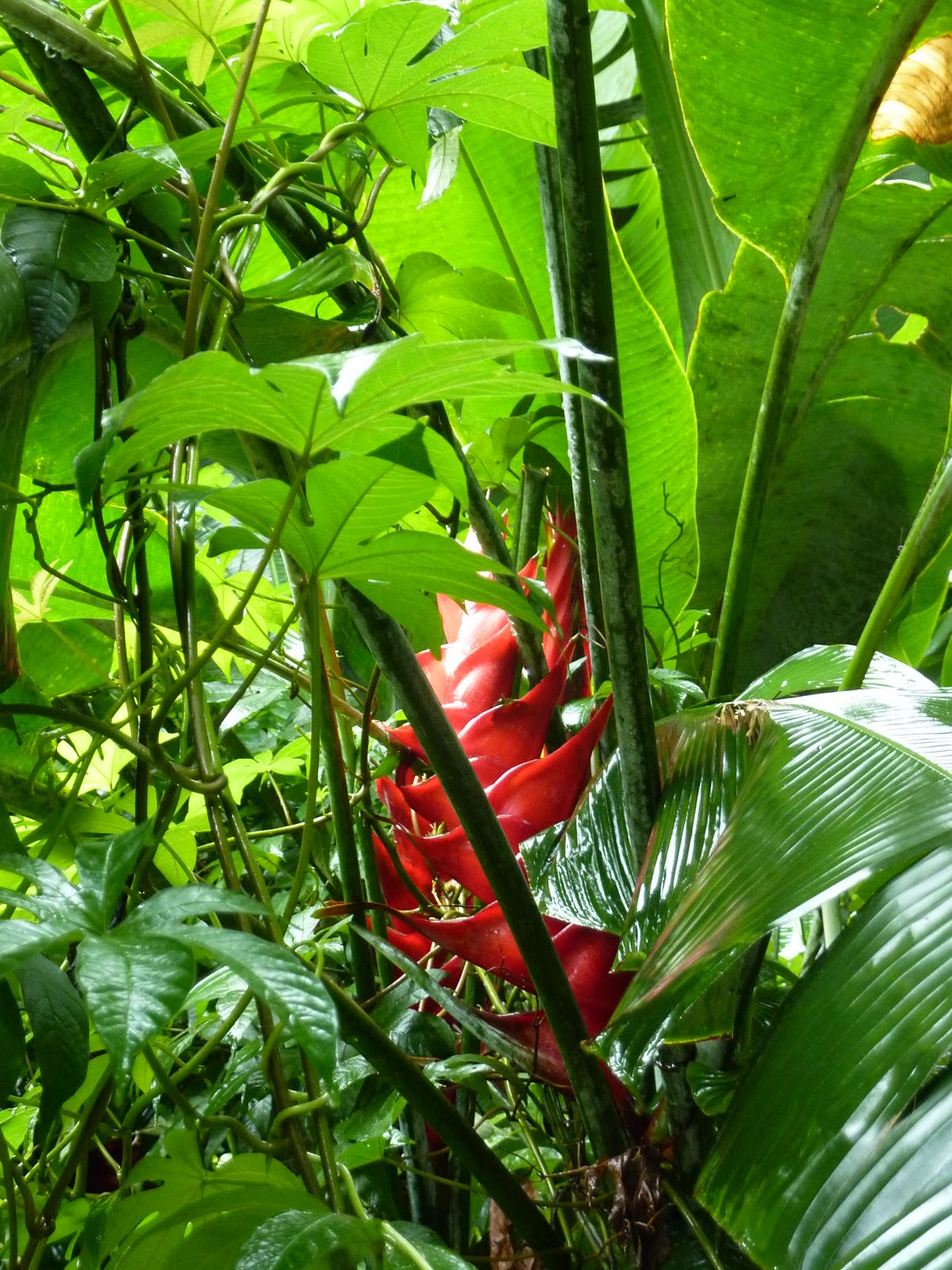
It was difficult to make out much else of Kandy due to its distinct topography and lush vegetation. This city of over 3 million inhabitants lies at the northern tip of the Hathana mountain range. As a result, the residential areas outside of the of the commercial  centre had literally been built into dense forests and hillsides of the mountain range. These communities were in effect camouflaged by astonishing amounts of greenery:  palm trees, cycads and a myriad of heliconias wherever you looked.


After Lal almost got us arrested for using a short cut out of the temple, we were brought to see traditional Kandyan dancing at Kandy's cultural centre. The building itself was dilapidated and a health and safety nightmare to boot - it took over half an hour for people to file out of the auditorium through the only exit, and this was after a show with plenty of real fire and sparks - but the dancing itself was fantastic. 


The dances were stories, the protagonists of which were animals like peacocks, birds and, this one, cobras:


After an evening filled with delicious curries, devilled pork and fluorescent green rice washed down with diluted red wine, we looked forward to the next day's trip to the Pinnawela Elephant Orphanage. 


Big Friendly Giants


Pinnawela Petting Zoo would describe the place better as the focus seemed to be more on tourism rather than conservation, but the orphanage is still an invaluable place for elephants who have trouble living in the wild. 


The residents included orphaned little Dumbos, while some had been mistreated by their owners, and we met one old fellow who's leg had been blown off by a mine during the civil war.


According to Lal, the conflict began after the "Sinhala Only Act" of 1956 declared that Sinhalese was to replace English as the infant state's official language. The policy understandably alienated the minority population of Tamils, mostly Hindus, who were effectively disenfranchised as every official document and activity had to be conducted in a language they did not speak. 


After initial demonstrations and rioting, the Tamil's began moving to the north of the island, and their efforts to achieve equal rights gradually hardened into a call for total independence. The Tamil Tigers were formed to pursue this goal by any means necessary, leading to a bloody and drawn out civil war.  


Their choice of name and symbol, incidentally, resulted from how Sri Lanka's flag depicted a lion, the king of the jungle. The Tamils, then, adopted the tiger, or prince of the jungle, if you will - even though the island has none of either.


The conflict ended in May 2009 after over three decades of fighting and atrocities by both sides. These days both languages are officially recognized - and Lal said it was remarkable how fast the population have chosen to move on and nowadays no-one really talked about it anymore. 


But I digress. It was the first time either of us had met these majestic creatures at such close proximity - and they certainly didn't disappoint. Although not as large as their African cousins, the Asian Elephant (elephas maximus) is still huge to say the least. But they were also docile, friendly and gentle - until, that is, when a few began running around the place in frenzied anticipation of feeding time. 


It was impressive to see how fast the elephants downed a litre of milk - which comes as little surprise, of course, given how these giants eat some 75-kilos of green matter each and every day.


We then had the pleasure of watching elephants being bathed in the river while we indulged in a delicious buffet at a restaurant a little upstream - something I certainly don't remember happening in my home town. 


It was truly wonderful meeting some of these gentle giants and I recommend it to everyone, and not just because tourism is the orphanage's main source of income. Indeed, Sri Lanka's elephant population has fallen dramatically over the last century, from almost 15,000 to some 3000 surviving today - so hopefully places like this will help to ensure that the trajectory of their numbers would henceforth move upwards.


As we left the orphanage to visit a tea plantation, we stopped off at the Royal Botanic Gardens in Kandy, which was fitting for us as we'd been married two months prior at London's Kew Gardens. The flora was pretty, and the orchid house was stunning, but, for me, the most interesting part was the fauna: giant bats, each the size of a cat, and just like the ones that had so freaked me out when I first saw Indiana Jones and the Temple of Doom as a young'un

I was also impressed by the Scorpion Man - as we named him - a park employee with a lucrative side operation of his own. He walked up to us offering a chance to touch a poisonous scorpion which he dangled on a leaf, but just looking at it was enough for me and I instead handed him a few hundred rupees to take the deadly insect away.


Time for a cuppa


Tea was introduced to Sri Lanka in 1852 by a British planter called James Taylor. Since then, it's become Sri Lanka's main export, far outstripping its closest competitors: cinnamon, gems and textiles. 


The tea plantation we visited was like going back in time to the age of steam. All except one of the machines in use was over a hundred years old, while the time tables and rotas were kept on a chalk boards. 


Although fortunate to have a job, the tea pickers are only paid a 150 rupees per day, which,  in London, is equivalent to about a can of Coke. And the pickers, all of whom were women, would only be paid for their day's work if they managed to pick more than the minimum amount of, I think, two kilos of fresh tea leaves. What an incredibly tough job.


We also learnt that pretty much every type of tea is made from the same plant. The several distinct varieties are the result of differences in the oxidization process, i.e. the length of time the leaves are dried for. Before leaving, we were told that our PG Tips and Liptons are made from the left-overs of the good stuff, which is mainly consumed in Russia, Asia and the Middle East.


Afterwards, we also learnt about Sri Lankan attitudes to building. Local houses and shops, and other small construction projects were in most cases paid by loans from banks which would usually only lend enough for one floor at a time. As a result, the majority of houses had been left in a state whereby another level could easily be added at a later date. 


In front of most building sites, which were small affairs, you could also see a scarecrow. This was a local defence against the envious eyes of neighbours and passers by - the green eyed monster being capable of jinxing an otherwise sound project. Some sites also had a pumpkin dangling from a rope, a natural clock that dictated the builder's deadline: get it done before the pumpkin rots, or risk having your pay docked.


The magic mountain


After a few hours of little rain and plenty of overcast, the heavens opened again on our way to the cave temples of Dambulla. Although the caves on this mountain, situated some 72 kilmotres from Kandy, were inhabited by humans over 2700 years ago, the current look and feel of the place - think Indiana Jones - dates back to the 1st century BC. 


So far, over 80 caves have been found, which together hold 153 statues depicting the Buddha sleeping, meditating and reclining; and several kings and various gods and goddesses. The buildings that lead into the caves are more recent (1938), but they still add to the mystique of this mountain, especially when the rain is falling with monsoon-like force.

I had never seen anything like it: cave after cave of Buddha statues and stupas (the Buddhist equivalent to the Christian cross, which often contain valuable relics), many of which are over two thousand years old, and carved from the mountain itself. 


The walls are covered with gloriously coloured paintings of geometrical patterns and cosmological visions. One showed the Buddha being tempted by demon-like manifestations of his human desires, while another, quite fittingly for our visit, pictured the meditating Buddha being shielded from the rain by the hood of a helpful cobra that had entwined itself around him.


The mysterious leak
Desires tempting the Buddha
The caves are also home to a centuries old unsolved mystery: one of the chambers has a leak in its ceilings, from which water has been dripping since the caves were first decorated by the monks inhabiting them - back in the days when, in far off Europe, Rome was still a republic. The drip has never ceased, not even during the worst droughts - and, still, to this day no one knows where the water comes from. UNESCO has spent the last seven years methodically searching for the source - with no success.


A pot has been placed to hold the mysterious water, and it is overlooked by several meditating Buddhas, who, I felt, know more about the mystery than they would have us believe.


While we were entranced by this magical place, dusk had arrived and the rain had begun to fall even harder. The path leading down from the mountain is made of cobbled stones and steps of varying width and height, but by the time we began our descent it was overwhelmed by water rushing down to sea level, and the little light we had to navigate this treacherous path was giving way to the darkness of night - a tad too swiftly for our liking because there were few artificial lights there to guide us.


This, of course, was not a recipe for a safe or leisurely walk, but it certainly added to the mystique of the dark mountain, home to god-like beings, hallucinatory visions and age-old mysteries. By now, even the tourists with colourful umbrellas and soaked trainers seemed to have transformed into pilgrims, nervously helping each other down the path, step by slippery step.


We finally made it to base camp, relieved but also exhilarated. Each of us was drenched, but the feeling we shared was one of having just experienced something magical and dangerous - an addictive combination, for sure.


The drive from Dambulla to our next hotel in Habarana, where warm showers and clean clothes awaited us, continued was equally, if not more, dark, damp and dangerous. The torrential rain continued and stretches of the road, having been tested so severely over the last few weeks, had simply disintegrated into ponds interspersed with potholes. Our driver, Tom, was forced to navigate the road at a pace even snails would snigger at - something he wasn't happy about because, as already mentioned, Sri Lankans like their driving fast and furious. Even still, at times the wheels of the van were literally gliding on the water, which was an interesting sensation, for sure, but one I would rather not experience again.


Polonnaruwa The Great


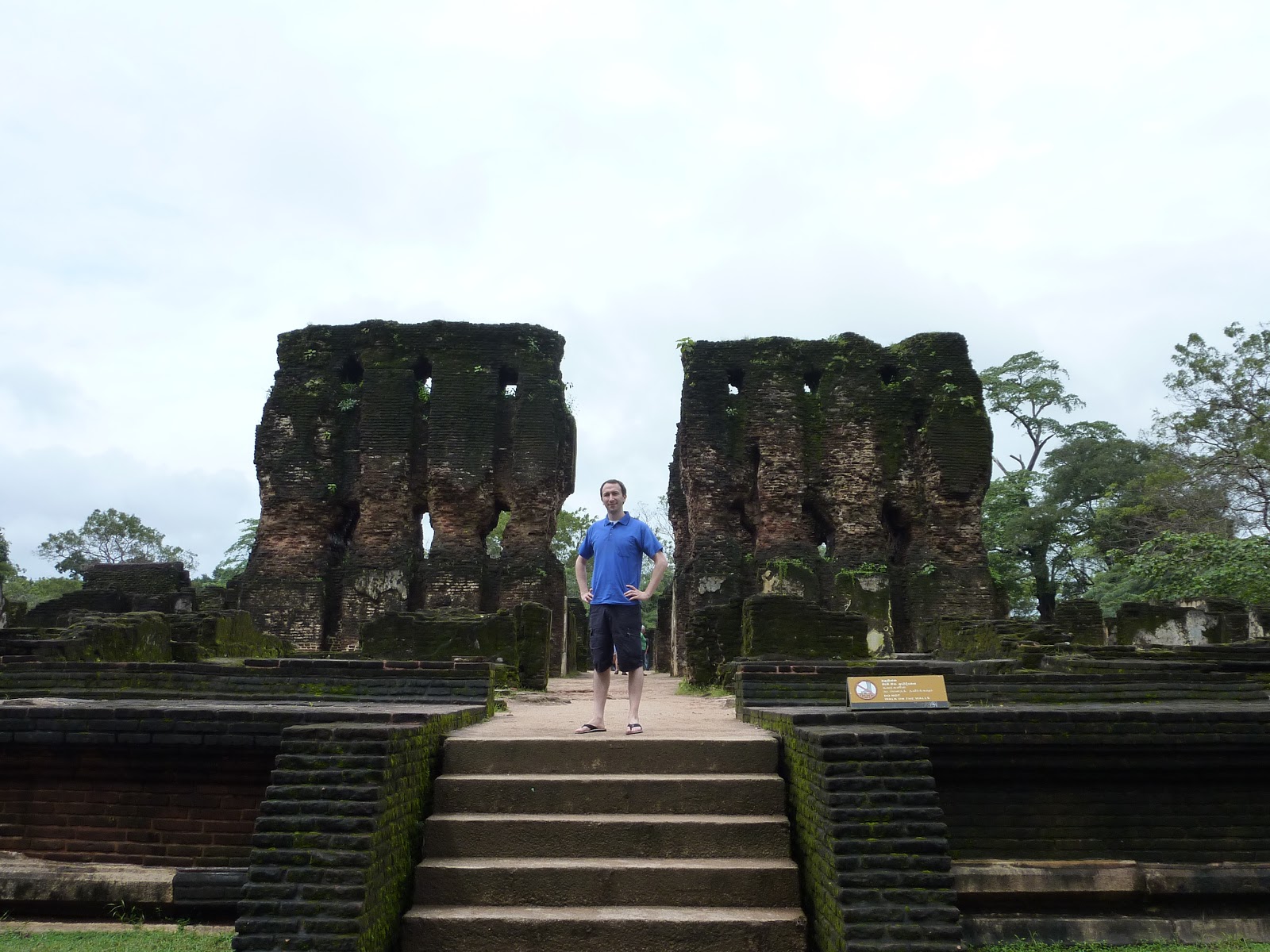
The next morning the sun came out and we were off to Polonnaruwa, the medieval capital of Sri Lanka. The Hindu invaders of the Chola dynasty had captured the city in 993, but the Sinhalese king, Vijayabahu I, defeated the occupiers in 1070 by taking advantage of how the Chola were distracted by unrest in Southern India.


Trade, agriculture and art began to flourish during the reign of Vijayabahu's grandson, Parakramabahu I (1153-1186), and he is revered in Sri Lanka as an almost mythical ruler. Indeed, the ruins provide ample evidence of some of his great achievements


The area is vast and littered with homes, temples, shrines, parliamentary chambers and swimming pools, along with lots of monkeys running around the place. 


The people that had inhabited this city were obviously much smaller than today's Sri Lankans, for the rooms and corridors are tiny even in the king's palace. But wandering around this sprawling city, or what's left of it, it takes little time to see how incredibly skilled they were. 


Some temples still stand several stories high, even after the jungle had claimed this area for centuries. The people of Polonnaruwa also modified the surrounding countryside by building vast artificial lakes that were used as reservoirs for irrigation systems, many of which still work today. The Parakrama Samudrayama water tank is so large that it's been known as the Sea of Parakrama - and the name still rings true.


The artistry and skill of Polonnaruwa's bricklayers and sculptors was also plain to see in countless temples and administrative buildings, and many of their outer walls were adorned with inspired reliefs that still manage to look delicate yet imposing.


The area is full of temples for the Buddha, but there are also Hindu temples, like the Shiva Devale temples for fertility. In one of them, women still leave offerings of milk and, if I remember correctly, cinnamon in front of a phallic shrine so as to placate the gods and ensure offspring.


Some of the structures were made of large asymmetrically shaped stone slabs that slotted together so neatly that one would think their joints must have drawn afterwards to create such an illusion. The walls were often filled with ancient sinhalese writing - like European cathedrals were often built to tell biblical and classical stories on their facades.
A short drive away, which felt slower than the moss growing on the ruins as a result of some seriously large pot holes, was the most impressive part of this ancient town.


The Buddha statues at Gal Vihara are a stunning testament to endeavour, skill and tenacity, not to mention the human will to mould the world to his liking, whatever the effort involved. 


These four gigantic Buddhas have been carved from a huge wall of granite. What must have gone through the minds of the artisans charged with this monumental task when they first looked at the mountainous stone and realised the amount of work they had in store? Or can you imagine the cheek of whoever gave them the job: "right so, here's a stone the size of several double decker buses. Now get your chisel out, good chap, and carve it into some perfect representations of the Buddha." 


The stunning results, however, make one shut up and just marvel at how malleable stone is when faced with such hardy material as we humans are made of.


The largest statue depicts the reclining Buddha and is over 14 metres. It is distinguished from a sleeping Buddha by how the toes on his feet are not in a straight line. The fact that one leg seems shorter than the other symbolises that this is the moment of his death, the last spasm of his worldly body. For Buddhists, this is the moment when Gautama achieved parinirvana, of awakening and being released from the cycle of reincarnation.


A bit of advice: it is deemed disrespectful to pose by a Buddha with your back facing the statue


Back in the real world, tragedy


Our journey back from Polonnaruwa was a sombre affair, however. Although we were some distance from the worst affected areas in the east of the country, the human impact of the recent and continuing flooding had become depressingly obvious on the roads we travelled that day.


For us, the near constant rain was a slightly disappointing turn of events given how any other year we would've been piling on the sun block in an attempt to only burn our skin up to a healthy looking tan. For the people who lived on and off this beautiful land, however, the consequences from the freak weather were disastrous.


We drove past rice fields that had been completely submerged under what looked like the lakes built by Parakramabahu The Great. Each destroyed field heralded hunger and meant a year of hard toil laid to waste - and that's before considering the effort involved in making the fields productive again.


Countless roads, as well, had been rendered impassable, thus marooning whole communities with only scant access to food, fresh water and medicines. 


We saw families shielding their - what for us would be - meagre possessions from the flood waters. Some were laying down sand bags while others were busy digging ditches so as to divert the deluge. Despite all their efforts, however, several homes had already been swamped by the ever rising waters.


On passing one of these, I saw a woman standing in front of what I presume was her home, which had been swallowed up by the muddy brown water. She was holding a baby against her bosom - a sight I will never forget because of the look on her face. I won't try to describe it here - I'm not paid for writing journalistic drama.


The very same evening, in our comfortable hotel room in Habarana, I saw Polonnaruwa again. It had made the headlines on CNN and there were pictures of flooded fields and dozens of abandoned vehicles lining the roads between them. We also learnt that we were now in what was officially the wettest place on the planet.


At least, I thought, we were bringing some money into the country. Even if this was of little or no consolation for those affected by this natural disaster, it was still probably better than nothing.


Herbs and spices


The next day we were due to visit the Sigirya Rock Fortress. But first, we were treated to a tutorial on dozens of well and lesser known plants, herbs and spices, and the various ways they can be used for our benefit.


I must apologize, though, dear reader, as the only details I can remember from the lesson were that red bananas are good for a man's virility, limes are beneficial in pretty much every way and if pepper is only dried, it becomes black, but if it's first soaked, it becomes white. Otherwise, the only thing that stayed with me was how much fun it was being guided through a jungle and being taught about this remedy for that symptom.


This amnesia was, I think, brought about by the spice massage we received in a hut at the end of the walk, which effectively wiped my mind clean of any thoughts, along, it would seem, with the lessons we had just learnt. Perhaps this was a side-effect of the red banana extract they used, or the oil of ulay, who knows, but even if I was none the wiser, I certainly felt a lot better as a result!


Into the lion's lair


And so, refreshed and relaxed, we made our way to the 'Lion's Rock'. Our first sight of the fortress was of a rocky protrusion towering over the surrounding jungle that was partially obstructed by clouds. By the time we got closer, however, the clouds were beginning to lift and we were in for one hell of a treat.


The site had been inhabited by Buddhist monks since the 5th century BC, and the Sigirya defensive complex that we see there today, along with its surrounding gardens, was built in the 5th century AD by King Kashayapa. This happened after he had first killed his father to ensure he, a bastard, would reign instead of the rightful heir, his half brother, Moggallana. Having forcefully made himself king, Kashaypa then swiftly moved court to this location in order to safeguard himself from any reprisals. Once you go there, it's easy to see why.


The gardens themselves were similar to those in Polonnaruwa, with the exception that everything here had been planned and built in one sweep. This was evident from how purposefully and geometrically everything was laid out to fulfil a clear vision - an undertaking somewhat similar, I suppose, to how Baron Hausmann would centuries later raze and then reorder 19th century Paris to suit his and his master's (Napoleen III) fancy. As it was, both the city and fortress of Sigirya were built in just 7 years. Amazing, isn't it, the things you can achieve with slave labour.


The feeling one gets when walking up toward the Lion's Rock was that these paths were meant to impress and even scare visitors, so imposing is the colossal rock - the size of a mountain - to which they lead to. To underscore the importance of the place, the paths and structures form straight lines which converge at a vanishing point that just happens to be where the king would hold audiences to those he saw as deserving of his time and attention.


These buildings were built to withstand pretty much anything that his unseated half-brother Mogallana, or anyone else for that matter, could muster. You can still see the how they were built on top of massive stones, with the structures slotting in neatly into carved holes which acted as natural foundation stones.

The aforementioned paths that lead to the entrance of the fortress are also lined with artificial streams, swimming pools and fountains that still work today, a mere 1500 years after they were first built. Quite some plumbers, they must have been.


After Kashayapa fell, the jungle claimed it for centuries and Sigirya was only rediscovered in 1831 by a Major Jonathan Forbes, who first described it as the "bush covered summit of Sigirya." This, as we will see, couldn't be further from the truth, but the first systematic archaeological excavations for the city only began recently, in 1982 to be exact - around the time of Duran Duran (the fortress can be seen in one of their well known music videos, along with Polonnaruwa). No one knows how much of the city still lays hidden underneath that jungle that surrounds it and UNESCO's archaeologists are continuously uncovering new buildings and areas of the city.


The climb to the top of the Lion's Rock consists of a meagre 1200 steps, and, like at Dambulla, many of them were overflowing with water due to the freakish weather. Upon rising above the jungle canopy - what amazing views opened in front of us - we were met by the Mirror Wall, which does exactly what it says on the tin. 


The wall used to extend all around the mountain, but only a section of it remains. Its name comes from how it was treated with bees wax and egg white, giving it an unmistakeable mirror-like shine. Perhaps not clear enough to help today's ladies to apply their make up, but you could still make out broad reflections, a feat in itself considering how old it was.


The wall might also be one of the oldest graffiti sites in existence as the strict warnings of fines and imprisonment hadn't stopped people from scribbling on it in various languages, from English to ancient Sinhalese.


From the Mirror Wall, we ascended up a cramped and rusty stairwell - an unnerving experience, it must be said, for those, like myself, who have issues with heights - to gape at the captivating Cloud Maidens.


These are frescoes (paintings made with plaster, thus requiring great skill as the artist has but one chance to get it right before their "canvas" solidifies, literally cementing the picture into the wall) of beautiful women of many types, from Sri Lanka and far beyond.


Some of the luscious ladies might have been members of Kashayapas court, while some are thought to be depictions of goddesses, as is suggested by the way they hover on clouds. The former, lighter ones are called Lightning Princesses while the latter, darker ones are the Cloud Maidens.

There used to be hundreds of these beautiful frescoes, looking down on the city from all sides of the mountain. Unfortunately all but 22 have been destroyed: some by time - tempus edax rerum - but some on purpose by the monks who reclaimed the site after Kashayapa's rule.


Perhaps the ladies simply proved too much of a distraction for the more impressionable of the monks, which would be understandable given their enigmatic smiles and curvaceous bodies. Nevertheless, to knowingly destroy  such masterpieces as these, whatever the reason, is surely unforgivable.


In any case, before I get myself into trouble - I am a newly married man, after all - I feel it wise to leave the last word on these enchanting women to a previous visitor who, in 800 AD, scribbled on the Mirror Wall:


     The lovely girl with golden skin entices the mind and eyes
     Her lovely breasts cause me to recall swans drunk with nectar


While the Lion's Rock was a formidable natural fort in itself, the summit of which must have been as safe as any other contemporary fortress, Kashayapa had also built weapons into it. We saw boulders the size of houses that had been placed precipitously on top of stone stilts so that they could be dislodged in an instant. If push came to shove, these gigantic weapons of mass destruction would have thundered down uncontrollably and no doubt inflicted horrendous damage on anything and everything unfortunate enough to be in their path.  


Next we found ourselves in front of two giant lion's paws. These mark the entrance to the top of the mountain, and what a sight it must have been when a whole king of the jungle towered in front of you, at least some four stories high. Today, however, only the paws remain and the rickety stairs that lead to the summit don't quite have the same effect.

On the summit itself was Kashayapa's palace: a large complex of buildings many of which used to be several stories high. There were lodgings and dining rooms for banquets; there was even a swimming pool, the water for which was pumped from springs at the base of the mountain or, during the monsoon, collected from rainwater. 


Except for the pool, the whole summit would have been covered in terraced buildings that were staggered, each row higher than the preceding one, so as to break the wind coming from the plains.


The panoramic views are spectacular to say the least. We were also lucky that the clouds that previously covered the top had evaporated and, now, the the jungle canopy spread out below us, as far as the naked eye could see. 


To the south we could see the Habana mountains,  along with the mystic mountain of Dambulla. In the east, we could see Polonnaruwa, and the artificial lakes of Parakamabahu the Great. The plains beneath us seemed so distant - in fact, it was difficult to believe that we had only climbed 1200 steps to get here, surely whoever counted them must've missed a few!


In its heyday, this must really have felt like a city in the sky - and it's all the more remarkable considering the speed at which it was erected. But just as fast as it was sprung up from the jungle, Kashayapa's crimes would come back to haunt him, ending his short spell as king and causing his magnificent city to crumble and be lost for centuries.


For Mogallana returned to lay claim to his birth right. He came with help from Indian armies, and Kashaypa's hubris caused him to make a fatal blunder. Although it would have been virtually impossible for the opposing armies to reach the summit, it was so well protected, Kashayapa chose to meet his brother's forces head on. The fog of war was to separate the king from his bodyguards and, isolated and effectively surrounded, he chose to slit his throat rather than surrender to his half-brother's forces.


Thus, after Kashayapa's 18 reign, Mogallana became King of Sri Lanka in 495 and he moved his court to Anuradapura, converting Sigirya into a monestary. The monks who inhabited it thereafter did their best to erase this patricidal egomaniac from history, allowing most of the gardens and the palace itself to be reclaimed by the jungle.


On the way back to the hotel, Lal pointed out some tree houses beside the rice fields. He told us of how, each night, the farmers here would take turns to sit in them in order to prevent pigs from coming to feast on their crops. They would  sing to themselves what, to us, would sound like lullabies so as to stay awake and, perhaps, keep themselves company as well.


What a beautiful image, I thought: a quiet countryside where the darkness of night is broken by regularly interspersed torches in tree houses, where men sing lullabies that echo gently over the rice fields, while awaiting for the returning light of morning.


And, so, this story of our journeys on this beautiful island in the Indian Ocean came to a close.

NEXT STOP: PARADISE...