19 January 2014

From a county show ox to the possibility of direct democracy

In 1906, visitors to the West England Fat Stock and Poultry Exhibition were asked to estimate the weight of a live ox after it had been slaughtered and dressed. Upon analysing the results of this competition, the Victorian polymath Francis Galton noticed a curious thing: the average of everyone's guess wasn’t just closer to the correct answer than the winning guess; it was also more accurate than any of the expert judges.

Quoting this and subsequent scientifically more rigorous evidence, the program Ultimate Swarms (BBC 1) argued that animals which exhibit collective behaviour are at their strongest when there is no single leader. This is because individuals, however capable, are nonetheless fallible. A collective, on the other hand, is able to counteract and mitigate the consequences any singular errors.

Intelligence in numbers


This holds true, for example, when looking at the evasive actions of a shoal of tuna, twisting and turning in an effort to outmanoeuvre animals of prey. Even if a few unlucky fish end up as lunch, the aggregate of each individual action produces a highly responsive defensive unit – indeed, one that is far more formidable than if the shoal were directed by a single lead fish.

Honey bees also take advantage of this collective intelligence. For example, when the time comes, it is not the queen bee who decides the location of the colony’s next home. Instead, this decision – vital for the survival of the group – is a communal choice. Upon discovering a potential nesting site for the colony, the worker bee will report back to the beehive and promote their find with a "waggle dance". This form of communication imparts information to the rest of the hive about the location and features of the newly found property. The winning dance – the one that excites the colony the most – will determine the location of the collective’s next home. A kind of bugs life X-Factor indeed.


But back to the ox and the county show in Plymouth. After realising that the median of all the guesses came to within 0.8% of the correct weight, while the average came even closer and was also more accurate than the experts, Galton reasoned that, "according to the democratic principle of ‘one vote one value’, the middlemost estimate expresses the vox populi, every other estimate being condemned as too low or too high by a majority of the voters”. 

Now, if this vox populi identified by Galton arrives at better answers than our so-called experts, and studies in swarm intelligence point to group decision-making being favourable to actions directed by a single leader; then what does this say about our reliance on individuals to ultimately decide the direction of our communities?

Thankfully, we in the West at least are able to vote in our leaders, but human collectives tend to still be guided by a singular brain, whether it be a PM, President or dictator. Our current system for collaborative action endows our rulers with the authority to weigh and consider the available information in order to arrive at decisions that will then affect us all. However, it's still just one individual making the final call.

Online to the rescue
In the wired parts of our world, however, there rests a gadget in virtually every gentleman's pocket and each lady's handbag that could be utilised to capitalise on our collective intelligence. 

Moreover, the daily routines of most of us already include posting statuses, checking tweets, and dealing with all manner of online chatter.  It shouldn’t, therefore, be too burdensome for each of us to have a civic obligation that would regularly poke us into thinking about a subject to do with our communities, hence, our own lives. 

It could be as unobtrusive as receiving an email, text or Facebook notification requiring us to vote for a collective course of action by clicking on “like” or “dislike”. Such e-plebiscites could take the form of questions, such as "should speed bumps be installed on street Y?", or "should land X of this council be used to build a shopping centre, business centre or park?", or "should this council buy energy from wind farms or shale gas producers?"

The user interface could be a simple page showing the question, and a button or two with which to assert one's position. The resulting votes would then be calculated by a Google-type number-cruncher.

  Each adult could own a civic profile ("Civicbook"?) connected to their council, allowing them to only vote on matters directly relevant to their lives and to their communities (and perhaps a national equivalent for larger and broader questions).

Every adult member of the body politic would also retain the power to bring up issues for debate, as already happens with the online petitions in the UK that can trigger talks in Parliament. And every time a citizen were to create such an e-plebiscite, it would be permanently displayed on their profile  resulting over time in a history that would flag up any conflicts of interest, thus bringing transparency and long-term accountability to our political interactions.

Such a Civicbook should also allow everybody to browse questions posed by others and to pick causes to "like" or "dislike".  Collectively agreed-upon rules would then dictate the frequency of these e-plebiscites and the threshold for "likes" that would trigger a referendum. 

There should also be a statutory duty forcing people to take part regularly, at risk of losing some commensurate privilege, right or benefit; not necessarily compelling us to vote on every question, but at least on an agreed-upon number. 

The thing is, this is far from some idealised techno-fantasy – indeed, a form of direct democracy similar to this is already practiced in Switzerland. Elections and referenda, increasingly often electronic, on all types of issues take place four times a year in each Swiss canton (about equivalent to our councils). 

Swiss citizens are able to, for example, demand popular votes, amend the constitution and even veto laws and spending bills through these referenda. The relatively small size of the cantons (in effect, peer pressure) and, in some places, fines for not taking part in elections ensure that everybody has an incentive to fulfil their duty.  

Likewise, the citizens of Iceland were allowed to draft their new constitution via crowd-sourcing – as is now also being advocated for the UK in a new project at the LSE.  So the technology already exists – what is missing is the political will. Our leaders and decision makers need not worry about their livelihoods, however, as we'd still need experts to analyse, inform and galvanise the population on the relevant questions of tomorrow.

Even so, as Galton opined about the county show competition, “the average competitor was probably as well fitted for making a just estimate of the dressed weight of an ox, as an average voter is of judging the merits of most political issues on which he votes. 

How to define "Politics"

The question is, how prudent is it for us to outsource our stakes in society to career-politicians – with their party political responsibilities, ideological agendas, vested interests and core voters – when these days we could so easily each wield the power ourselves? 

Moreover, the zigzagging, even schizoid dynamic of oppositional politics – the governing party moulding the country according to their proclivities, the opposition trying to undermine them, only for the roles to be reversed after a Parliament or two; and repeat ad nauseam – seems far from an efficient or productive system for guiding our societies toward sustainable and long-term prosperity. 

If we each had the exact same amount of say, in no way mediated or determined by whichever party made it into government, it would seem to follow that there would be a lot less, if any, need for the kind of arrogant partisanship and ignorant tribalism that so often goes for "debate" amongst the political classes, the MSM and, in particular, online comments sections. Merriam Webster offers several definitions for Politics

Here are two:  “Activities that relate to influencing the actions and policies of a government”; and “Getting and keeping power in a government”. The former, in my mind at least, would better describe this type of direct, power-in-the-palm-of-your-hands politics. 
The latter, meanwhile, reflects rather aptly our current, depressing-for-most-but-lucrative-for-a-few party political system.


We are incredibly lucky and privileged to be alive at a time when the power to influence our societies could reside equally in each and every individual. Indeed, modern technological advances are bringing us the opportunity to consign to the dustbin of history  where it belongs with such other iniquitous systems as feudalism and imperium  our paternalistic form of representative democracy. 

These days, a large scale state run by an electronic form of direct democracy is a real and distinct possibility, one that even Plato might have approved of

A single official – democratically elected or otherwise – is always prone to such quintessentially human traits as vanity, greed or being fallible, as are we all. So, when it comes to questions that affect communities, societies and countries, wouldn't it be more prudent to trust the votes, so easily collectible these days, of everyone affected in order to arrive closer to the optimal solution? Swarm intelligence, Galton’s vox populi and Equity  one vote, one value  all seem to suggest it would.

14 October 2012

The EU wins the Nobel what prize?

On Friday, the Norwegian Nobel Committee awarded their highly coveted Nobel Peace Prize to the European Union. According to the Committee, the "union and its forerunners have for over six decades contributed to the advancement of peace and reconciliation, democracy and human rights in Europe."

Well, yes, the EU has done a lot of good. The free movement of people, for instance, has given Europeans the possibility of voting with their feet. Despite what the Daily Mail would have us believe, this right to move will force governments to raise their game. And red tape emanating from Brussels risks stifling growth, but the common market gives European businesses the opportunity to branch out into new markets – a nice by-product of which is enhanced consumer choice.

But the Noble Peace Prize? Seriously? Have the Nobel Committee been living on the bottom of a fjord for the last five years?

Referring to the close ties that exist today between France and Germany, those all too often warring neighbours, the Committee reasoned that "through well aimed efforts and building up mutual confidence, historical enemies can become close partners". That is all well and good, but the EU's current policies seem designed to foster distrust and drive regions apart.

Rather than strengthening national ties, as the Nobel committee would have it, the EU's answer to the sovereign debt crisis has resulted in a gradual but sustained erosion of trust between North and South, ditto rich and poor.


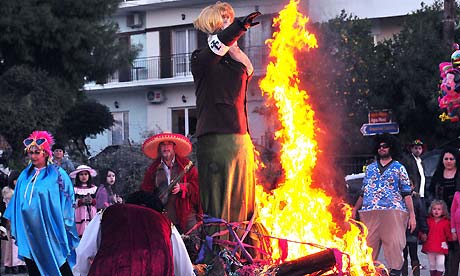
De facto EU policies such as favoring of austerity over haircuts for investors, and pushing elected leaders into early retirement, have led to a steep and unfortunate rise in support for nationalist and extremist parties and attacks on foreigners. Crude, prejudicial caricatures of national stereotypes have made a return to many a broadsheet. We have even become accustomed to seeing flags and effigies of our leaders being burned on European streets. 

The foremost reason behind this rise in distrust and animosities is the fiscal imbalance caused by the EMU. It has plunged some of the Eurozone countries, Greece and Spain in particular, into unemployment, civil unrest and violence, while enabling the so-called core countries (Germany, France, the Netherlands, Finland) to live in relative luxury. Their citizens, on the other hand, are becoming disaffected by a growing perception that their taxes are paying for the economic mismanagement of their Southern neighbours. 

The result of this terminal tango has been poverty, distress and paranoia in the South; wealth, resentment and xenophobia in the North. Devising and enforcing such a divisive economic system, that by its very nature creates winners and losers and then sets out to reinforce the disparities, doesn't, to me at least, sound like Nobel Peace Prize territory.

We could also point out to the Committee that less than 20 years ago, on European soil, this harbinger of peace failed to both prevent and bring to an end the vicious and bloody wars in the Balkans. While Brussels was busy setting up the EMU, Europeans were witness to humanitarian atrocities (cf Sarajevo) and very real attempts at genocide (cf Srebrenica). It was left to the US and NATO to bring to an end this tragic chapter in European bloodletting.


But, putting aside all of the above, the prize still doesn't make sense. If the Panel wanted to award a human endeavour that produces stability and fosters peace, the rightful winner would have been liberal democracy. The panel have confused cause with result. There is not a single case of a liberal democracy fighting a war against another liberal democracy: the EU did not create the 60 years of stability on our continent, it was born of that peace. 

Even with such noble roots, these days, the EU disregards cooked books when it served its purpose (cf Greek entry), turns a blind eye to huge overspending by member states (cf rules on deficits), interferes in the democratic process of sovereign nations, refuses to disclose its own accounts for public scrutiny, and brakes its own rules without batting an eyelid (cf bailing out countries).

It has, of course, been a difficult few years, but it is exactly at such times – when the going gets tough – that an institution's true nature will show. On the same day as the Prize was awarded, a more deserving recipient of the Peace Prizethe Dalai Lama, tweeted that:

"Peace isn't the mere absence of violence; real peace must come from inner peace. And inner piece comes from taking other's interests into account".

In this respect, the EU has failed miserably.

An example of a more worthy winner would have been Malala Yousafzai, the 14 year old girl in Afghanistan who is fighting for her life after being shot in the head on her way to school by the Taliban. Her crime, according to the sick and twisted perpetrators, was to promote equality between the sexes. Already at such a young age, she has paid an incredible price for promoting peace and equality, and for having  the courage to stand by her convictions.


The only rational explanation that I can think of, for awarding the Peace Prize to the EU and not Malala, for example, would be that the oil rich and impeccably mannered Norwegians wanted to help their financially embattled neighbour with a donation of €750,000. The prize, in any case, will no doubt be swallowed up swiftly by the beaurocrats, MEPs and special advisors in Brussels. The inhabitants of the European Union, meanwhile, suffering from an economic catastrophe created by their leaders but facilitated by the EU, will more than likely become increasingly marginalised and disenfranchised.

The Nobel Committee has, it must be said, previous form in picking unlikely winners. It was a surprise to most when Obama received the Peace Prize for little more than a a handful of speeches – after which, we should remind ourselves, he increased drone strikes, drew up an official 'kill list', and ordered extrajudicial assassinations on foreign lands. This peace maker even basked in the publicity. Go figure. But at least the hypocricy wasn't quite as rank as Gaddaffi's Libya chairing the Human Rights Commission

Perhaps Mao had a point, that political power rests in the barrel of a gun. I'd hope not, but one thing is depressingly clear: when it comes to the decision making organs of our global institutions, the Nobel Committee included, politicking, backhanders and favoritism tend to trump facts, justice and historical accuracy.

The EU winning the Nobel Peace Price? Please. Alfred must be turning in his grave.

13 September 2012

Ode alla Toscana

Buongiorno, bella Toscana. Colazione e poi andiamo in spiaggia. Dopo si ritorna a casa per mangiare cibo molto buono con un poco di vino locale. Dopo, sonnellino e poi andiamo ancora in spiaggia. Di sera, andiamo in una bella e vecchia città nelle montagne per mangiare troppa pasta, cinghiale e vino buonissimi. E poi, buona notte. Ripetere domani... La dolce vita, mi piace.

Prossima fermata, Sardegna, ma è difficile lasciare la Toscana.


17 June 2012

Rill Rill Atlantis

The last flight of space shuttle Atlantis. Edited by yours truly from the Discovery Science documentary, "The Last Shuttle". Music, "Rill Rill", by Sleigh Bells. (Better in Full Screen.)


11 May 2012

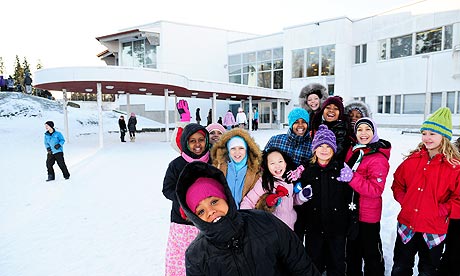
Finland's world class education system: a solid foundation for a more balanced society

In a recent article, Polly Toynbee wrote that she wants Britain to "aim for the social and economic balance that thrives in the Nordic nations." Well, Ms Toynbee (and Britain's politicians) would do well to learn from the Finnish education system, because it has managed to promote such an equilibrium by balancing equality with meritocracy. As a result, social mobility and equality of opportunity are a reality in Finland.


Suomi FinlandOver the last couple of decades, this small nation of 5.1 million people living in the 8th largest country in Europe has created arguably the best education system in the world. While the land is one of extremes, where temperatures range from -50C in the winter to +37C in the summer, there is a remarkable level of uniformity when it comes to primary and secondary level education. However, although Finnish education pops up quite regularly in the news over here, I have yet to see a detailed description of how the system works. So here goes.


The world-beating success of Finnish education can be boiled down to four basic yet powerful features. The first is a strong emphasis on producing high calibre teachers. Second, there are no centrally mandated targets or league tables. Third, fee paying private schools do not exist. And, finally, the system engenders a strong sense of responsibility in one's own actions.


More teacher training, less league tables


As a profession, teachers in Finland are held in high esteem. Although the pay isn't as good as that of, say, lawyers or doctors, the entry requirements are nearly as demanding. Secondary school teachers must have at least a Masters degree in the subject they wish to teach; while places for primary school teacher training are highly oversubscribed and very difficult to obtain.


After qualifying as a teacher, however, the professional is left to do their job and, provided there are no complaints, the state stays out of the classroom. There are virtually no centrally-imposed targets, rankings or league tables to distract teachers from their work at hand. In other words, get the professional right, and a good product will follow.


School tests and examsThis lack of testing in favour of professional autonomy is especially interesting given the recent revelations here in the UK of examiners setting standards as low as possible; teachers feeling compelled to help their students achieve high grades, whatever the cost; and the rampant grade inflation that the UK has seen over the last decade. It would seem that the target-based culture has incentivised the different cogs of the UK's education system to focus on ticking boxes rather than on the process of teaching itself. To adapt Charles Moore's brilliant observation about mental processes: education in Britain has become industrial, whereas it should be horticultural.


By contrast, the frosty northern garden that calls itself Suomi has seen no grade inflation in its upper secondary school matriculation exams (equivalent of UK A-levels). Year after year, the only ones to receive an A in each subject are those whose results are in the top 5% nationally. And the next 10% receive a B, and so on. The grade A+ doesn't even exist - and rightly so because as a concept it's as ridiculous as the Americanism "I'm with you 110 percent."


Furthermore, rather than a constant barrage of assessments and rankings, the focus in Finnish classrooms is on teaching kids how to learn - and exam results only gain emphasis when pupils hit their teens. Even so, Finland has consistently led the international rankings compiled by the Programme for International Student Assessment (PISA). Meanwhile, despite comparatively high spending per pupil, the UK has unfortunately been sliding down the list and in the latest study of 65 countries managed only 25th place.

Finnish children also start school later, do less homework and spend fewer hours in the classroom than their peers in South Korea, Finland's closest - if not only - competitor in educational success. The average school day in Finland lasts 6 hours, compared to South Korea's 9 hours (not counting the evening tuition expected of South Korean children). Likewise, Finnish children sit at their desks for 192 days a year, compared to South Korea's 220 school days, or a whopping 243 in Japan, another high flyer in the PISA rankings. (The UK school year is 190 days.) And yet Finnish students still manage  to equal and often surpass their Asian peers - and everyone else, for that matter - in educational achievement.


The high value of free education


Another important factor in creating the best education system in the world is the total absence of fee paying schools - as paradoxical as that may sound to people in the UK or the US, for example. In Finland, primary and secondary school is free at the point of delivery, whether you live in Helsinki or Inari, and whichever school you attend.


Schools in Finland (except Steiner education) are state-funded, and local authorities have a statutory duty to provide free education for each child in their area. The local authorities receive funds from the government which are earmarked for education, and the amount is directly linked to the number of school aged children in the municipality - a pupil premium, if you will, of about £5300 p.a. per student.


While the majority of schools have been created and are also run by local authorities, anyone can set up a school provided they meet three requirements: a suitable building and environment; a certain ration of teachers to children; and a curriculum that passes the local authority's vetting process. If a school fails to enroll enough students, it will be forced to shut down due to not qualifying for enough funds to sustain the above requirements.


As for the types of schools in Finland, there is a core centrally-mandated curriculum called Opetussuunnitelma (OPS), which aspirant headmasters must prove that their school will provide. After satisfying its demands to teach the basics (Finnish, maths, science, languages, history, physical education, etc.), each school can then bolt on any manner of specialities with which to attract students and, by extension, government funding. For example, some schools offer additional music, and others focus on sports, or drama, or even horse riding. Some schools might offer the typical local authority school curriculum to 95% of its students, and then offer a specialist class as well.


Each school can also get additional funding from the government with which to purchase and maintain the required equipment for such specialist leanings. This is also the case should a school provide extra services in poorer areas, or if they have a higher than average number of  students with special needs. But, again, the school must garner enough interest from parents and students to make the calculations work.


Because some areas will not be able to provide a specialist school - rural municipalities might simply not have enough pupils to make it sustainable - parents can send their children to any school in the country should they want to nurture a talent they've perceived in their little Pele or Pavarotti, provided that the child passes the required entry tests.


In this way, the Finnish education promotes equality of opportunity as far as the state can deliver, and, crucially, it's not disfigured into that corrosive form of levelling down known as equality of outcome. One school may have a better French teacher, while another may have a superior history teacher, but, overall, children receive the same amount of attention and investment from the government, after which they are allowed to grow and shine to the extent that they work and, therefore, deserve.


Competition, choice and responsibility

When it comes to upper secondary level education, there are some disparities in achievement between particular schools, but this is mainly due to a healthy dose of competition and meritocracy.


Each year, those leaving lower secondary school (16 year olds) can apply to any upper secondary school, whether a vocational polytechnic or an academic high school, anywhere in the country. (I will focus on academic high schools here, as that is where I went.) The schools, in turn, are allowed to cherry-pick the highest achieving applicants first, based on their final year grades from lower secondary school. After a school has filled up all its places with the cream of those who applied, the unsuccessful applicants are then assigned to their second, then third, and so on, choice of school - meaning some nail-biting summer months for the wannabe high schoolers. Every pupil is guaranteed a place, but getting into your dream school is down to whether you worked hard enough and performed well enough to earn it.


Upper secondary level schools in towns tend to receive more applicants than those in the countryside, which naturally drives up the entry requirements at urban institutions. This, however, is compensated by the government's student grants, whereby students can avail of a free monthly allowance and subsidized housing should they wish to study at a school away from home. And this grant is enough to live on, if not in total comfort, then certainly at the level of bohemian luxury associated with 21st century student-life.


Thus, even though there are regional and local differences in the standards of education, there is no reinforcing dynamic where a few schools do ever better while others sink ever lower. Instead, people can choose with their feet and study at any upper secondary level school in the country, provided they have worked hard enough in the classroom to earn their place.


Cygnaeus Lukio, Finland
The new Cygnaeus Lukio
Indeed, when I walked the halls of my good old alma mater, Cygnaeus Lukio, the school was the third most popular in my home town. (I chose it so that I could continue being in a music orientated class). Since then, however, it has become the most sought after upper secondary school in the town, and therefore the most difficult to get into. I'd like to think this development is due to the youth of today wanting to emulate my educational choices, but unfortunately for my ego a more plausible explanation would be that my former school managed to attract more students with its speciality offerings in music and science. Also, the fact that it was assigned by the town to move to a stunning new building probably did no harm to its reputation (the premises I was taught in were demolished to make way for a car park).


The high level of achievement attained by students in Finland's upper secondary schools is also, I think, partly due to how the curriculum places a lot of responsibility on pupils to organise and manage their own education. In a nutshell, one must complete 75 six-week courses in no less than 2, and no more than 5 years. Forty-five of these are compulsory (e.g. maths, sciences, Finnish, English, Swedish, PE and history), and the rest are electives (home economics, wood work, art, philosophy, psychology, French and German, or extra maths, or additional sciences, for example). Each course is offered a few times a year, and completing one necessitates passing an exam at the end of the six weeks. Students must plot out their own timetables, determined by what they want to study and when, and if you fail an exam, you have one chance to take it again, or risk having to repeat the whole course (which is the equivalent of throwing an almighty spanner into your carefully laid out timetable). The required amount of courses must be passed before pupils are allowed to attempt the final matriculation exams.


The coveted hat of  a high school graduate
This managing of one's own affairs, naturally, provides valuable training for life in the real world. In my own case, I took it a bit too easy for the first two years by giving myself only 30 or so classes per week. This strategy then backfired, however, in the form of a nightmare final year of 40 hours of classes per week in addition to studying for my finals. My mother always did say, "that which you leave behind, you'll find in front of you" - and upper secondary school sure did drive the lesson home.


So, there you have it, a 1.01 on the Finnish education system, where it matters not a jot whether children eat their morning porridge with a silver spoon or a wooden one because when they get to their state-funded classrooms, the children will all sit side-by-side. They might not treat each other equally - kids seldom do - but at least the state does.


Granted, this type of education system, and the state's investment into each citizen, does not come for free. Finland does have high taxes, but there is currently only a small difference between income tax in the UK and Finland. And while a VAT rate of 23% does make things significantly more expensive than they are in the UK, it is seen by most as an acceptable cost for promoting a society based on fairness.


Also, it has often been said that providing a consistently high standard of education is easier in Finland, with its highly homogeneous society, than it is in a multicultural place like Britain. However, recent studies seem to contradict this analysis as Finnish schools with higher than average immigrant students are also producing superb results.


With this kind of education system, it's therefore unsurprising that the social and economic balance that Ms Toynbee is after is alive and well in up north in Finland. And, even if its still no Utopia, and not everybody manages to bag their dream career, it's still a pretty good state of affairs when one's postcode and family wealth are less important in determining later success in life than one's work ethic, initiative and individual choices.

1 May 2012

Burying talents in a muddy Finsbury Square


The camp

Occupy Finsbury Square, May Day 2012Last Friday, on my way to Moorgate after work, I decided to walk through the Occupy camp on Finsbury Square. I wanted to see how they were coping with the dreadful weather we've had this spring - and what I found was anything but a pleasant surprise.

The place was a mess. Some six months after being pitched, the tents looked battered. Everything seemed soggy. There were few signs of life and the din of the city was the only sound to be heard. I saw a mountain of rubbish in one corner of the square, rising from a pond made of its own garbage juice. The ground, previously healthy grass, had been reduced to liquid mud and brown puddles. At times I was unsure of what I was walking on (or worse, in).


There were a few slapdash attempts to create walkable paths. A piece of cardboard here, a plank of wood there, but these were so dispersed and slippery that even Crash Bandicoot would've found it difficult to skip through the camp unscathed. The Square, the mud, the atmosphere; it all made me think of a festival where the final act had long since finished, but the revellers still refuse to face reality, pack up, and go home.

When I finally made it through the sprawl of tents, I found the main information hub. Interestingly, compared to the fall out city that lurked behind it, this place was clean and orderly like town library. I found myself wondering: how could the people who set up this info hub, who obviously had some pride in appearances and organisational skills to boot; how could they put up with all this filth around them? How can they live with front and back yards that resemble pigsties? And why are there still, 6 months into this experiment, no concrete signs of progress or development on the site?

The inhabitants

And, then, it began to dawn on me. I had been thinking of writing a post about how governments like to live beyond their means. To a large extent, I realised, this movement and their actions reflect a very similar mindset of wanting the cake, but not being prepared to earn it. The ideological inhabitants of Finsbury Square argue for power and wealth to be distributed more evenly, but judging by the place they call home, they must either be unwilling or too lazy to work hard in order to increase their share.


Guardian photo gallery (from a sunnier day)
Polis, said Plato, is man writ large. Well, if so, this polity looked like the kind of ruffian you would find living in a cardboard box under a bridge in a run-down part of town.


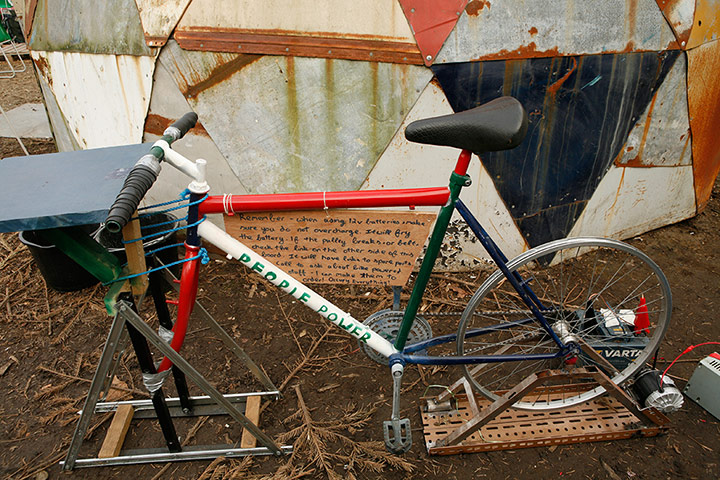
Granted, they had shown some initiative by turning a bicycle into a power generator. But in terms of creating a sustainable and long term power supply, it would probably turn out somewhat impractical - unless, that is, they fancy cities powered by people in hamster wheels? 

Still, hardly a blueprint for improving the structures of our society, this camp. If this Occupy group can't even manage an acre or so without turning it into the toilet from Trainspotting, then why should we listen to them harping on about how to structure society? Just imagine the state of our infrastructure, sewage, electricity, NHS, telecoms, etc., if these Occupiers were put in charge.

There's nothing wrong per se with turning on, tuning in and dropping out, provided one doesn't become a burden or a bother to others. However, not only does the ship of fools at Finsbury Square spoil public places and ask for handouts, they also have the cheek to belittle everyone else by declaring "Why get a job? I have an Occupation.

16th century ship of fools(Well, let's see. Jobs pay for 1) a roof, floor and four walls, 2) water for washing, 3) gas for heating, 4) electricity for entertaining and, most importantly, 5) food to sustain me. But you, on other the other hand, dear Occupier, choose to live in a tent surrounded by mud, refuse and discarded bits of dreadlocks.)

Similar wasters have of course always existed. However, from the Middle Ages up to the 17th centurybefore the French came up with asylumsrather than being allowed to plant themselves right bang in the centre of town, they were forced to wander the rivers and the wilderness

We need not be quite so strict these days, but - here's an idea - why don't these Occupiers petition the government and local businesses for a licence to use vacant properties? They could undertake a binding promise to leave the property in better shape than what they found it in. They could could do it up a bit, make it nicer. In short, they could add value.

The Guardian writes about a meeting that took place in the camp: 'In a bizarre act of protest, an older Occupier called Rob, shouting "fuck your process", left the meeting to fish a ukelele from a nearby tent, then sat strumming for the remainder of the meeting, to the annoyance of several around straining to hear.' This sentence, for me, reflects the camp and its relationship with London in microcosm.

The people being annoyed by the arrogant and selfish rogue playing the ukelele are us, the many, the real 99% who live or work around the Square. The bad apple, Rob, is analogous to the Occupy movement vis-à-vis London. He decided to unilaterally ruin it for everyone else, just like the Occupiers did with Finsbury Square. They have arbitrarily appropriated a public space and reduced it to their own private squalor in order to promote their singular political beliefs, whatever the cost to the larger community.

The malady

I"Protest and Communication", episode 6 of the sublime BBC series Civilization, Kenneth Clark looked at Drürer's famous work, "Melancholia I".

Albrecht Drürer, "Melancholia I"
He said of the engraving, created in 1514, that it was "one of the great prophetic documents of western man." It shows, Clark continued, "humanity at its most evolved. With wings to carry her upwards, she sits holding the compasses - symbols of measurement by which science will concur the world. Around her are all the elements of constructive action: a saw, a plane, pincers, and those two prime elements of solid geometry, the sphere and the dodecahedron. And yet all these aids to construction are abandoned, and she sits there brooding on the futility of human effort."


In the Late Middle Ages, according to Clark, melancolia had meant a simple combination of sloth, boredom and despondency. As radical as the "direct action" activists on Finsbury Square might fancy themselves, today's Occupy movement is actually captured perfectly by the engraving. They have in their lap the most powerful machine yet (the computer) and with it a key (the internet) to virtually every tool in history. But instead of utilizing these to make stuff with, or do things that could improve their communities, they sit down and bury their head on a table, their their talents wasting away in the muddy ground beneath their tents.


Occupy Finsbury Square, May Day 2012
Despondency in Finsbury Square
That is no route to progress. It is the opposite, in fact. Where the civilized man develops himself and improves upon his surroundings with a view to making them permanent, the savage merely looks around haphazardly to satiate himself now. The Occupiers have grown up cushioned by the welfare state and the Western life of luxury. As a result, they have little sense of direction, and even less of a work-ethic - instead, they prefer to act on the basis of an incredible sense of entitlement. It is because of these reasons that the movement, while admirable in intent, will ultimately fail.

The alternative

I have no doubt that there are many people living in the camp who have honourable ideas and who really want to make the world a better place. Indeed, I agree with many of the Occupiers' gripes. However, the path to wilderness is filled with good intentions, while the road to progress is paved with hard work. Plumbing, hygiene, waste management, taking care of one's property, construction, gardening, education, health care... that's the stuff that really matters. And as is evidenced by the unholy state of their camp, the Occupiers unfortunately prefer to spend their time and energy on more glamorous and intellectually stimulating pursuits, like discussing the international legal dimensions of eradicating ecocide.

Instead of transforming public spaces into a health hazard, these people should use their time constructively and find something that they can make into an occupation, something with which they can add value. These would be revolutionaries could have put up tents, and then occupied themselves in a productive way by figuring out how to improve and help the area, its people and its environs.  If they had done this, they would have gained more friends, and they might have made a real difference for the better.

The last time I walked through Finsbury Square was on my way to a concert by Terje IsungsetIf these Occupiers find it difficult to figure out what it is that they can give to humanity, they would do well to to ask him for some advice. Mr Isungset has made himself famous by playing music with instruments he crafted from birch, ice and stones, to name but a few novel materials. Now that's more like it - and Terje's incredible initiative contrasts glaringly with the the self-righteousness and laziness that are on display at Finsbury Square.

It is May Day after all, the day of the workers, so, guys, you really should get to work. And, please, leave our public parks just that: public.


29 April 2012

Higher states of consciousness


A red rectangle with a BBC logo has appeared in the forest, and one furry fellow is investigating it with gusto. At the risk of anthropomorphising, the bear must be wondering where this curious object came from and what it is. The chances of the bears having seen before anything quite like this object are slim to none, which quite likely has something to do with how in thrall he/she is with the colourful curiosity.

We featherless bipedals do the same, and perhaps did even more in the past. The myriad of explanations, thoughts and ideas to have unfolded as a result of our investigations into the things we come across are, to a great extent, what make us human. And there's a good chance, or at least it would be a plausible explanation, that our propensity to be inquisitive was spurred by a novel event or thing that in some way stopped us in our tracks.

Like what happened to our hominid predecessors in 2001: A Space Odyssey.


Whatever the shape of our metaphorical monolith, when we found it, we began to not just seek answers, but consciously create them as well. The Dawn of Man came the day we began to share the fruits of this labour. We had made the step from a private language to a public one, and we have been adding layer upon layer of complexity to our languages ever since. The work and thought of our forefathers can be seen, touched and heard today in our society, science, construction and culture; and it is incumbent upon us to continue the efforts.


Pardon the flight of fantasy, but instead of a higher state of consciousness using some unsuspecting bears to collect cutsey-points from an audience, what if our monolith had been something just as inconsequential, like a piece of scrap (or crap for that matter) from a passing space ship. A disused refrigerator, or a broken radioator, or whatever is probably being used out the somewhere in the vast expanse of space.


What if our most treasured, sacred and unifying concepts and beliefs were set in motion by the interstellar equivalent of a rusty hub cap? More to the point, would that make them any less important?